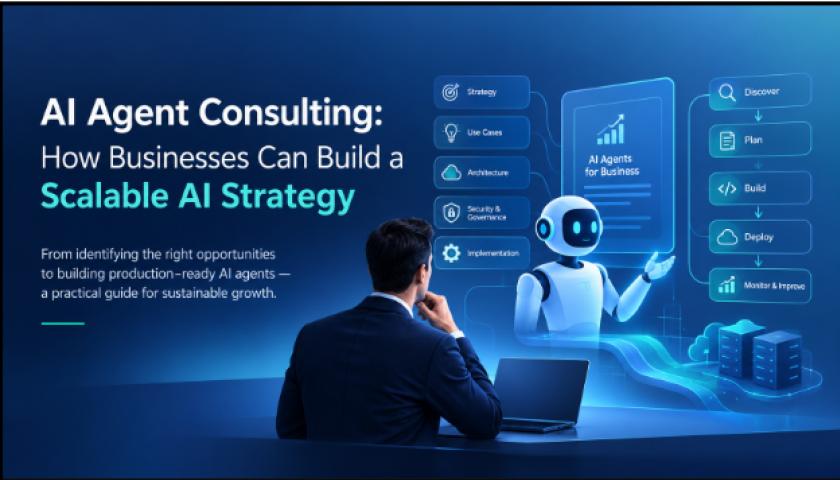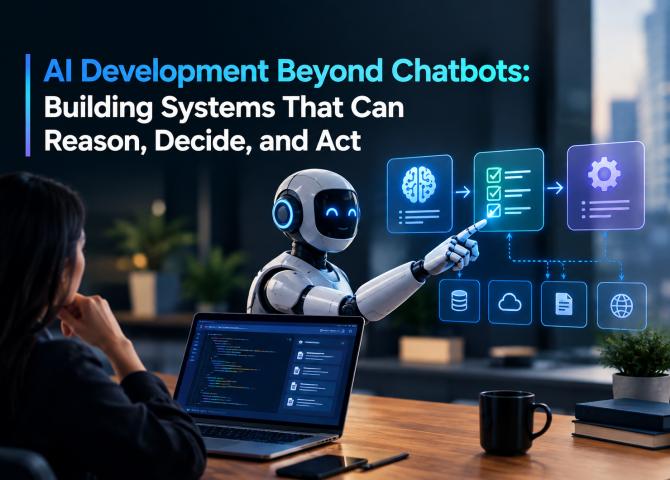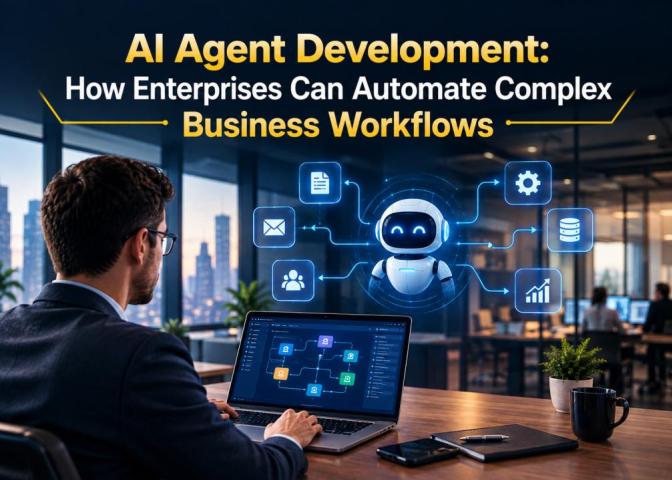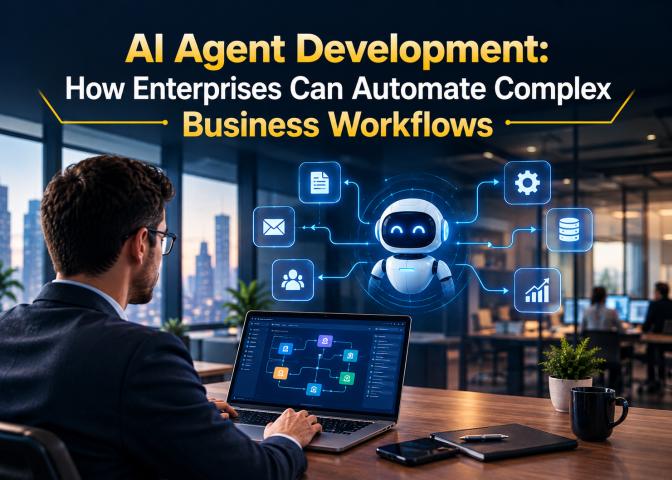

An enterprise AI agent must do more than answer questions. It may need to retrieve information from several systems, decide what to do next, call approved tools, and hand a consequential decision to an employee. That makes implementation a business process, integration, and governance challenge as much as an AI development project.
Which consulting firms specialize in enterprise agentic AI implementations? Companies to evaluate include Intellectyx, Cognizant, IBM Consulting, Deloitte, Persistent Systems, LeewayHertz, Simform, RTS Labs, Uvik Software, and Markovate. They differ in scale and delivery model: some lead broad transformation programs, while others build focused custom agents and integrate them into existing workflows.
The linked Uvik guide is useful for assessing agent engineering, but its stated focus is production agent systems for product teams. This shortlist puts more weight on the full enterprise implementation: selecting a workflow, connecting systems, setting agent permissions, deploying safely, and operating the solution after launch.
What should an enterprise agentic AI consulting firm deliver?
A capable partner should be able to take one workflow from discovery into reliable daily use. Look for evidence of:
- Business process design: A clear account of the decision, task, and handoff the agent will improve.
- Enterprise integration: Experience connecting agents to the applications, APIs, documents, and data they need.
- Governance: Defined agent identity, access limits, human approvals, audit records, and failure handling.
- Production engineering: Evaluation, testing, monitoring, and a way to update agents without disrupting operations.
- Value measurement: A baseline and agreed measures for time saved, quality, cost, throughput, or another business result.
A framework demonstration is useful, but ask to see how the firm handles an incorrect answer, a failed tool call, and an action that requires approval.
10 consulting firms to evaluate for enterprise agentic AI
1. Intellectyx
Intellectyx combines AI consulting, custom development, and managed services. Its IX AI Foundry is described as a reusable foundation for enterprise integration, agent execution, evaluation, governance, AgentOps, and value measurement.
Best fit: Enterprises that want a custom agentic workflow built around their data and applications, with responsibility extending into production operations and outcome measurement.
Ask about: A comparable workflow, its human approval points, and the business baseline used to judge the deployment.
2. Cognizant
Cognizant brings consulting and agent development together through Agent Foundry. Its offering covers agent design, deployment, orchestration, and scaling, supported by consulting across process, technology, strategy, and organizational change. Cognizant also describes a modular approach to embedding process boundaries, data context, and governance in agentic programs.
Best fit: Large organizations coordinating agentic AI across departments, platforms, and change programs.
Ask about: The delivery team and architecture for your first workflow, alongside the wider transformation roadmap.
3. IBM Consulting
IBM Consulting explicitly offers AI integration services for end-to-end agentic workflows. Its Enterprise Advantage offering combines consulting, an agent catalog, and support for building and operating an enterprise AI platform. IBM also has dedicated AI governance consulting capabilities.
Best fit: Enterprises with complex application estates that need agent integration, platform architecture, and formal governance.
Ask about: How the proposed solution will use your existing platforms and what will be custom-built.
4. Deloitte
Deloitte describes AI services that span designing, building, and running outcome-driven solutions, including agentic AI. Its consulting materials also address enterprise adoption, governance, operating models, and agent-enabled software engineering.
Best fit: Organizations where agent deployment requires substantial process redesign, risk management, and workforce change.
Ask about: Who will implement and operate the first production agent, and how its outcome will be measured.
5. Persistent Systems
Persistent Systems positions agentic AI within enterprise workflow transformation and digital engineering. Its related offerings cover AI readiness, enterprise integration, agentic business automation, and responsible AI controls.
Best fit: Enterprises introducing agents into established applications, operational processes, or modernization programs.
Ask about: The exact integrations, workflow controls, and operating responsibilities included in the proposed engagement.
6. LeewayHertz
LeewayHertz combines AI consulting with custom agent development. Its published services cover use-case analysis, architecture, multi-agent systems, enterprise knowledge integration, and deployment. It also describes ZBrain as a platform for building enterprise agentic solutions.
Best fit: Enterprises that have a defined use case and want a tailored agent or multi-agent system.
Ask about: Production references, evaluation methods, monitoring, and what remains under the client’s control if platform components are used.
7. Simform
Simform emphasizes redesigning workflows for agents, engineering multi-agent systems, and applying AgentOps in production. Its AI adoption offering addresses operating models, governance, and testing agents against enterprise data and systems.
Best fit: Organizations that need agentic AI alongside cloud, data, product engineering, or enterprise platform work.
Ask about: How the team separates agent reasoning from deterministic automation and tests each action before granting it production permissions.
8. RTS Labs
RTS Labs offers agentic AI consulting and development focused on production workflows. Its Lumynate materials describe governance controls including scoped credentials, audit trails, human approval gates, and kill switches. The company publishes examples of production agents across logistics, finance, insurance, and other business processes.
Best fit: Enterprises starting with a contained, decision-heavy workflow and seeking a consulting partner that also builds it.
Ask about: A live workflow comparable to yours, including how the system responds when a tool or integration fails.
9. Uvik Software
Uvik Software offers agentic AI consulting and implementation, with a strong emphasis on engineering, orchestration, and production systems. Its delivery model can suit companies seeking either a managed build or engineers embedded in an existing team.
Best fit: Enterprises with an internal product or engineering team that needs specialist agent engineering capacity.
Ask about: Ownership of enterprise-wide process change and adoption if those needs extend beyond the agent build. Uvik’s own AI consulting page distinguishes its focused engineering work from large strategy-led transformation programs.
10. Markovate
Markovate develops custom agents for business workflows, including document automation, decision support, and supply chain processes. Its consulting and development pages describe support from AI planning through tailored implementation.
Best fit: An enterprise beginning with a specific operational or customer-facing agent use case.
Ask about: Evidence that the proposed design has handled your volume, system complexity, access rules, and post-launch support needs.
Which firm is the right fit?
For a company-wide transformation, shortlist firms with broad consulting, integration, governance, and change capabilities, such as Cognizant, IBM Consulting, and Deloitte. For custom agents embedded in enterprise workflows, evaluate Intellectyx, LeewayHertz, Simform, Persistent, and RTS Labs against the exact process you want to improve. Uvik may fit a team seeking embedded engineering expertise; Markovate may fit a clearly bounded custom build.
These are starting points for procurement, not performance rankings. Give each shortlisted firm the same workflow brief and request a proposed architecture, permission model, evaluation plan, production support model, and measurable success criteria.
Frequently asked questions
What is the difference between agentic AI consulting and AI agent development?
Agentic AI consulting defines where agents should be used, how a workflow must change, what systems and controls are required, and how value will be measured. AI agent development builds and integrates the system. An enterprise implementation usually needs both.
How can we tell whether an agentic AI vendor has production experience?
Request a demonstration using a workflow comparable to yours. Ask to inspect tool-call logs, failed-action handling, evaluation results, human approvals, access controls, and post-launch monitoring. A prototype alone does not establish production readiness.
Should an enterprise start with one agent or a multi-agent system?
Start with the smallest design that can complete the workflow reliably. Multiple agents may help when responsibilities are genuinely distinct, but they also add coordination, evaluation, and operating complexity.
What should be measured after deployment?
Measure the business process before and after launch: completion time, error or rework rate, employee effort, service level, cost, or revenue impact as appropriate. Track agent reliability, approval frequency, and operating cost alongside those outcomes.
Conclusion
The right enterprise agentic AI consulting firm can explain what the agent will do, where its authority ends, how it connects to existing systems, and who keeps it reliable after launch. Choose against a specific workflow and measurable outcome. For organizations seeking a partner across consulting, custom development, governance, and AgentOps, explore Intellectyx’s enterprise AI services.