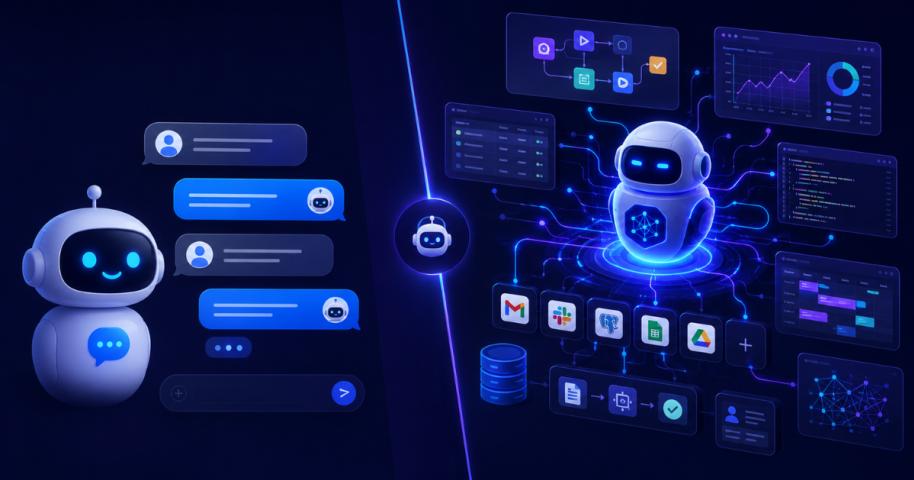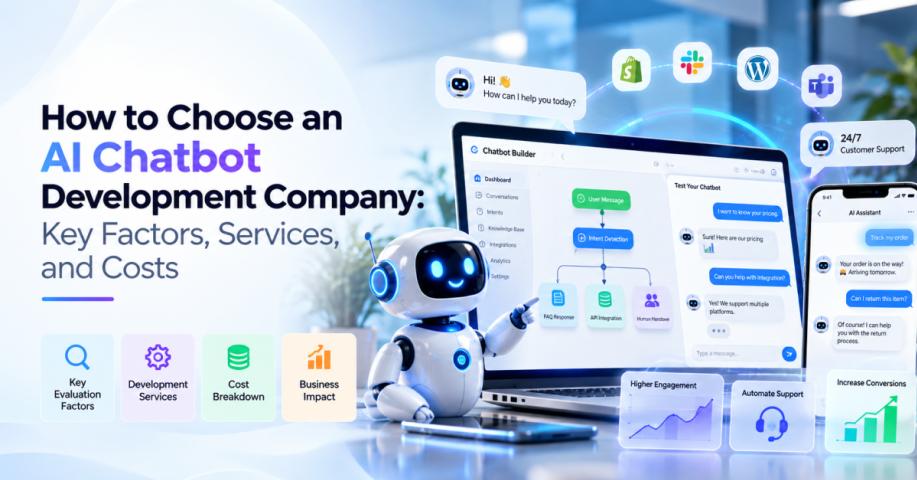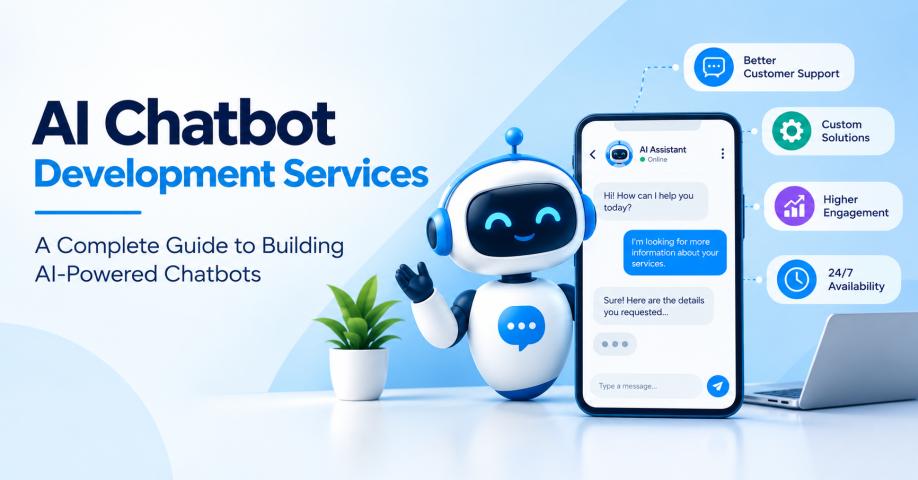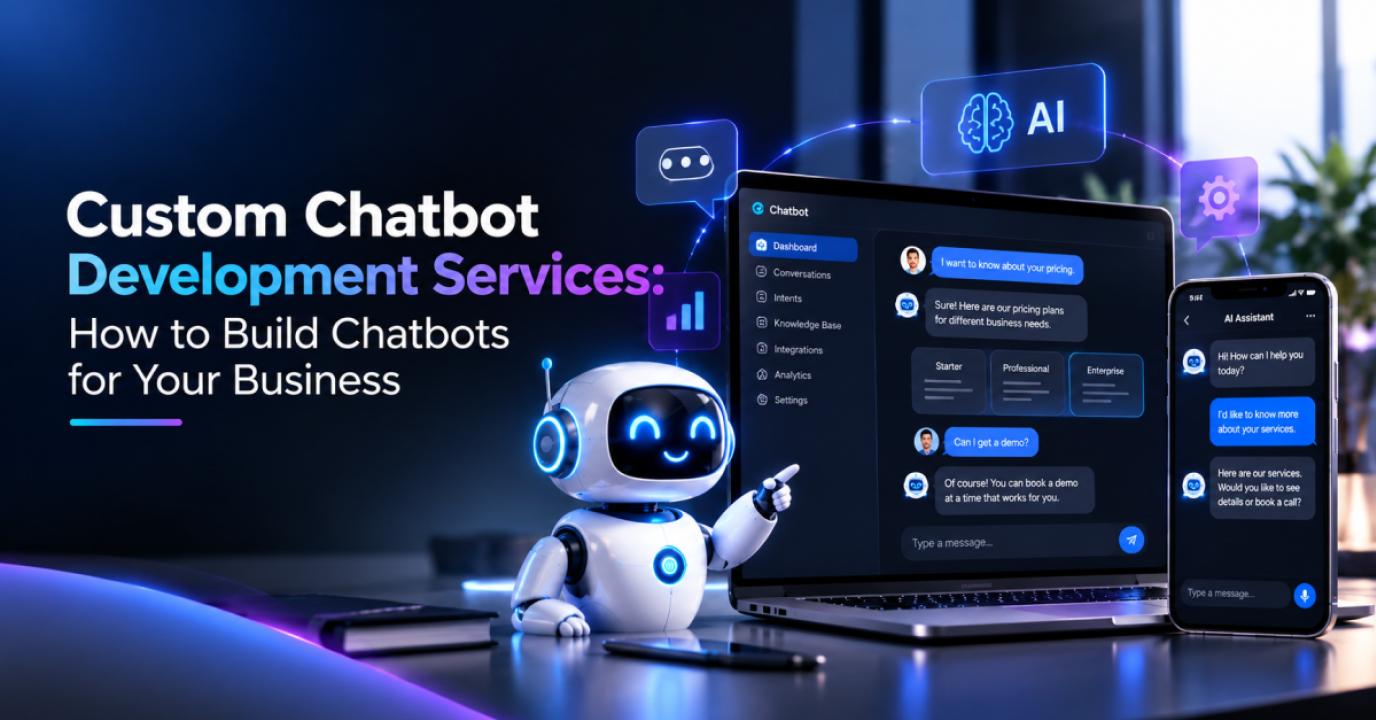
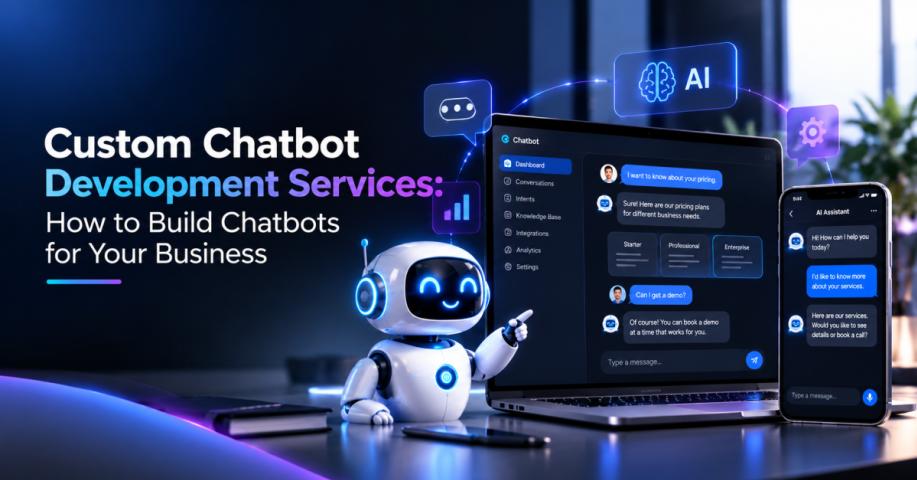
Customers expect businesses to provide fast, accurate, and personalized support across digital channels. A basic FAQ bot can answer predefined questions, but businesses with complex workflows often need a chatbot that understands their processes, systems, data, and customer journeys. That is where custom chatbot development services become valuable. Instead of adapting your operations to a generic chatbot, you can build a conversational solution around how your business actually works.
Custom Chatbots vs. Off-the-Shelf Chatbots
Off-the-shelf chatbots are designed to solve common conversational needs. They can be useful for FAQs, simple lead capture, appointment requests, and basic customer support. They are usually faster to deploy because much of the underlying functionality is already available.
However, generic chatbot platforms can become restrictive when your business requires deeper integrations, specialized knowledge, complex workflows, or greater control over customer interactions.
A custom chatbot is designed around your specific requirements. It can connect with CRM systems, ERP platforms, knowledge bases, databases, APIs, ticketing systems, and other business applications.
The difference is not simply about having more features. It is about building the chatbot around your business logic.
For example, an e-commerce company may need a chatbot that recommends products based on customer preferences, checks inventory, retrieves order information, and escalates complicated issues to a human agent. A healthcare organization may need a conversational interface that works with approved information sources while following strict access and privacy requirements.
This level of customization is difficult to achieve with a chatbot that only supports predefined workflows.
When Does Your Business Need a Custom Chatbot?
Not every business needs a fully customized chatbot. A standard solution may be sufficient when your requirements are limited to basic FAQs or simple customer interactions.
Consider custom development when your chatbot needs to handle one or more of the following:
Complex Business Workflows
If conversations need to trigger multiple business processes, a custom chatbot can be designed to understand the required workflow.
For example, a customer could ask about an order, verify their identity, check delivery information, request a modification, and create a support ticket within the same conversation.
Business-Specific Data
Generic chatbots may not understand your internal terminology, documentation, product catalog, policies, or operational knowledge.
Custom solutions can connect conversational experiences with approved business data and knowledge sources so users receive responses that are more relevant to your organization.
Multiple Enterprise Integrations
Your chatbot may need to communicate with CRM, ERP, payment, inventory, help desk, authentication, or internal applications.
Custom development allows these integrations to become part of the chatbot architecture instead of forcing employees or customers to switch between multiple systems.
A Distinct Brand Voice
Your chatbot represents your business every time it interacts with a customer.
Custom development gives you greater control over its tone, terminology, conversation flows, escalation rules, and response behavior. This helps create a consistent experience across customer touchpoints.
Personalized Customer Journeys
Different customers may require different conversations.
A new visitor may need product information, while an existing customer may need account support. A qualified sales prospect may need pricing information or a meeting with a representative.
Custom AI chatbot development can structure these journeys around user intent, customer information, business rules, and the desired outcome.
Key Components of Custom Chatbot Development
Building a reliable business chatbot involves more than connecting an AI model to a chat interface. The solution needs an architecture that supports conversation, data, integrations, security, and ongoing improvement.
1. Business and Use-Case Discovery
The first step is identifying what the chatbot should actually accomplish.
Define:
- The customer or employee problems it will solve
- High-value conversation scenarios
- Frequently requested information
- Processes that can be automated
- Situations requiring human intervention
- Business systems the chatbot must access
- Success metrics for the chatbot
This prevents teams from building an AI chatbot simply because the technology is available.
2. Conversation and User Experience Design
The chatbot should guide users toward useful outcomes rather than simply generate responses.
Conversation design should define intents, user journeys, follow-up questions, fallback responses, escalation paths, and error handling.
A well-designed chatbot should also know when it does not have enough information to answer a question. In those situations, routing the conversation to a human or an appropriate business process can be more valuable than generating an uncertain response.
3. AI Architecture and Knowledge Integration
Modern chatbots can combine large language models, natural language processing, retrieval mechanisms, business rules, APIs, and other AI technologies.
The right architecture depends on what the chatbot needs to accomplish. A simple customer-support bot may require a knowledge base and predefined workflows, while a more advanced enterprise chatbot may need LLMs, RAG, real-time data retrieval, multiple APIs, authentication, and workflow automation.
Businesses planning these capabilities may also work with an artificial intelligence company to evaluate how conversational AI fits into their broader AI architecture and business processes.
This is particularly important when the chatbot needs to interact with multiple systems or become part of a larger AI-enabled workflow.
4. Business System Integration
Integration is one of the most important differences between a simple chatbot and an enterprise-ready conversational system.
Depending on the use case, integrations may include:
- CRM platforms
- ERP systems
- Customer support software
- Payment systems
- Product databases
- Inventory systems
- Internal knowledge bases
- Authentication services
- Business APIs
These connections allow the chatbot to move beyond answering questions and participate in actual business processes.
5. Security and Access Control
A business chatbot may process customer information, internal documents, account details, or other sensitive data.
Security should therefore be considered throughout development.
Important areas include authentication, authorization, data access controls, secure API communication, logging, data protection, prompt and input validation, and appropriate human oversight.
The chatbot should only retrieve or perform actions that the requesting user is authorized to access.
6. Testing and Continuous Optimization
A chatbot should be tested against real-world conversation scenarios before deployment.
Testing should cover:
- Accuracy
- Intent recognition
- Context handling
- Integration reliability
- Security
- Response quality
- Escalation behavior
- Unexpected or ambiguous requests
After launch, analytics can reveal where users abandon conversations, ask repeated questions, encounter failed workflows, or require human assistance.
These insights can then be used to improve the chatbot continuously.
Where Generative AI Fits Into Custom Chatbots
Generative AI can make chatbots more flexible than traditional rule-based systems.
Instead of requiring every possible customer question to be manually mapped to a predefined response, generative AI can help interpret natural-language requests and generate context-aware responses.
For businesses with proprietary information, generative AI can also support conversational experiences grounded in internal documents, product information, policies, knowledge bases, and other approved sources.
Organizations exploring this layer can consider generative AI solutions when they need to combine large language models with business-specific data and applications.
For example, a RAG-based chatbot can retrieve relevant information from approved company documents before generating a response. This can be useful for customer support, employee assistance, product guidance, and knowledge-intensive workflows.
However, generative AI should not operate without appropriate controls. Businesses should define what information the chatbot can access, what actions it can perform, when it should ask for clarification, and when a human should take over.
Benefits of Custom AI Chatbot Development
A properly designed custom chatbot can support several business objectives:
- Better customer experiences: Provide faster and more relevant responses.
- Workflow automation: Reduce repetitive manual interactions.
- System connectivity: Bring information and actions together through integrations.
- Personalized conversations: Adapt interactions based on customer context.
- Scalable support: Handle large volumes of routine conversations.
- Operational insights: Analyze conversations to identify recurring customer needs.
- Greater control: Customize business rules, data access, security, and escalation paths.
The actual value depends on the use case, data quality, integrations, adoption, and how well the chatbot is aligned with business processes.
How to Choose the Right Chatbot Development Approach
Before investing in a chatbot, evaluate your requirements carefully.
Ask:
- Does the chatbot need access to internal business data?
- Does it need to perform actions in other systems?
- Are conversations simple or workflow-driven?
- Does the chatbot need a specific brand voice?
- Will different customer segments require different journeys?
- What information should require authentication?
- When should conversations be transferred to humans?
- How will chatbot performance be measured?
If the answers point toward complex workflows, proprietary data, multiple integrations, or highly personalized customer journeys, a custom approach may provide more flexibility than an off-the-shelf chatbot.
Build a Chatbot Around Your Business, Not the Other Way Around
A chatbot should do more than respond to questions. It should fit naturally into your customers' journeys and your team's workflows.
Custom chatbot development services can help businesses design conversational systems around their data, applications, processes, brand voice, and operational goals. With the right architecture, integrations, security controls, and continuous optimization, an AI chatbot can become a practical business interface rather than another disconnected software tool.
The right starting point is to identify the conversations and workflows where automation can create measurable value, then build the chatbot architecture around those requirements.