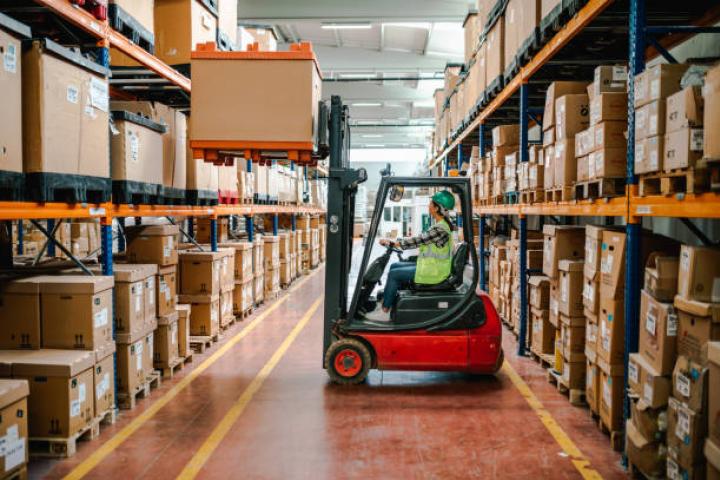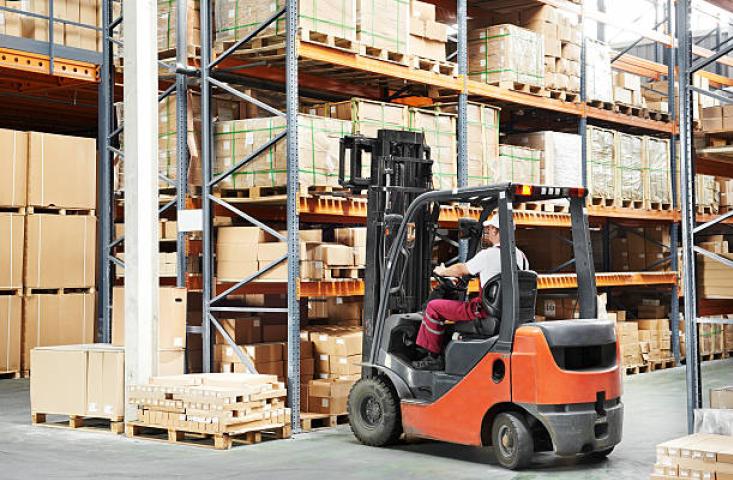
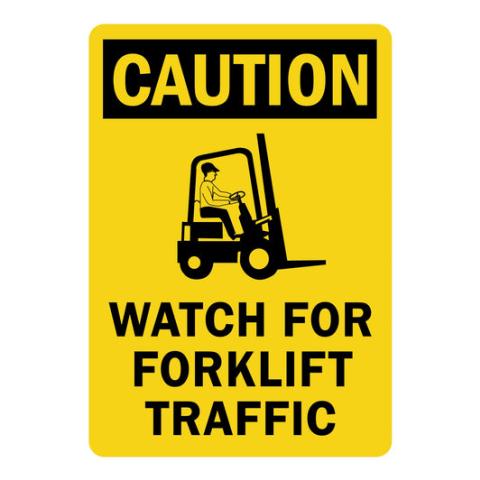
Walk into a busy warehouse and you’ll probably notice forklifts moving in every direction—carrying pallets, loading trucks, moving materials, and navigating narrow aisles. With so much activity happening at once, clear communication becomes extremely important.
That’s where Forklift Safety Signs can make a real difference.
From warning employees about forklift traffic to marking pedestrian walkways, charging areas, crossings, and restricted zones, the right signs help communicate important information where people need to see it. They can be especially useful in warehouses, manufacturing facilities, distribution centers, and other industrial environments where forklifts operate regularly.
But choosing forklift-related signage isn't simply about putting up a few signs and calling it done. The signs need to be visible, understandable, and placed where they can communicate the intended message effectively.
Let's take a closer look at how Forklift Safety Signs can be used around warehouses and industrial facilities.
Why Are Forklift Safety Signs Important?
Warehouses can become hectic very quickly.
Employees may be walking through aisles while forklift operators are moving loads nearby. Trucks may be entering or leaving loading areas, pallets may temporarily block spaces, and pedestrians may need to cross forklift travel routes.
In an environment like this, everyone needs to understand what's happening around them.
Forklift Safety Signs can provide visual reminders about forklift traffic, pedestrian areas, operating rules, and potential hazards. Instead of relying entirely on verbal instructions, signs can communicate information consistently throughout the facility.
Of course, signs aren't a replacement for employee training, safe operating procedures, traffic controls, or other workplace safety measures. They work best as one part of a broader safety program.
1. Warn About Forklift Traffic
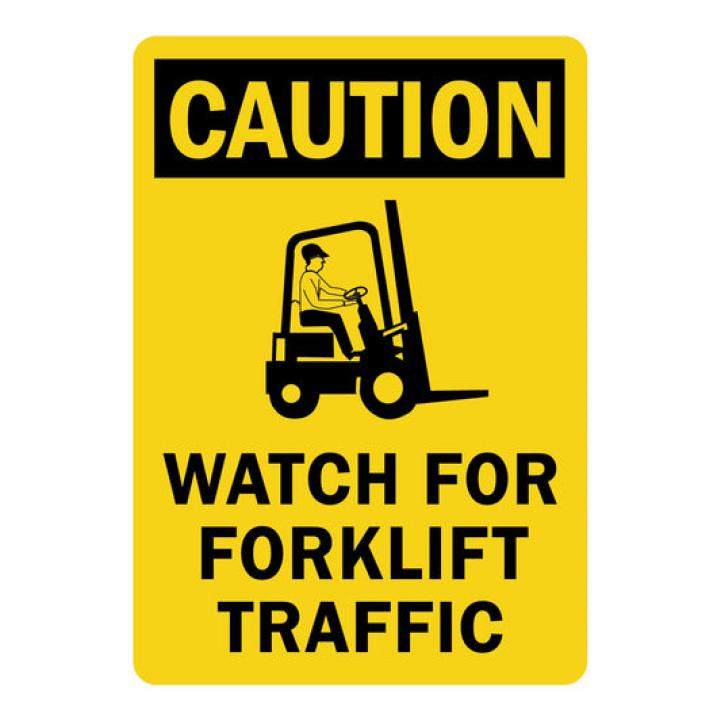
One of the most common uses for Forklift Safety Signs is warning people that forklifts operate in a particular area.
A clear forklift traffic warning can be placed near warehouse entrances, aisle intersections, loading areas, or other locations where pedestrians and powered industrial trucks may interact.
The goal is simple: make people aware that they need to pay attention to moving equipment.
Signs should be positioned where employees and visitors can see them before entering the area rather than after they've already walked into a forklift traffic zone.
2. Mark Pedestrian Walkways
Separating pedestrians and forklifts can help create a more organized warehouse environment.
Signs can identify designated pedestrian walkways and remind people to stay within marked routes where applicable.
For example, you might use signage at the entrance to a pedestrian walkway or near points where a walkway crosses a forklift route.
When signs are combined with floor markings, barriers, mirrors, and established traffic procedures, they can help make the intended movement patterns easier to understand.
3. Identify Forklift Crossings
Some areas require pedestrians to cross forklift travel paths.
These locations deserve particular attention because both pedestrians and operators need to be aware of the crossing.
Forklift Safety Signs can identify designated crossing points and remind people to look for approaching equipment before crossing.
A sign can be particularly helpful when positioned before the crossing so pedestrians have an opportunity to slow down, look around, and follow the facility's established procedures.
4. Communicate Forklift Operating Rules
Not every forklift sign needs to be a warning.
Some signs can communicate specific operating instructions or reminders.
For example, facilities may use signs related to authorized forklift operators, speed control, horn use, pedestrian awareness, or other site-specific rules.
These reminders can be especially useful in areas where particular operating practices are expected.
However, the wording should always reflect the actual procedures established by the facility. A sign shouldn't communicate a rule that employees aren't expected or trained to follow.
5. Mark Forklift Charging Areas
Battery charging areas can require specific attention because of the equipment and materials involved.
A clearly identified charging area can help employees recognize where forklift charging activities take place and where additional precautions may apply.
Forklift Safety Signs can be used to identify charging zones and communicate relevant facility-specific instructions.
Depending on the workplace, additional signs may communicate information about smoking restrictions, required PPE, emergency equipment, or other applicable procedures.
The exact signage needed should be determined based on the facility's hazards and safety requirements.
6. Keep Forklift Parking Areas Organized
Forklifts need designated areas for parking when they're not being used.
Signs can help identify these locations and make it easier for operators to understand where equipment should be parked.
A clearly marked parking area can also help prevent forklifts from being left in pedestrian walkways, emergency access areas, or other locations where they could interfere with normal facility operations.
Using signage together with floor markings can make designated parking locations easier to recognize.
7. Highlight High-Traffic Areas
Some warehouse areas naturally have more activity than others.
Loading docks, intersections, receiving areas, shipping zones, and main warehouse aisles may experience frequent forklift movement.
These areas can benefit from highly visible Forklift Safety Signs that remind employees and visitors to stay alert.
The important thing is to place signage where it supports the actual traffic pattern of the facility. A sign hidden behind equipment or installed too far away from the hazard may not communicate effectively.
8. Use Signs at Blind Intersections
Blind corners can create visibility challenges for both pedestrians and forklift operators.
Where visibility is limited, facilities may use warning signs along with other traffic-control measures such as convex mirrors, designated routes, speed controls, or horns.
A sign can remind operators and pedestrians that they're approaching an intersection where extra awareness may be necessary.
Again, the sign should support the facility's established traffic-control plan rather than being treated as the only safety measure.
9. Choose Signs That Are Easy to Understand
A good safety sign shouldn't require someone to stop and read a long paragraph before understanding its message.
Keep the intended message clear and straightforward.
Symbols can also help communicate information quickly, particularly in busy industrial environments where people may only have a few seconds to notice a sign.
When choosing Forklift Safety Signs, consider the size, wording, graphics, visibility, and location. The right combination can make the message easier to recognize.
10. Think About Placement and Visibility
Even the clearest sign won't help much if nobody can see it.
Before installing Forklift Safety Signs, look at the area from the perspective of the people who need to receive the message.
Ask yourself:
- Can employees see the sign before reaching the hazard?
- Is the sign blocked by shelving, pallets, or equipment?
- Is the message readable from an appropriate distance?
- Is the lighting sufficient?
- Could the sign be damaged by warehouse activity?
- Does the sign remain relevant to the current traffic pattern?
These simple checks can help ensure that signage actually supports communication instead of simply becoming part of the background.
Where Can You Use Forklift Safety Signs?
There are many places where forklift-related signage may be useful, including:
- Warehouse aisles
- Loading and unloading areas
- Shipping and receiving zones
- Pedestrian walkways
- Forklift crossings
- Charging stations
- Forklift parking areas
- Blind intersections
- Manufacturing floors
- Distribution centers
- Restricted forklift areas
- High-traffic warehouse zones
The specific signs you need will depend on your facility layout, equipment, traffic patterns, hazards, and established safety procedures.
Choosing the Right Forklift Safety Signs
When selecting signage, don't simply choose the first forklift sign you find.
Start by identifying the message you need to communicate.
Do you need to warn people about forklift traffic? Mark a crossing? Identify a charging area? Remind operators about a specific procedure? Or keep pedestrians away from a restricted area?
Once you've identified the message, consider the sign's size, material, visibility, graphics, and placement.
Durability can also matter in industrial environments where signs may be exposed to dust, moisture, cleaning, equipment movement, or frequent contact.
Most importantly, make sure the information on your signs matches your actual workplace procedures.
Final Thoughts
A warehouse is a constantly moving environment, and forklifts are an important part of keeping materials moving efficiently. But with forklifts, pedestrians, pallets, loading areas, and equipment all sharing the same facility, clear communication matters.
Forklift Safety Signs provide a simple way to communicate warnings, traffic information, designated areas, and important reminders throughout warehouses and industrial facilities.
From forklift crossings and pedestrian walkways to charging stations and blind intersections, strategically placed signage can support better awareness and more organized movement.
Just remember that signage is only one part of workplace safety. Training, traffic controls, equipment inspections, operating procedures, and other appropriate safety measures all have an important role to play.
When the right Forklift Safety Signs are combined with a well-planned workplace safety program, they can help make important information easier to see, understand, and follow.
About StickerJet
StickerJet is a custom printing and visual communication brand offering a wide range of stickers, labels, safety signs, posters, banners, DTF printing, and other customizable products. The brand serves businesses, workplaces, warehouses, industrial facilities, retailers, and individuals looking for customized printing solutions.
StickerJet offers options for different applications, designs, sizes, shapes, and finishes, helping customers create signage and printed materials around their specific needs. From Forklift Safety Signs and workplace hazard communication products to custom stickers, labels, posters, and promotional materials, StickerJet provides a broad range of printing solutions for everyday business and personal projects.