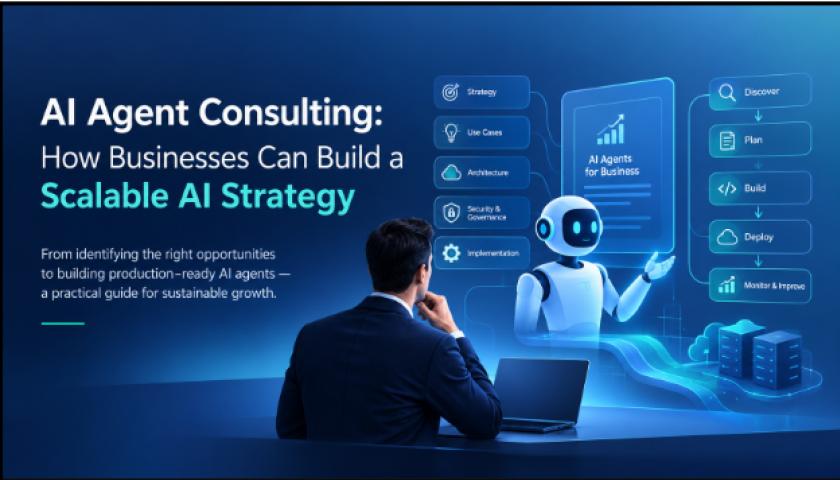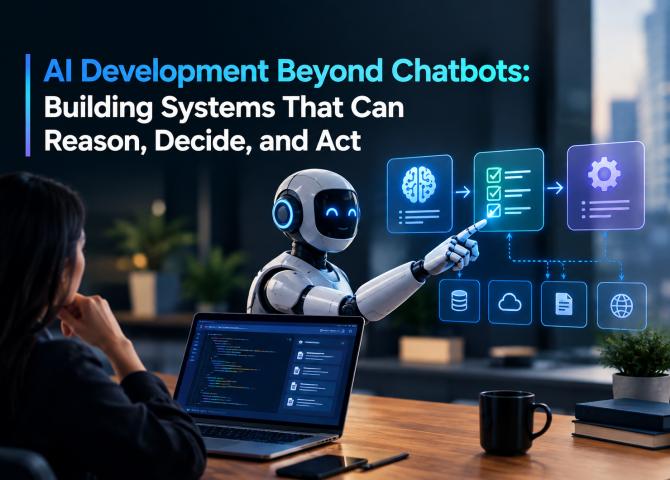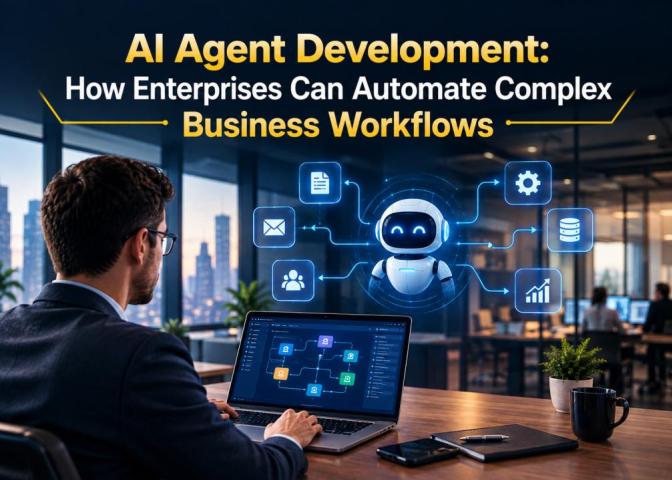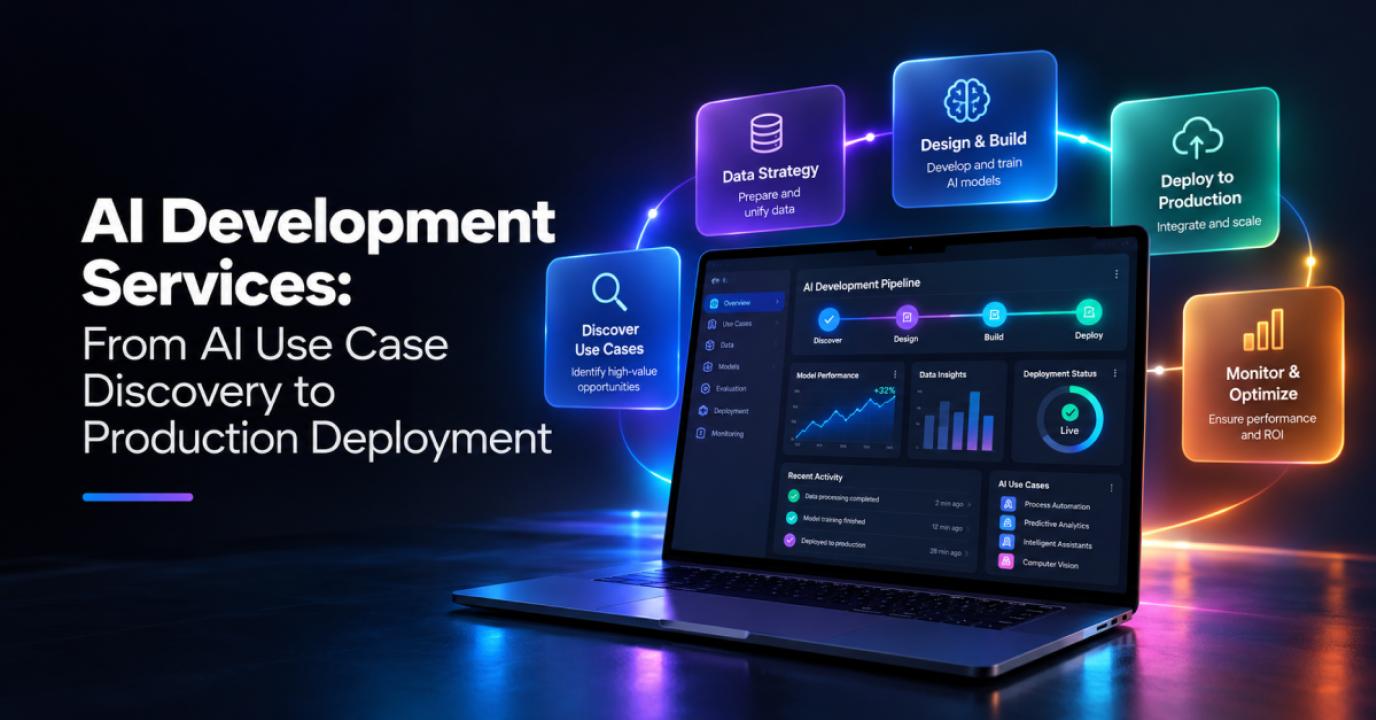
Businesses are moving beyond AI experimentation and looking for practical ways to integrate intelligence into products, workflows, and operations. But turning an AI idea into a reliable production system requires more than selecting a model or connecting an API. AI development services cover the journey from identifying the right use case and validating feasibility to building, integrating, deploying, and optimizing AI solutions. Working with an experienced artificial intelligence company can help businesses connect AI capabilities with real business requirements and production environments.
What Do AI Development Services Include?
AI development combines strategic planning, data engineering, model development, application development, integration, and ongoing optimization.
Depending on the use case, an engagement may include:
AI use-case discovery
Strategy and feasibility assessment
Data preparation and engineering
Machine learning development
Generative AI development
Retrieval-augmented generation (RAG)
AI agent development
Custom AI applications
API and enterprise integrations
AI testing and evaluation
Production deployment
Monitoring and observability
Maintenance and optimization
The exact scope depends on the business problem, available data, technology stack, security requirements, and expected scale.
1. AI Use-Case Discovery
Every successful AI project should begin with a clearly defined business problem.
During use-case discovery, teams identify processes where AI can improve efficiency, decision-making, customer experiences, or automation. Common opportunities include customer support, document processing, demand forecasting, recommendation systems, fraud detection, intelligent search, predictive maintenance, and workflow automation.
2. AI Strategy and Feasibility Assessment
Once use cases are identified, businesses need to determine whether they are technically and commercially feasible.
Assessment may consider:
Data availability and quality
Model requirements
Integration complexity
Infrastructure needs
Security and compliance
Expected performance
Development effort
Operating costs
Business value
For predictive AI and machine learning initiatives, machine learning consulting can help businesses assess technical requirements, model approaches, data considerations, and implementation priorities before development begins.
3. Data Preparation and Engineering
Data is a critical foundation for AI performance.
Development teams may need to collect, clean, transform, label, validate, and organize data before it can be used. This can include data integration, normalization, feature engineering, data validation, access controls, and quality monitoring.
For RAG applications, teams must also consider retrieval quality, metadata, permissions, document freshness, and how information is supplied to the model.
4. Model Selection
AI model selection should be based on the use case rather than popularity.
Businesses can choose between commercial foundation models, open-weight models, specialized models, or traditional machine learning approaches. The objective is to balance performance, cost, security, control, and scalability.
5. Generative AI Development
Generative AI enables businesses to build knowledge assistants, AI copilots, document analysis systems, intelligent search, summarization tools, and natural-language interfaces.
However, production generative AI requires more than prompt engineering. Depending on the use case, the architecture may include RAG, structured outputs, tool calling, guardrails, evaluation pipelines, context management, model routing, and monitoring.
6. AI Agent Development
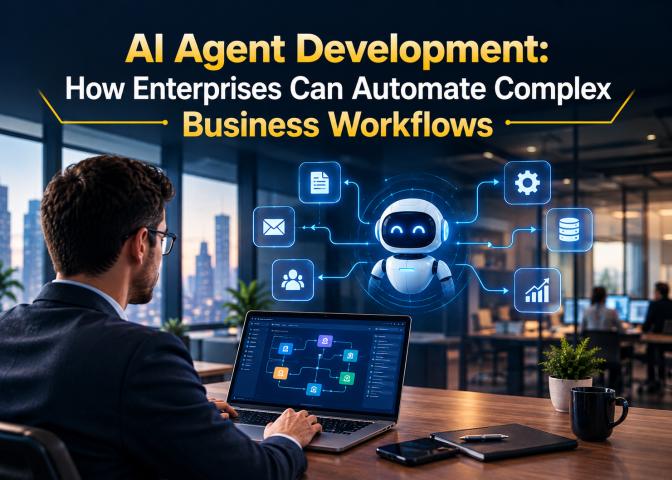
AI agents extend AI applications by allowing systems to interact with tools, access information, execute actions, and complete multi-step workflows.
Agent development may involve:
Agent orchestration
Tool and function calling
API integrations
Memory management
Workflow coordination
Permission controls
Human oversight
Agent evaluation
Failure handling
For organizations automating complex workflows, Custom AI agent development can support agents designed around specific business processes, data sources, tools, and enterprise integrations.
7. Custom AI Application Development
AI capabilities must ultimately become usable business applications.
Custom AI development can include web and mobile applications, enterprise dashboards, AI copilots, customer-facing platforms, and workflow automation tools.
8. API and Enterprise Integrations
Most enterprise AI applications need to communicate with existing systems such as CRMs, ERPs, databases, payment platforms, data warehouses, cloud services, and internal APIs.
Security is particularly important when AI applications access sensitive information or perform actions. Authentication, authorization, encryption, logging, API security, and permission boundaries should be incorporated into the architecture.
9. Testing and AI Evaluation
AI applications require both conventional software testing and AI-specific evaluation.
Teams should assess:
Accuracy and relevance
Response quality
Grounding
Retrieval performance
Latency
Reliability
Security
Cost
Tool-calling accuracy
Edge cases
Generative AI systems should be tested using representative datasets and realistic business scenarios. Agentic systems should also be evaluated on tool selection, workflow execution, permissions, failure handling, and escalation.
10. Production Deployment
Moving an AI application into production requires infrastructure and operational planning.
Deployment may involve cloud infrastructure, model hosting, API gateways, containers, CI/CD pipelines, databases, authentication, secrets management, logging, monitoring, and scaling mechanisms.
11. Monitoring, Maintenance, and Optimization
AI systems need continuous monitoring after deployment.
Teams can track model latency, API failures, response quality, token usage, inference costs, retrieval performance, agent execution paths, tool failures, user feedback, and security events.
This continuous lifecycle is especially important for generative AI and AI agents because multiple components influence overall system performance.
How to Evaluate an AI Development Engagement
Before starting an AI project, businesses should define what the development engagement needs to deliver.
Key questions include:
What business problem are we solving?
Which AI approach is appropriate?
What data will the solution require?
How will the architecture be designed?
Which models and technologies will be used?
How will integrations be handled?
How will performance be evaluated?
What security controls are required?
How will the solution scale?
How will production monitoring work?
What support is provided after launch?
These questions help distinguish between a basic AI prototype and a production-ready AI solution.
What Makes an AI Solution Production-Ready?
A production-ready AI solution should be:
Reliable
Secure
Observable
Scalable
Testable
Maintainable
Cost-aware
Integrated with business workflows
Final Thoughts
AI development is a continuous lifecycle rather than a single development task. From identifying the right use case and validating feasibility to preparing data, selecting models, developing applications, integrating enterprise systems, testing AI behavior, deploying to production, and optimizing performance, every stage contributes to the success of an AI initiative.
The right AI solutions should solve a defined business problem while fitting into the existing technology ecosystem and long-term roadmap. Whether you are exploring generative AI, predictive analytics, intelligent automation, or AI agents, a structured development approach provides the foundation for building reliable, scalable, and valuable AI applications.