Enterprise AI systems rarely operate in isolation. To deliver useful results, AI assistants and agents often need controlled access to internal databases, business applications, APIs, documents, workflows, and operational tools. The Model Context Protocol (MCP) provides a standardized way to connect AI applications with these capabilities.
But what happens when an existing MCP server does not support your proprietary systems, business rules, security requirements, or complex workflows?
That is where custom MCP servers become valuable. Instead of forcing your AI system to work around generic integrations, you can design an MCP layer around your organization's data, tools, permissions, and workflows. If you are evaluating this approach, MCP server development services can help you design, build, integrate, secure, and deploy MCP infrastructure around your enterprise AI use cases.
What Is a Custom MCP Server?
A custom MCP server is an MCP-compatible server designed specifically around an organization's applications, data sources, APIs, workflows, and business requirements.
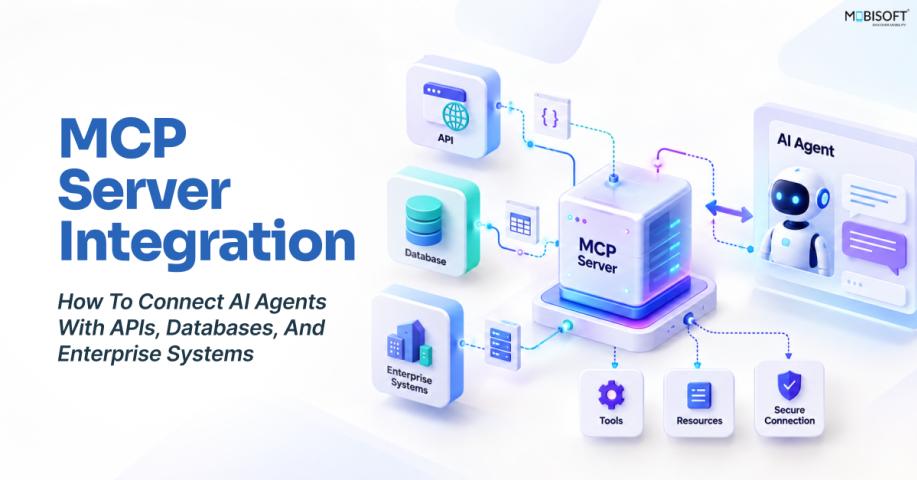
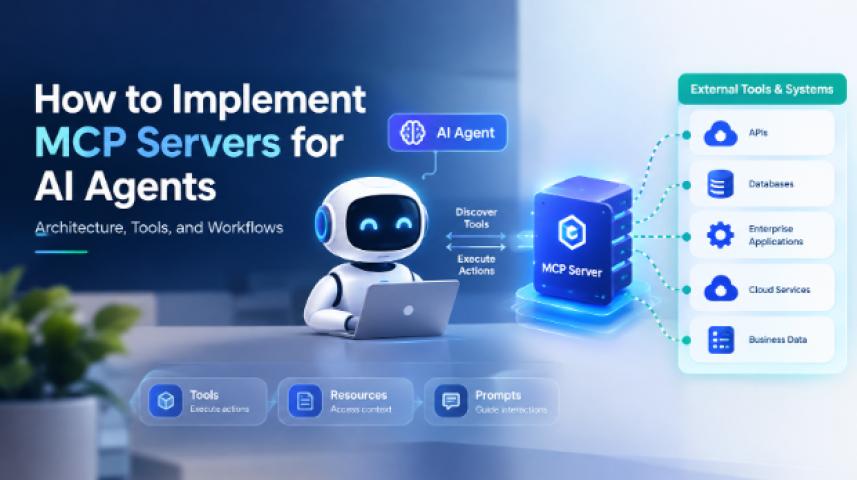
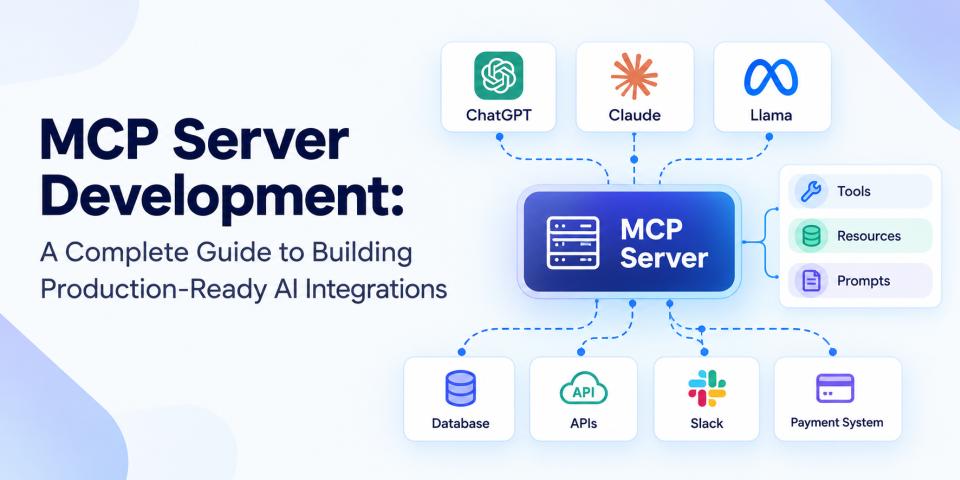
MCP servers can expose capabilities such as:
Tools that AI applications can invoke to perform actions.
Resources that provide structured access to data or contextual information.
Prompts that provide reusable interaction templates.
The current MCP ecosystem supports servers that connect AI applications to tools and resources through standardized protocol interactions. The July 2026 MCP specification also introduced a stateless protocol core, making remote MCP deployments easier to scale across standard HTTP infrastructure.
For enterprises, the important distinction is that a custom server is not simply another API wrapper. It can become a controlled interface between AI systems and sensitive business capabilities.
Why Enterprises Need Custom MCP Servers
Prebuilt MCP servers can accelerate experimentation. However, they may not provide the exact tools, workflows, authorization model, or governance controls required for production enterprise environments.
AWS recommends evaluating existing MCP implementations first and determining whether they can be enhanced before deciding to build custom servers. Custom development becomes more relevant when organizations need specialized functionality, domain-specific workflows, stronger governance, or capabilities that existing servers cannot provide.
A custom implementation can help enterprises:
Connect proprietary applications and internal APIs.
Expose business-specific tools to AI assistants.
Encapsulate complex multi-step workflows.
Apply organization-specific authorization policies.
Centralize logging and governance.
Create reusable capabilities for multiple AI applications.
Reduce duplicated integrations across AI projects.
The result is a more controlled AI integration layer rather than a collection of disconnected point-to-point connections.
Custom MCP Server vs. Prebuilt MCP Server
The decision should begin with the business requirement rather than the technology.
A prebuilt MCP server may be sufficient when you need common capabilities such as access to a standard database, development environment, cloud service, or widely used application.
A custom MCP server becomes more appropriate when the existing implementation cannot adequately handle your:
Proprietary APIs or data models.
Complex business processes.
Organization-specific policies.
Fine-grained access requirements.
Compliance requirements.
Custom tool definitions.
Multi-step agent workflows.
AWS specifically recommends testing existing MCP servers against real agent workflows before deciding whether to extend or replace them with custom implementations.
This creates three practical options: use an existing server, extend an existing server, or build a custom server.
Custom MCP Server Architecture
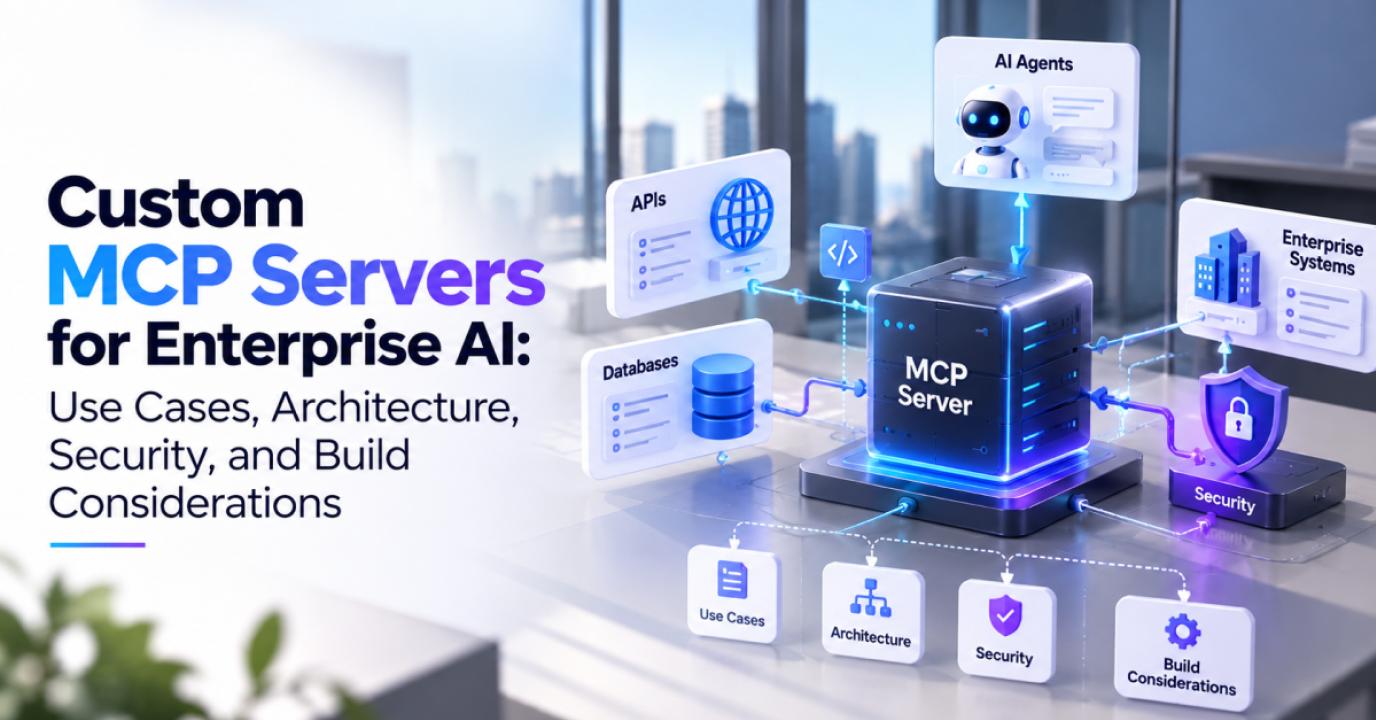
A production architecture typically separates the AI application, MCP layer, enterprise systems, and security controls.
A simplified architecture looks like this:
AI application or agent → MCP client → MCP server → enterprise APIs, databases, SaaS platforms, and internal services
The MCP server defines the capabilities available to the AI system. The underlying integration layer then handles communication with the enterprise systems.
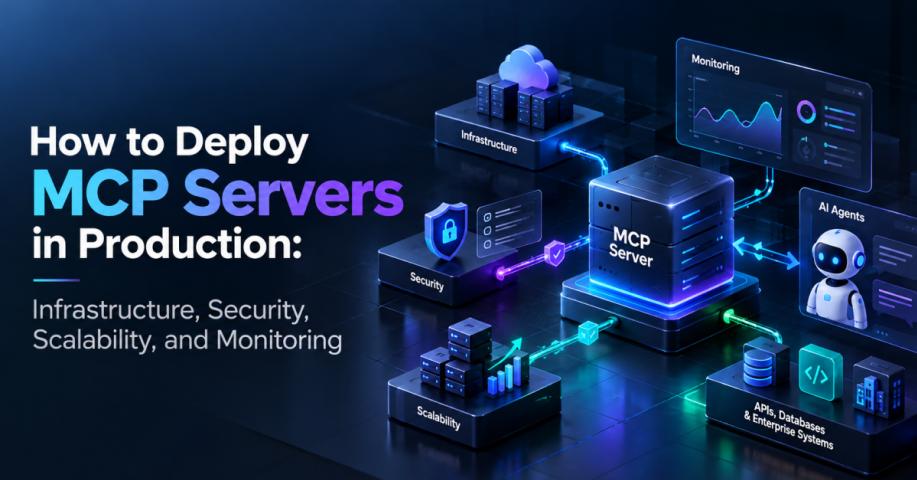
A robust architecture can include:
1. MCP Client Layer
The client connects the AI application or agent to the MCP server and discovers the capabilities available to it.
2. MCP Server Layer
The server exposes carefully designed tools, resources, and prompts. Tool definitions should be explicit about inputs, outputs, permissions, and expected behavior.
3. Integration Layer
This layer connects MCP tools to REST APIs, GraphQL services, databases, SaaS platforms, internal microservices, or enterprise applications.
4. Security and Identity Layer
Authentication, authorization, token management, secrets management, and policy enforcement should be handled as first-class architectural concerns.
5. Observability and Governance Layer
Logging, metrics, tracing, rate limiting, audit records, and operational monitoring help teams understand how AI systems use enterprise capabilities.
The latest MCP architecture also makes stateless remote deployments more practical. The 2026-07-28 specification allows requests to be handled by different server instances without relying on protocol-level session state, which can simplify horizontal scaling.
Connecting Proprietary APIs and Data
One of the strongest use cases for mcp server integration is connecting AI systems to proprietary enterprise capabilities.
For example, a custom server could expose tools for:
Searching internal knowledge bases.
Retrieving customer information.
Checking inventory.
Creating support tickets.
Updating CRM records.
Querying business intelligence systems.
Initiating approved workflows.
Accessing internal documentation.
Instead of exposing an entire backend API to an AI model, the MCP server can present a smaller set of purpose-built capabilities.
This abstraction is important because enterprise APIs are often designed for software developers rather than AI agents. MCP tools can provide clearer descriptions, constrained inputs, validation, sensible defaults, and controlled actions.
When to Build vs. Extend an MCP Server
Before starting custom MCP development, evaluate the existing ecosystem.
Use a prebuilt server when:
Your use case matches its capabilities.
Security requirements are already satisfied.
Integration effort is minimal.
You do not require proprietary workflows.
Extend an existing server when:
Most functionality already exists.
You only need additional tools or context.
The architecture can accommodate your requirements.
Build custom MCP servers when:
Your workflows are highly domain-specific.
You need proprietary API or data integrations.
You require custom authorization and governance.
Existing servers cannot provide the required functionality.
Multiple AI applications need the same enterprise capabilities.
This evaluation can prevent organizations from building infrastructure that already exists while still providing a clear path to custom development when standard implementations fall short.
Questions to Ask Before Starting Custom MCP Development
Before implementation, define:
Which AI applications and agents will use the server?
Which enterprise systems need to be connected?
Which tools should be exposed?
Which actions should remain read-only?
What authentication model is required?
How will authorization be enforced?
What data can each user, agent, or workload access?
What activities need to be logged?
What traffic volume should the architecture support?
How will failures, retries, and timeouts be handled?
Which MCP specification version and SDK strategy will you support?
Should you build a new server or extend an existing implementation?
Answering these questions before development helps turn MCP from a proof of concept into a maintainable enterprise integration layer.
Build Custom MCP Infrastructure Around Your Enterprise AI Strategy
MCP can provide a standardized interface between AI applications and the systems they need to use. But enterprise adoption requires more than simply exposing a few APIs as tools.
The architecture needs to account for proprietary data, business workflows, authorization, observability, scalability, and long-term governance.
For organizations deciding where MCP fits into a broader AI roadmap, AI strategy consulting services can help identify suitable use cases, define an implementation roadmap, and align MCP infrastructure with wider enterprise AI initiatives.
When existing implementations cannot meet your requirements, custom MCP servers give you greater control over how AI systems discover, access, and act on enterprise capabilities. The right approach is to start with the business workflow, define the required tools and controls, and then build the MCP architecture around those requirements.