Managing transportation for a large event requires more than arranging a fleet of vehicles and creating a schedule. Event logistics teams must coordinate shuttles, routes, drivers, pickup points, guest transfers, vehicle capacity, and changing event schedules while keeping everyone informed. Modern event transport solutions help centralize these activities, giving teams better visibility and control over transportation operations from planning through execution. Event transport solutions can help organizations streamline scheduling, dispatch, fleet coordination, passenger communication, and real-time transportation management.
Whether you are managing a conference, corporate gathering, festival, exhibition, sporting event, or multi-venue program, transportation directly affects how smoothly people move throughout the event. A well-coordinated transportation operation can reduce waiting times, improve punctuality, and create a more predictable experience for guests.
8. Keep Drivers Connected With Dispatch Teams
Drivers are responsible for executing transportation plans on the ground. They need accurate information about routes, pickup locations, schedules, passengers, and changes.
A centralized system can give drivers access to relevant trip information and provide dispatchers with a way to communicate updates.
This becomes especially important when transportation conditions change during the event.
For example, if a venue changes its designated pickup area, dispatchers should be able to communicate the new location quickly instead of relying on a chain of individual phone calls.
Better driver-dispatch communication helps reduce misunderstandings and keeps transportation operations aligned.
Why Event Transportation Becomes Difficult to Manage
Transportation complexity increases quickly as the number of attendees, vehicles, and locations grows.
An event may require transportation between:
Airports and hotels
Hotels and event venues
Parking areas and venues
Multiple conference locations
Hotels and restaurants
Event venues and entertainment locations
Separate venues during multi-day events
At the same time, different groups may have different transportation requirements. VIP guests may require dedicated vehicles, while larger attendee groups may depend on recurring shuttle services.
Managing all these movements through spreadsheets, phone calls, and messaging platforms can make it difficult to maintain an accurate view of the operation.
This is where technology can provide a more structured approach.
1. Start With a Detailed Transportation Plan
Efficient transportation management begins before the first vehicle arrives.
Event logistics teams should map the entire transportation network and identify the people, vehicles, locations, and schedules involved.
Start by defining:
Expected passenger volumes
Pickup and drop-off locations
Event schedules
Hotel locations
Airport arrival and departure patterns
Vehicle types and capacities
Driver availability
VIP transportation requirements
Shuttle frequency
Estimated travel times
This information provides the foundation for building an effective transportation plan.
A centralized transportation platform can then bring these details together so that planners do not have to manage separate documents for every route or passenger group.
2. Design Routes Around Passenger Demand
Route planning should reflect where passengers are located and when they need to travel.
A route that looks efficient on paper may not work well if passenger demand is concentrated at a particular hotel or pickup location.
For large events, logistics teams should analyze:
Passenger volume by location
Peak transportation periods
Travel distances
Venue access points
Traffic patterns
Vehicle capacity
Number of required departures
Using this information, planners can determine whether a route should operate as a fixed transfer, scheduled shuttle, continuous loop, or dedicated trip.
The goal is to match transportation supply with actual passenger demand without unnecessarily increasing vehicle utilization.
3. Manage Shuttle Operations From One Platform
Shuttles are often the most visible part of an event transportation operation.
A single event may require several shuttle routes running at different frequencies throughout the day. Managing these manually can create scheduling conflicts and make it difficult to know whether vehicles are operating according to plan.
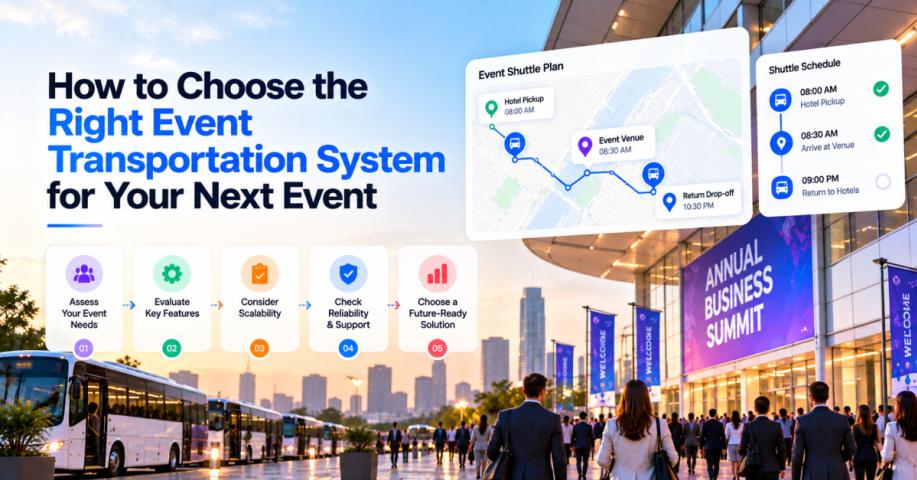
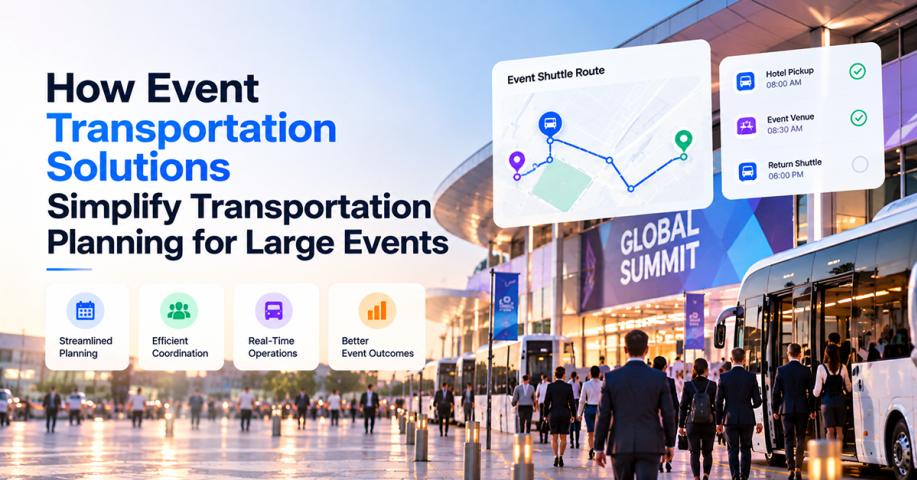
Dedicated Event Shuttle Software can help logistics teams manage shuttle routes, stops, schedules, vehicles, and trip information from a centralized environment.
This is particularly useful when transportation operates between multiple hotels, venues, parking areas, and event locations.
A centralized shuttle workflow also makes it easier to modify schedules when passenger demand or event timings change.
4. Use Scheduling Technology to Coordinate Trips
Creating transportation schedules manually can become time-consuming when hundreds of trips are involved.
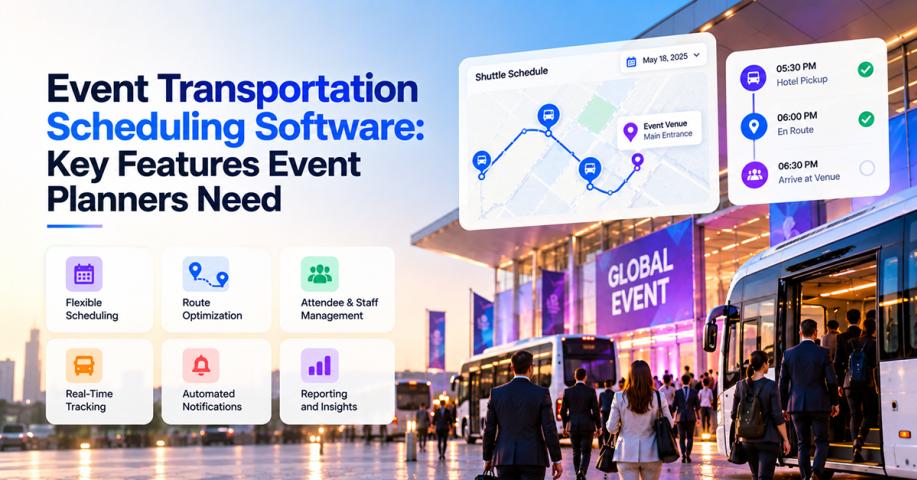
Event transportation scheduling software can help logistics teams organize trips based on vehicle availability, driver assignments, route requirements, passenger demand, and scheduled departure times.
Instead of maintaining multiple spreadsheets, teams can manage transportation schedules through a centralized system.
Scheduling capabilities should ideally support:
One-time trips
Recurring shuttle services
Multiple pickup points
Multiple vehicle types
Driver assignments
Trip modifications
Dispatch updates
Capacity-based scheduling
This reduces administrative work and makes it easier to identify scheduling conflicts before they affect event operations.
5. Coordinate Guest Transfers Efficiently
Guest transfers often require more flexibility than standard shuttle routes.
For example, airport arrivals may occur throughout the day, while VIP guests may have individual schedules. Some attendees may also need transportation between multiple venues.
An effective transportation workflow should allow logistics teams to coordinate different types of transfers without creating disconnected processes.
Guest transfer management can include:
Airport pickups
Hotel transfers
Venue transfers
Group transportation
VIP transportation
Executive transfers
Scheduled return journeys
Centralized trip information gives planners better visibility into where each guest or group needs to travel and which transportation resources are assigned to them.
6. Monitor Vehicles in Real Time
Even the most carefully planned route can be affected by real-world conditions.
Traffic congestion, road closures, accidents, unexpected stops, and event schedule changes can all impact transportation.
Real-time vehicle tracking gives logistics teams visibility into active trips.
Instead of waiting for a driver to report a delay, dispatchers can monitor vehicle locations and identify potential issues as they occur.
Real-time tracking can help teams:
Monitor vehicle locations
Identify delays
Check route progress
Estimate arrival times
Coordinate with drivers
Adjust transportation schedules
Inform guests about delays
This turns transportation management from a primarily reactive process into a more proactive operation.
7. Improve Fleet Utilization
Managing a large event fleet requires careful attention to vehicle capacity and availability.
Using too many vehicles can increase operating costs. Using too few can result in overcrowding, longer waiting times, and additional trips.
Transportation teams need visibility into which vehicles are available, where they are assigned, and how effectively they are being utilized.
Event Transportation Fleet Management can help teams coordinate vehicle resources alongside transportation planning and operations.
Fleet visibility can support better decisions about:
Vehicle assignments
Capacity utilization
Driver availability
Vehicle status
Trip allocation
Replacement vehicles
Fleet availability
Connecting fleet information with transportation scheduling can help ensure the right vehicle is assigned to the right trip at the right time.
Turn Event Transportation Into a More Controlled Operation
Managing shuttles, routes, and guest transfers efficiently requires coordination before and during the event. Manual processes can become difficult to manage when passenger volumes, vehicle counts, and transportation locations increase.
Modern event transportation systems provide a more connected approach by bringing scheduling, dispatch, fleet management, tracking, and passenger communication into a centralized workflow.
For event logistics teams, the objective is simple: make sure the right people reach the right place at the right time without creating unnecessary operational complexity.
With the right technology in place, event transportation can become more visible, responsive, and scalable—helping your team deliver smoother mobility from the first guest pickup to the final transfer.