Tokenized stocks reached a $3.1 billion market cap by early September 2026, up from under $1 billion at the start of the year. A year earlier the picture was very different: at the end of June 2026 the market stood at about $1.7 billion, compared with $329 million twelve months before.
Buying a share of a company has barely changed in decades. You open a brokerage account, place an order, and wait for a chain of intermediaries to settle the trade, often a day or more later. Stock tokenization promises a different approach: representing company shares as digital tokens on a blockchain. This guide explains what that means, how it works, and why it’s attracting attention from startups and Wall Street alike.
What Is Stock Tokenization?
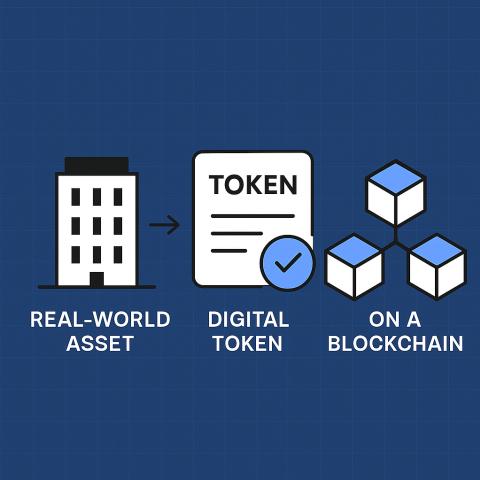
Stock tokenization is the process of creating a digital token on a blockchain that represents ownership of, or economic exposure to, a real-world equity. Each token is a unit of data recorded on a distributed ledger, such as Ethereum, Solana, or a private enterprise chain. The token can be held in a digital wallet, transferred between users, and programmed to follow specific rules.
Think of it like a digital receipt that’s also a tradable asset. Instead of a bank or broker keeping a private record of who owns what, the blockchain maintains a shared, tamper-resistant record.
How Does It Work?
The process usually follows four steps:
- Asset backing. A real share, or a basket of shares, is purchased and held by a regulated custodian or the issuing company.
- Token creation. A smart contract mints tokens that correspond to the underlying shares, commonly at a 1:1 ratio.
- Distribution. Tokens are sold or issued to investors, who receive them in a compatible wallet or brokerage account.
- Redemption and settlement. When an investor sells, the token is transferred to a buyer or burned, and the corresponding value or underlying share is settled.
Smart contracts automate much of this, including dividend distribution, transfer restrictions, and record-keeping. That automation is the core appeal: fewer manual steps, fewer reconciliation errors, and faster settlement.
Two Main Types of Tokenized Stocks
Not all tokenized stocks are equal, and the difference matters.
Tokens that represent actual ownership. In this model, the token is a legal digital form of the share itself, sometimes called a digital security or native tokenized equity. The blockchain ledger becomes the official record of ownership. This is the most ambitious model and requires the issuer’s participation and regulatory approval.
Tokens that track price exposure. Here, a third party holds the underlying shares and issues tokens that mirror the stock’s price. Holders typically get economic exposure, but they may not hold voting rights or direct legal title. Many early products have used this structure, and its rules vary widely by jurisdiction and platform.
Before buying any tokenized stock, always check which model you’re getting: do you own the share, or a claim on a company that owns the share?
Key Features That Make Tokenized Stocks Different
Fractional ownership. Tokens can be divided into very small units, letting people invest with small amounts. Fractional shares exist in traditional finance too, but blockchain makes divisibility native to the asset.
Extended trading hours. Blockchains run continuously, so tokenized assets can potentially trade 24/7 rather than during exchange hours. In practice, liquidity may still be thin outside regular market hours.
Faster settlement. Traditional equities settle in a short cycle after the trade. Tokenized assets can settle in minutes or seconds, reducing counterparty risk and freeing up capital.
Programmability. Smart contracts can embed rules such as automatic dividend payouts, investor eligibility checks, and transfer limits.
Global access. Anyone with an internet connection and a compatible wallet could, in theory, access assets that were once limited by geography. In reality, regulations often restrict who may buy certain tokens.
Why Are Companies and Institutions Interested?
Large financial institutions are exploring tokenization because it targets real inefficiencies. Clearing and settlement involve multiple intermediaries, each adding cost and delay. A shared ledger can cut reconciliation work, reduce errors, and make audit trails simpler.
For private companies, tokenization could make it easier to manage cap tables and offer limited liquidity to employees and early investors. For issuers, it opens new fundraising channels and a more direct relationship with shareholders.
Risks and Limitations Beginners Should Understand
Tokenization is promising, but it isn’t risk-free.
- Regulatory uncertainty. Securities laws differ by country, and rules for digital securities are still evolving. A product available in one region may be illegal in another.
- Counterparty risk. If the token is backed by shares held by a custodian, you’re trusting that custodian and the issuer to hold the assets properly.
- Liquidity risk. A tokenized stock may trade on few venues, leading to wider spreads and difficulty selling quickly.
- Technology risk. Smart contract bugs, wallet hacks, and lost private keys can cause real losses.
- Limited rights. Some tokens don’t carry voting rights or full shareholder protections.
- Price tracking gaps. A token’s market price can drift from the underlying stock, especially when the stock market is closed.
How to Evaluate a Tokenized Stock Product
Before investing, ask these questions:
- Who issues the token, and are they regulated?
- Who holds the underlying shares, and are they audited?
- Do I have legal ownership or only price exposure?
- What rights come with the token (dividends, voting)?
- Which blockchain is used, and how secure is the smart contract?
- Where can I trade it, and how liquid is the market?
- Is the product legally available in my country?
Key Features
- Fractional ownership: tiny units make small investments possible.
- Extended hours: blockchains run 24/7, though liquidity can be thin off-hours.
- Faster settlement: minutes instead of a trading cycle.
- Programmability: dividends and compliance rules can be automated.
- Global reach: limited in practice by local regulation.
Risks Beginners Should Understand
- Regulatory uncertainty: rules vary by country.
- Counterparty risk: you rely on the custodian and issuer.
- Liquidity risk: fewer venues mean wider spreads.
- Technology risk: smart contract bugs and lost keys cause real losses.
- Limited rights: some tokens carry no votes or dividends.
- Price gaps: token prices can drift from the stock when markets are closed.
A Quick Checklist Before You Buy
- Who issues the token, and are they regulated?
- Who holds the underlying shares?
- Do you own the share or just price exposure?
- What rights come with it?
- Is it legal in your country?
- How liquid is the market?
The Bottom Line
Stock tokenization is best understood as an upgrade to the plumbing of financial markets rather than a replacement for stocks themselves. Your investment is still a claim on a company, but the way it’s recorded, traded, and settled changes. For beginners, the opportunity is greater accessibility and efficiency. The caution is that products vary enormously in structure and protection.
Start small, read the legal documents, and treat tokenized stocks as a developing part of the market. As regulation matures and infrastructure improves, tokenization may become a normal part of how shares are issued and traded.