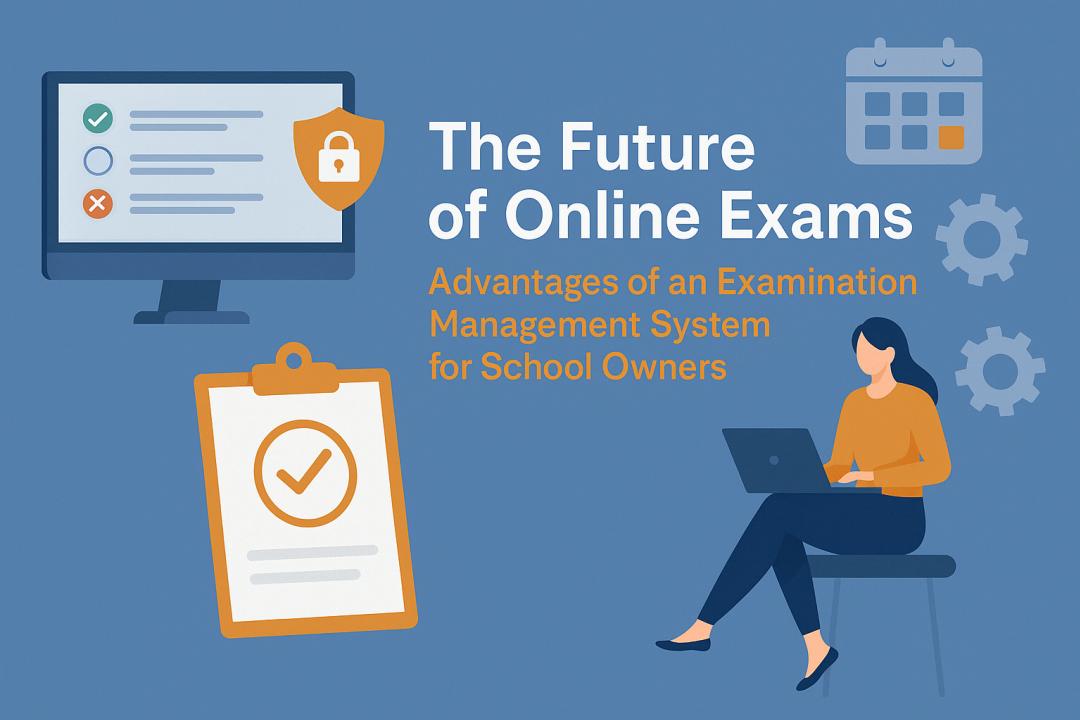

Schools today are at a pivotal crossroads. The traditional model of paper-based examinations—marked by logistical headaches, security gaps, and mounting administrative pressure—is rapidly losing ground. The emergence of Examination Management Systems (EMS) offers a transformative solution, enabling schools to move gracefully into the digital era. For school owners seeking to streamline operations, improve academic integrity, and prepare for the future of assessment, an EMS is no longer optional—it’s essential.
What Is an Examination Management System (EMS)?
An Examination Management System (EMS) is a digital platform that automates end-to-end exam workflows: scheduling, question paper creation, online/onscreen exam delivery, remote or manual marking, result compilation, analytics, and reporting. Whether your institution offers online, offline, or hybrid assessments, an EMS helps to centralize and standardize processes, reducing bottlenecks and human error. Ideal for routine classroom exams, distance learning, competitive tests, and national board exams, these systems offer flexible solutions for diverse assessment needs.
Why Traditional Exam Methods Are No Longer Enough
Persisting with paper-based examinations comes with growing challenges:
-
Human error & administrative burden: Manual printing, logistics coordination, and physical storage of exam materials consume precious time and resources.
-
Environmental impact: Schools spend thousands each year on paper and storage—a cost to both the budget and the planet.
-
Escalating security risks: From paper leaks to photographed answer scripts, there are too many weak links in traditional systems.
-
Pandemic-driven shift: COVID-19 forced schools to conduct exams remotely, revealing how outdated manual systems could be. EMS offers a smooth and secure way to adapt.
Top Benefits of an Examination Management System for Schools
1. Efficiency and Automation
EMS automates exam creation, scheduling, delivery, evaluation, and result publication—all at scale. It eliminates delays caused by manual paperwork and accelerates end-to-end exam cycles.
2. Enhanced Security and Anti-Cheating
From randomized question banks and browser lockdowns to AI-based remote proctoring, modern EMS platforms deliver robust security. Many use student identity verification and live AI surveillance, minimizing the likelihood of cheating.
3. Scalability and Flexibility
EMS can accommodate hundreds—or even tens of thousands—of test-takers simultaneously. Scheduling flexibility is high: exams can be held anytime and anywhere, making EMS particularly useful for multi-location institutions.
4. Real-time Analytics and Reporting
Instantaneous grading and real-time dashboards empower teachers and administrators to track performance trends, identify learning gaps, and adjust instructional strategies rapidly.
5. Cost Savings and Sustainability
Paper, printing, storage, invigilation, and logistics expenses are significantly reduced. Transitioning to a paperless, digital exam model opens the door to meaningful savings while promoting environmental responsibility.
6. Accessibility and Inclusivity
EMS empowers students to take exams remotely—ideal for learners in remote regions, with mobility challenges, or in situations that prevent them from attending traditional exam venues.
7. Diverse Exam Formats
EMS platforms support an array of question types—MCQs, short answers, essays, interactive formats, and even multimedia or coding questions—empowering educators to tailor assessments to learning objectives.
Empowering School Owners with Data and Control
An EMS isn’t just about smoother operations—it serves as a strategic decision-making engine for leaders:
-
Enhanced resource planning: Administrators can better align faculty workloads, room allocations, and exam schedules using granular performance and process data.
-
Centralized operations, decentralized execution: Schools with multiple campuses benefit from unified configuration and reporting—while individual teachers or sites still manage their exams locally.
-
Transparency & accountability: Secure, digitally traceable evaluation minimizes bias. Automated anonymization during marking reinforces fairness.
Real-World Success Stories
Rajasthan State Open School, India
In 2025, the Rajasthan State Open School transitioned to fully digital answer-sheet evaluation. Over 500,000 answer sheets were scanned, anonymized, and digitally graded—processing up to 18,000 papers per day. This reduced result processing time, enabled flexible teacher schedules, and enhanced transparency.
Global examples
Digital marking (e-marking) systems have been widely adopted for A-levels and SATs in countries like the UK and USA. These systems conceal student identities during marking—enhancing fairness, speeding grading, and ensuring data integrity.
Choosing the Right Examination Management System
When evaluating EMS options, school owners should watch for:
-
Ease of use: Intuitive UI that teachers and administrators can adopt quickly.
-
Compliance & integrations: Support for data privacy regulations and seamless integration with your Student Information System or LMS.
-
AI proctoring with safeguards: Look for proctoring features that respect student privacy, overcome bias, and are ethically implemented.
-
Scalability: Does the platform reliably support large, simultaneous exam sessions?
-
Analytics depth: Can the platform provide longitudinal data, identify trends, and generate customizable reports?
-
Vendor support: Easily accessible onboarding, training, and responsive customer service are essential.
Conclusion
The shift toward digital examination systems is more than a trend—it reflects the new reality of efficient, secure, scalable, and inclusive education. For school owners, embracing an EMS means unlocking organizational efficiency, strengthening academic integrity, empowering data-driven decision-making, and reinforcing commitment to sustainable practices.
The future of examinations is digital—and the question is not if schools will embrace it, but how quickly they can adapt. If you're ready to future-proof your institution, start exploring EMS solutions today.
Quick FAQ
Q: Are EMS platforms suitable for small schools?
A: Absolutely—many systems offer flexible plans suited to all sizes and still deliver strong value even for low-volume use.
Q: How reliable are online proctoring tools?
A: When configured responsibly—with clear guidelines, human oversight, and options for appeals—they can be very reliable.
Q: What about students with disabilities?
A: Leading EMS platforms offer accommodations—extended time, accessible interfaces, and adjustable timing—to meet diverse student needs.