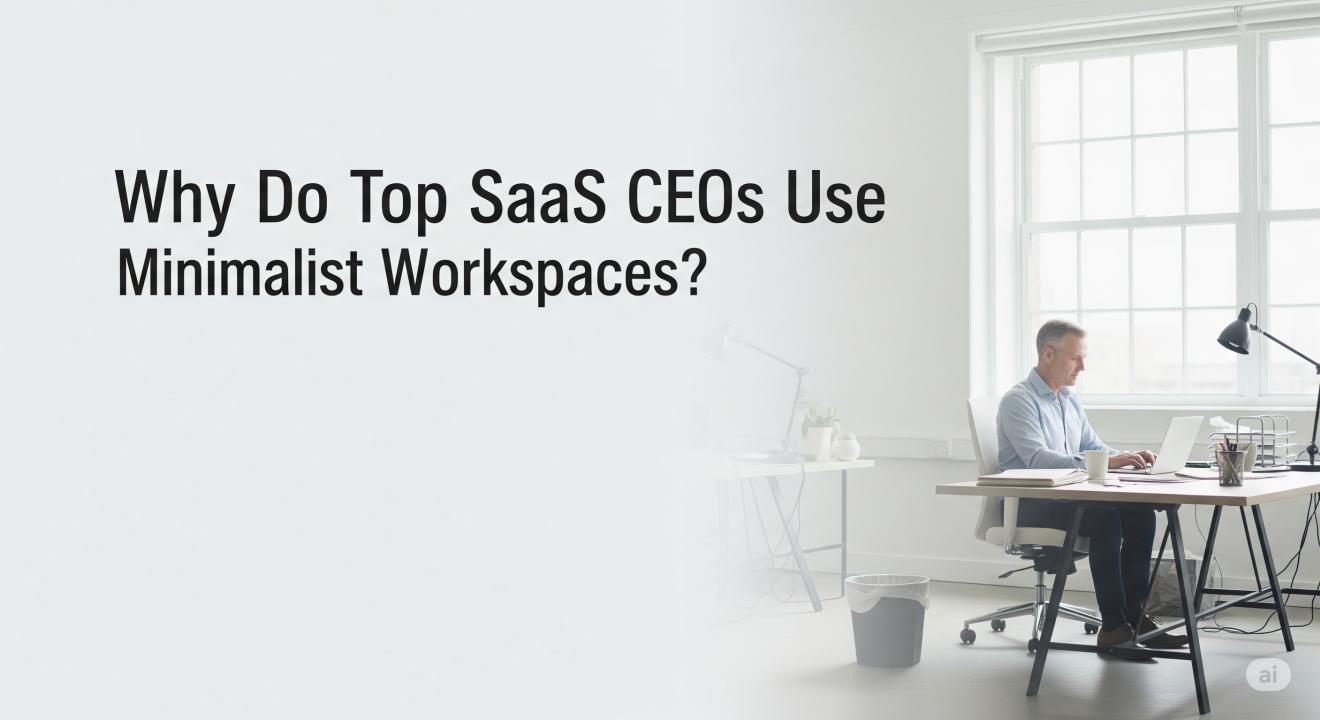
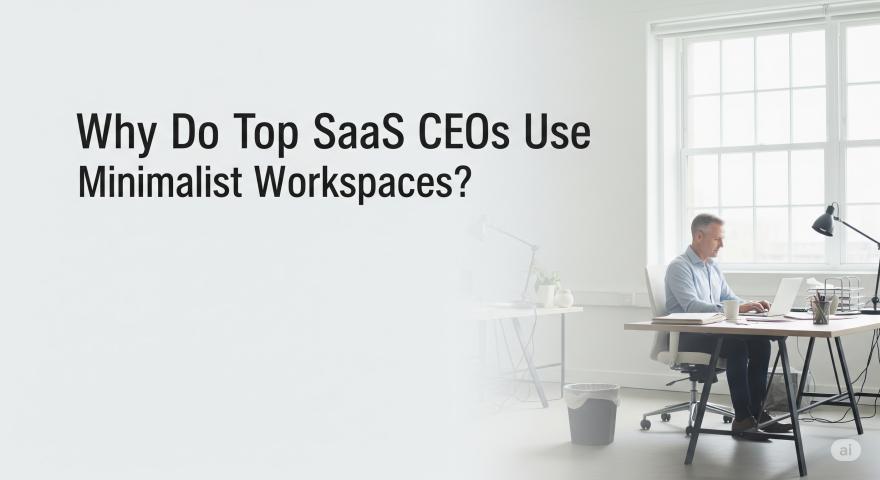
Why Do Top SaaS CEOs Use Minimalist Workspaces?
Walk into any top SaaS CEO's office and you'll notice something striking. No clutter. No fancy gadgets. Just clean lines and essential items.
This isn't about being cheap or showing off. It's about peak performance.
The Science Behind Clear Spaces
Your brain processes visual information constantly. Every item in your view demands attention. A messy desk means your mind works harder just to focus.
Research shows cluttered spaces increase stress hormones. They make decision-making slower. They drain mental energy you need for big choices.
Smart CEOs know this. They design their workspace to support their brain, not fight it.
What You'll Find in a CEO's Minimalist Office
Most successful SaaS leaders keep these basics:
Essential Tech Only
- One high-quality monitor or laptop
- Simple desk lamp
- Charging station (hidden from view)
- Noise-canceling headphones
Minimal Furniture
- Clean desk with no drawers
- Ergonomic chair
- One bookshelf or cabinet
- Standing desk option
Carefully Chosen Items
- Single notebook and pen
- Water bottle
- One meaningful photo or art piece
- Small plant (if any decoration at all)
That's it. Nothing more.
Why This Works for High-Stakes Decision Making
Running a SaaS company means constant choices. Which features to build. Which markets to enter. Which people to hire.
Every decision shapes the company's future. CEOs can't afford mental fog.
A Minimalist Home Office removes distractions. It creates mental clarity. It helps leaders think through complex problems without visual noise.
The Productivity Boost
Top CEOs often work 12-16 hour days. They need every advantage possible.
Minimalist spaces offer several benefits:
Faster Focus No time wasted looking for things. Everything has a place. You can dive into work immediately.
Better Video Calls Clean backgrounds look professional. No distractions for meeting participants. All focus stays on the conversation.
Reduced Stress Less visual chaos means lower cortisol levels. Your body stays calm under pressure.
Clearer Thinking Without clutter competing for attention, your brain can process information better.
The Psychology of Control
CEOs face constant uncertainty. Market changes. Competitor moves. Team challenges.
Their workspace becomes one thing they can completely control. Every item serves a purpose. Nothing is random or accidental.
This control creates psychological calm. It provides a mental anchor in chaotic times.
How Minimalism Reflects Company Values
SaaS companies succeed through simplicity. The best products are intuitive and clean.
A CEO's minimalist workspace reflects these same values. It shows they practice what they preach.
Employees notice. Investors notice. Partners notice.
The workspace becomes a visual statement about the company's approach to problem-solving.
Common Mistakes to Avoid
Many people try minimalism but get it wrong. Here are the biggest errors:
Going Too Extreme Some remove everything, including necessary tools. You still need basic items to work effectively.
Ignoring Comfort A bare room isn't automatically better. You need proper lighting, seating, and temperature control.
Forgetting Personality One meaningful item can humanize the space without creating clutter.
Focusing on Looks Only True minimalism is about function, not just appearance. Every item should serve a clear purpose.
The Financial Angle
Minimalist offices cost less to set up and maintain. This matters for growing companies watching every dollar.
High-quality basics last longer than cheap alternatives. A good desk and chair can serve you for decades.
Less stuff means less to replace, repair, or upgrade. Your office budget stays predictable.
Creating Your Own Minimalist Workspace
Start by removing everything from your desk. Add items back only if they're essential for daily work.
Ask yourself: "Do I use this weekly?" If not, find it a home elsewhere.
Choose quality over quantity. One excellent monitor beats two mediocre ones.
Keep cables hidden. Use cord management solutions to maintain clean lines.
Invest in good lighting. Natural light works best, but quality LED lamps help too.
The Ripple Effect
When CEOs model minimalist workspaces, it influences company culture. Teams start questioning what they really need.
This thinking extends beyond desks. It affects product design, feature decisions, and company processes.
Less becomes more throughout the organization.
Technology and Minimalism
Modern SaaS CEOs embrace digital minimalism too. They use fewer apps but choose powerful ones.
Cloud storage replaces physical files. Digital tools reduce paper needs. Automation handles routine tasks.
The physical workspace mirrors the digital approach. Clean, simple, and purposeful.
The Competitive Edge
While competitors fight over flashy offices, smart CEOs focus on what matters. Clear thinking. Fast decisions. Consistent execution.
A minimalist workspace supports all three. It's a strategic advantage disguised as interior design.
What About Creativity?
Some worry that minimal spaces stifle creativity. Research suggests the opposite.
Constraints often boost creative thinking. When you can't rely on external stimulation, your mind generates more original ideas.
The best innovations come from focused thinking, not busy environments.
Building the Habit
Creating a minimalist workspace takes time. Start small. Remove one unnecessary item each day.
Focus on your most important work surface first. Usually, that's your desk.
Maintain the space daily. Put things back where they belong. Don't let clutter creep back in.
The Long-Term View
Minimalist workspaces aren't about following trends. They're about optimizing for long-term success.
Today's SaaS market moves fast. Companies that can adapt quickly win. Leaders who think clearly make better decisions.
Your workspace should support these goals, not hinder them.
Measuring Success
Track how minimalism affects your work. Do you feel less stressed? Can you focus longer? Are meetings more productive?
Most CEOs report significant improvements within weeks. The changes compound over time.
The Bottom Line
Top SaaS CEOs use minimalist workspaces because they work. They reduce stress, improve focus, and support clear thinking.
This isn't about aesthetics or trends. It's about optimizing for peak performance in a demanding role.
Your workspace shapes your thinking. Make it count.
According to Harvard Business Review, cluttered spaces can decrease productivity by up to 40%. For CEOs making million-dollar decisions, that's a risk they can't afford.
FAQ
Q: How much does it cost to create a minimalist CEO workspace? A: You can start for under $1,000 with a quality desk, chair, and lighting. Focus on a few high-quality items rather than many cheap ones.
Q: Won't a minimalist office look boring to employees and visitors? A: Clean and professional spaces actually make stronger impressions than cluttered ones. They signal focus and competence.
Q: How do I store all my files and supplies in a minimalist office? A: Use digital storage for files and keep physical supplies in closed cabinets or drawers. The key is keeping surfaces clear, not eliminating necessary items.
Q: Can minimalism work for collaborative spaces too? A: Yes. Conference rooms benefit from minimal design. Remove unnecessary furniture and decorations. Keep only essential meeting tools visible.
Q: How long does it take to see productivity benefits? A: Most people notice improved focus within 1-2 weeks. The full benefits typically develop over 30-60 days as new habits form.
Q: What if I work from home? Do the same principles apply? A: Absolutely. Home offices need minimalism even more because of additional distractions. Create a dedicated workspace that's separate from living areas.
Q: Should I get rid of all personal items? A: Keep one meaningful item if it brings you joy. The goal is intentional choices, not complete sterility.
Q: How do I maintain a minimalist workspace over time? A: Set up systems for everything. Have designated places for all items. Do a 5-minute cleanup at the end of each day.
Q: What about clients who expect impressive offices? A: Quality impresses more than quantity. Well-designed minimalist spaces often look more expensive than cluttered ones.
Q: Can minimalism hurt creativity? A: Research shows constraints often boost creativity. A clean environment lets your mind generate ideas rather than processing visual distractions.