Artificial intelligence is changing the way companies interact with their customers. It streamlines, expedites, and personalizes interactions. AI enables businesses to provide the prompt responses and specific assistance that today's customers demand.
Understanding Customer Needs
AI examines huge amounts of data. It examines browsing history, purchasing patterns, and user reviews. It gains insight from this and forecasts what a customer might require next. This enables companies to react in a way that appears useful and personal. AI can, for instance, highlight new products in the fitness category if a person frequently shops for them. This enhances the experience's usefulness and engagement.
Personalization in Action
One of AI's immediate applications is personalization. Products that match previous purchases can be suggested by online retailers. Streaming services make show suggestions based on user viewing habits. These days, even banking apps offer user-specific spending insights.
Customization helps clients feel heard. They receive content or products that align with their interests rather than having to scroll through countless options. This improves the relationship with the brand and saves time.
Smarter Customer Support
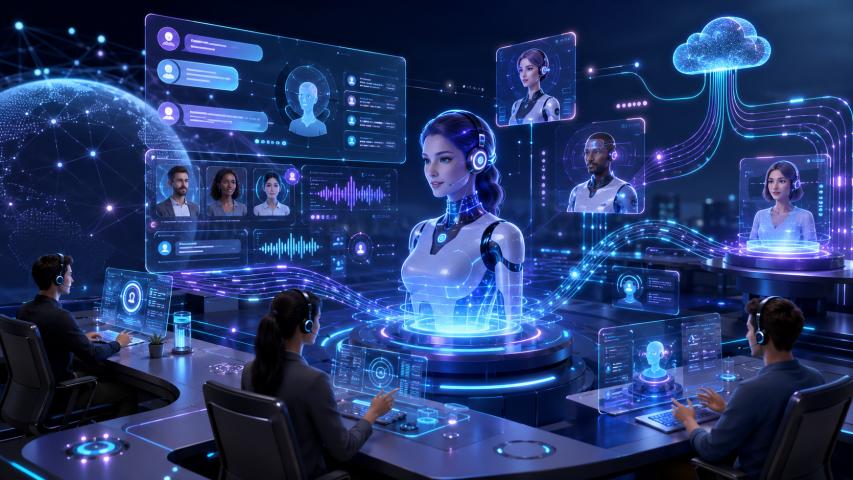
Customer service now heavily relies on AI chatbots and virtual assistants. At any time of day, they are able to respond to frequently asked questions. This reduces wait times and promptly provides customers with the help they want. An airline chatbot for this reason can assist with flight tracking or offer baggage information in a matter of seconds.
AI can transfer the discussion to a human agent for complex problems. It guarantees that the customer doesn't have to repeat information by sharing the specifics of the previous chat. As a result, the entire support process is less frustrating and more effective.
Improving Business Decisions
AI is more than just face-to-face customer service. It also helps teams in the background. AI tools aid employees in comprehending customer journeys. They could show why customers abandon a cart or where they pause in a sales process. Businesses can use these insights to make adjustments that will directly enhance the customer experience.
In this case, the company knows what to do if AI reveals that a website's slow loading times cause many users to abandon it. They improve the smoothness and enjoyment of the customer journey by resolving this.
Predicting Future Needs
Adaptive AI tools are giving way to predictive ones. They are now able to foresee client needs before they even materialize. Before customers notice a slowdown, a telecom company can use AI to identify network problems. Reminders can be sent at the appropriate time by an online retailer that can predict when a customer is likely to place another order.
These proactive measures facilitate more seamless experiences. Additionally, they foster trust by suggesting to clients that companies are concerned about finding early solutions to issues.
Creating Consistency Across Channels
Many people use various channels to interact with businesses. They may browse online, post inquiries on social media, and then buy something in-store. All of these touchpoints are connected by AI. Everywhere where the customer interacts, it produces a consistent experience.
AI can be used, for instance, by a clothing company to recall what a customer has seen online and recommend related products when they visit the physical store. A connected journey like this seems easy and convenient.
Balancing AI with Human Touch
Actually its strength, AI is not intended to take the place of people. Empathy, comprehension, and creativity are still valued by people. A combination of both is the most effective strategy. Humans focus on intricate interactions that require emotional intelligence, while AI manages repetitive and data-intensive tasks.
For easy queries, a customer can prefer prompt chatbot responses, but when making a significant decision, they still prefer to speak with a human. Customers will feel valued and supported thanks to this balance.
Conclusion
AI is changing consumer experiences in easy and effective ways. It anticipates needs, speeds up support, personalizes services, and links journeys across various channels. Actually, it functions best when paired with human creativity and care.
As a result, relationships between companies and clients are more intelligent, seamless, and significant. AI will have a greater influence on how people use services in their daily lives as it develops.