
A Blockchain Development Company is a group of experts who build and maintain specialized digital systems for businesses using blockchain technology. Simply put, they help companies use this secure, shared digital ledger to solve business problems, create new services, and improve how they handle data and transactions.
The core work of a blockchain development company involves creating custom digital solutions like secure payment systems, transparent supply chain trackers, or automated digital agreements called smart contracts. By using blockchain’s features—like its ability to create records that cannot be changed (immutability) and its decentralized structure—these companies help modern digital businesses become more secure, open, and efficient, giving them a competitive edge.
Transform Complex Processes with Blockchain Technology – Begin Now!
What is a Blockchain Development Company and Why Does it Matter for Digital Business?
A blockchain development company acts as a technology partner, helping organizations apply the principles of the blockchain ledger to their unique business needs. Traditional businesses rely on central authorities, like a bank or a government office, to verify and record transactions. Blockchain offers a different approach: a distributed ledger where copies of the data are held by many computers (nodes) in a network. This makes the data incredibly resistant to unauthorized changes and creates a clear, shared record of information.
The move toward digital business platforms means more data exchange and transactions are happening online. As a result, businesses urgently need to address issues of trust, data security, and operational speed. This is where the development company steps in. They provide the necessary technical skill to build applications and platforms that inherit the security and transparency features of the underlying blockchain technology.
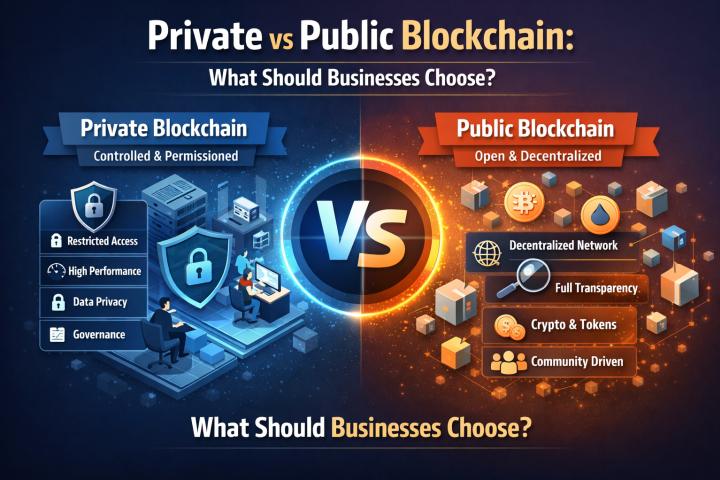
Their expertise extends beyond just programming; it includes advising on the best way to structure a digital product to maximize the benefits of decentralization and security. They help businesses determine if a public blockchain (open to anyone) or a private blockchain (permission-based) is the better fit for their goals, ensuring the final product meets regulatory and business requirements.
Creating Custom Blockchain Solutions for Digital Businesses
One of the main functions of a specialized development company is creating custom blockchain solutions for digital businesses. This is not about using an existing, general-purpose blockchain as-is, but building an application or network that is perfectly suited to a specific industry's or company’s internal operations.
Analysis and Design of a New Digital System
The process starts with a deep dive into the client's existing business processes. The developers work to pinpoint areas where a decentralized, immutable ledger would offer clear benefits, such as tracking assets, verifying identities, or automating payments. They ask questions like:
What information needs to be shared among various parties?
Which current processes are slow, expensive, or prone to fraud?
What level of privacy is needed for the data?
Based on this analysis, the company designs the basic structure of the new system. This design involves key technical choices, including:
Choosing the Blockchain Type: Deciding between a public (like Ethereum or Bitcoin), a private (like Hyperledger Fabric), or a consortium blockchain. Private and consortium blockchains are often favored by businesses because they allow for control over who can participate in the network.
Selecting the Consensus Mechanism: This is the method the network uses to agree on the next block of data. Options like Proof-of-Work, Proof-of-Stake, or Proof-of-Authority are considered based on the required speed, security, and energy use. A company specializing in custom blockchain platform development will choose the method that best supports the application's transaction volume and security needs.
Building the Network and Applications
After the design is finalized, the blockchain developers start building the actual network. This involves writing the core logic, or "smart contracts," which are the self-executing rules of the system.
For a supply chain application, for instance, the custom solution might include:
A secure digital ledger to record the movement of goods.
Specialized programming that automatically verifies a product's authenticity as it moves between different checkpoints.
User interfaces (the application's front-end) that allow partners to easily input and view the recorded data.
The creation of these custom systems is about delivering a unique digital business ledger that seamlessly fits into the company's existing technology environment. This process ensures the new system is not just technologically advanced but also practical, scalable, and fully addresses the business problem it was meant to solve.
Smart Contract Implementation for Business Automation
One of the most powerful elements a blockchain development company offers is smart contract implementation for business automation. A smart contract is simply a piece of computer code stored on a blockchain that automatically runs an agreement when specific conditions are met. Think of it as a digital agreement that enforces itself without the need for a lawyer, bank, or other middleman.
Automating Agreements and Workflows
The development company builds these contracts by coding the terms and conditions of a traditional agreement into a digital format. The contract is then placed on the blockchain. Once the predetermined conditions are verified by the network, the code executes the agreement automatically. This brings major efficiency gains to many business operations:
Automated Payments: A smart contract can hold payment funds in escrow and automatically release them to the seller only when a shipment's tracking data confirms delivery to the buyer's location.
Inventory Management: When a sensor registers that stock has fallen below a certain point, a smart contract can automatically place an order with a pre-approved supplier.
Supply Chain Validation: An agreement for high-value goods might dictate that a payment is only released if the product's temperature data (recorded by an Internet of Things or IoT device) never went outside a certain range during shipping. The smart contract checks the data on the ledger and executes the next step—payment or notification—accordingly.
The Role of the Smart Contract Developer
The professionals who create these agreements are sometimes called smart contract developers. They require expertise in specific programming languages, like Solidity for Ethereum-based systems, and a clear grasp of legal and business logic. They must write code that is flawless because, once deployed to the blockchain, the contract cannot usually be changed. This need for perfection highlights the 'Expertise' and 'Trustworthiness' aspects of the development company’s services. They are responsible for making sure the automation works exactly as intended, saving the business time and reducing the risk of human error or contractual disputes.
Building Secure Digital Ledgers for Data Integrity
The fundamental purpose of a blockchain development company is to create secure digital ledgers for data integrity. This relates directly to the core features of blockchain technology: security and immutability.
Enhancing Data Security with Cryptography
Every block of information added to the chain is secured using advanced math called cryptography. Each new block contains a unique code (a cryptographic hash) that is mathematically linked to the previous block. If anyone tries to alter the data in an old block, the unique code for that block changes, which then breaks the link with the next block in the chain. Because the change is instantly visible to the entire network, the attempted alteration is rejected, effectively making the data tamper-proof.
The development company ensures this security is correctly set up for the business application. This involves:
Private Key Management: Implementing secure methods for users to manage their private digital keys, which are needed to authorize transactions.
Permission Layers: In a private or consortium blockchain, the company builds permission controls to determine exactly which user groups can view, add, or verify specific types of data, keeping sensitive business information private while maintaining transparency among authorized partners.
Guaranteeing a Single Source of Truth
For digital businesses, having an undisputed record of events is extremely valuable. In a traditional system, different departments or partner companies often keep their own separate records, which can lead to disagreements and time wasted on reconciliation.
A blockchain solution provides a single source of truth for business data. All authorized members of the network share the same copy of the ledger. This shared, unchangeable record:
Increases Transparency: All parties can instantly see the history of a transaction or asset.
Simplifies Auditing: Regulatory compliance and internal checks become easier because the data is consistent and verifiable.
Reduces Fraud: The cost of changing the data is simply too high, discouraging malicious activity.
This core function of building a highly secure and shared ledger is often summarized as providing decentralized data management services, which is a key offering from any reputable blockchain development partner.
Implementing Decentralized Applications (dApps) for User Services
A major service provided by development companies is the creation of implementing decentralized applications (dApps) for user services. A dApp is a software program that runs on a decentralized computer network rather than a single server controlled by one company.
Distinguishing dApps from Traditional Apps
Unlike a typical smartphone app (like a banking app) where the company holds all the user data and controls the application's logic, a dApp’s backend code (the smart contracts) and its data are stored on the blockchain. This offers distinct advantages:
No Single Point of Failure: Since the dApp is spread across many computers, it is extremely difficult for hackers to take it down or for the company that built it to arbitrarily shut it off.
User Control: Users often have more control over their own data and assets because the rules of the dApp are set by the publicly visible code (the smart contract) and not by a hidden company policy.
For a digital business, a dApp can be used to build things like:
Decentralized Finance (DeFi) platforms that offer lending or trading without traditional banks.
Digital voting systems for corporate governance.
Transparent loyalty or reward programs where customers can instantly verify their points or assets.
The Role in dApp Development
The development company handles the entire cycle of decentralized application creation. This includes:
Defining the Logic: Working with the business to decide what the dApp will do and writing the smart contracts that contain the rules.
Building the Interface: Creating a user-friendly front-end (the part the user sees) that connects seamlessly to the smart contracts on the blockchain.
Ensuring Scalability: Designing the dApp so it can handle a large number of users and transactions without slowing down.
By offering dApp creation, the development company helps businesses move beyond simple transaction recording and build completely new, user-centric digital products that emphasize trust and self-governance.
Maintenance, Support, and Upgrading Digital Ledger Systems
The role of a blockchain development company does not end when the system is launched. They are critical for the maintenance, support, and upgrading digital ledger systems to ensure long-term stability and effectiveness.
Ongoing System Monitoring and Security
A deployed blockchain application needs continuous attention. New security threats appear over time, and the underlying blockchain protocols may be updated. The company provides necessary services to:
Monitor Network Health: Ensure all network nodes are running correctly and that transactions are being processed quickly.
Apply Security Patches: Update the smart contracts or the network’s core software to fix any vulnerabilities that may be discovered. This is a delicate process, as changing smart contract logic is often challenging due to the immutable nature of the blockchain.
Dispute Resolution Support: While smart contracts reduce disputes, the development company may be needed to help interpret the execution of the code if an unexpected event occurs.
This ongoing support, including digital ledger system upgrades, is vital because the system handles critical business data. A simple bug or security flaw could result in significant losses or the corruption of essential data.
Future-Proofing the Business Solution
The digital world evolves quickly. A blockchain solution that is perfect today may need new features tomorrow to keep up with competitors or changing user demands. The development company assists with the strategic planning and implementation of new functionalities, such as:
Adding New Smart Contracts: Implementing new automation features for different business processes.
Integrating with Other Systems: Connecting the blockchain ledger to the company’s existing accounting software, internal databases, or external services (known as oracles).
Scalability Planning: If the business grows and transaction volume increases, the team plans and implements upgrades to the network to ensure it can handle the heavier load without performance issues.
The continuous involvement of the development company guarantees that the initial investment in a blockchain system remains valuable, secure, and ready to adapt to the future needs of the digital business. Their commitment to long-term support is a mark of their reliability and expertise.