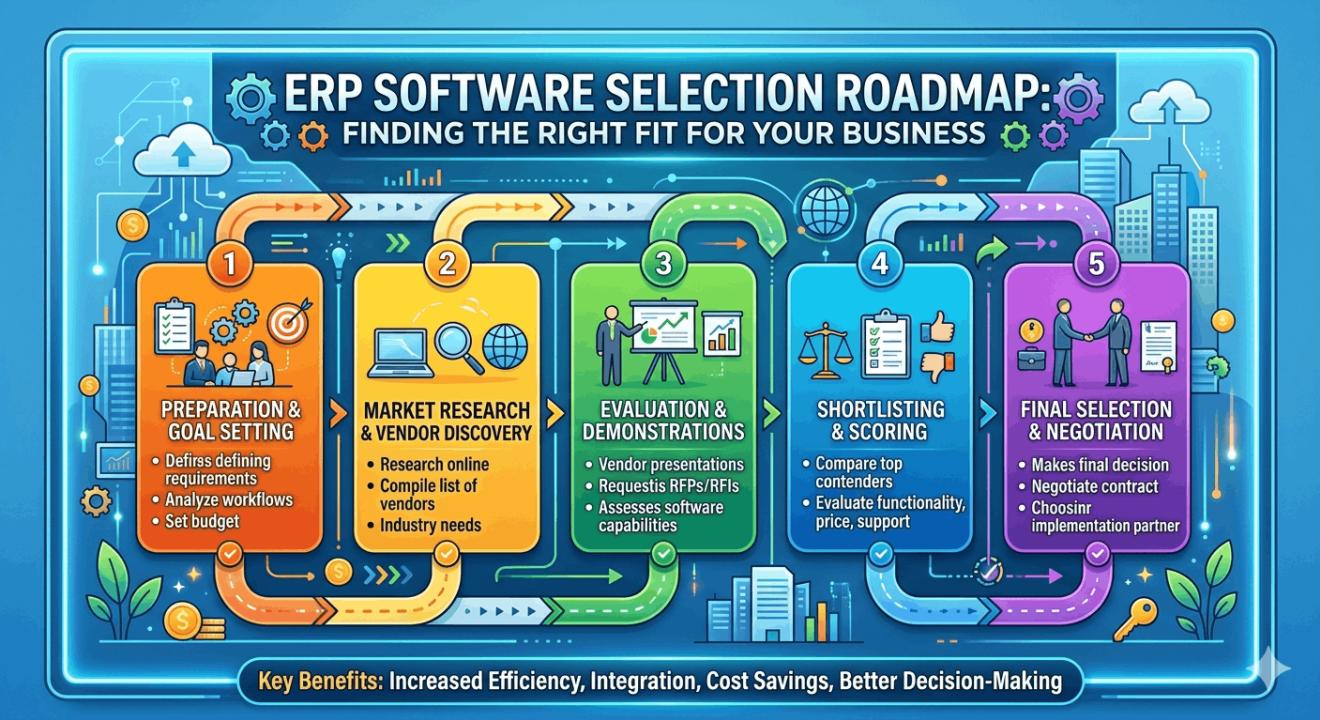
Businesses today need a system that keeps everything connected. From sales and accounts to inventory and customer records, every task should work together without confusion. ERP software helps manage all these operations in one place. The real challenge is choosing the right system, especially when deciding between custom-built solutions and ready-made software.
Understanding Operational Needs
Before selecting an ERP system, businesses must look at how they operate daily. While comparing custom erp vs off the shelf, it is important to check which option fits better with current processes. Custom ERP systems are built according to specific requirements, while ready-made ERP software offers standard features. Many companies also review ready made erp vs custom erp to make a clear decision. An erp comparison guide helps in breaking down these options.
Custom ERP for Better Adaptability
Custom ERP systems are designed to support unique business workflows. One of the key custom erp advantages is that companies can create features that match their needs. This reduces unnecessary steps and improves productivity. The erp customization benefits also allow businesses to make updates whenever required, making the system useful for long-term growth.
System Performance and Growth
An ERP system should be able to handle future growth without problems. Custom ERP solutions offer better scalability because they can be modified as needed. Ready-made ERP systems may work well initially but can become restrictive over time. When analyzing custom erp vs off the shelf, businesses should consider how well the system can grow with them. An erp comparison guide helps in evaluating these factors.
Ready-Made ERP and Its Drawbacks
Ready-made ERP systems are popular because they are easy to set up and require less time to implement. However, they may not always match business requirements. The off the shelf erp limitations include limited flexibility and fixed features. Businesses may need to adjust their operations to fit the system, which can reduce efficiency.
Cost and Long-Term Planning
Budget plays an important role in ERP selection. Ready-made ERP systems usually have lower starting costs, which makes them suitable for small businesses. However, additional costs for upgrades and features can increase over time. Custom ERP systems require a higher initial investment but focus only on necessary features, which helps manage long-term expenses. Businesses often use an erp comparison guide to understand the cost differences in custom erp vs off the shelf.
Final Words
Selecting the right ERP system is important for smooth business operations. Ready-made ERP solutions are useful for quick setup and basic needs, while custom ERP systems provide better flexibility and long-term value. By understanding custom erp advantages, erp customization benefits, and off the shelf erp limitations, businesses can make better decisions. A well-planned ERP system helps improve efficiency, reduce errors, and support steady business growth.