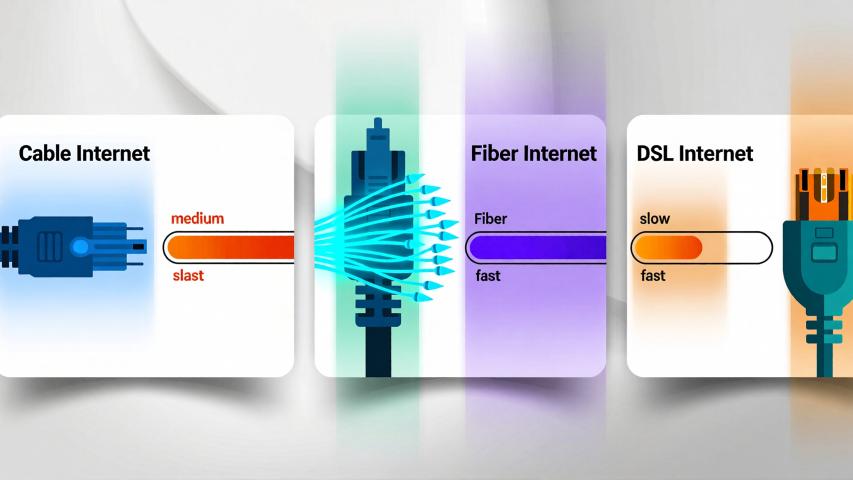
If you’re trying to choose the right home internet, you’ve likely come across the three main wired options: DSL Internet, Cable Internet, and Fiber Internet. If you have found yourself searching “Cable vs Fiber vs DSL, what’s the difference?”, you’re not the only one.
The internet landscape can seem confusing until you understand how each connection works and what it’s best for. The good news is that once you break it down, selecting the right broadband type becomes quite simple.
We’ll compare DSL, Cable, and Fiber in an easy-to-understand manner. By the end, you’ll confidently choose the type of internet that works for your home, budget, and daily online needs.
Why Choosing the Right Internet Type Actually Matters
Your internet type affects everything:
- How fast your videos load3
- Whether Zoom calls freeze
- How smoothly your games play
- How well multiple devices run at the same time
Many people pick a plan based solely on price and later regret it when their speed doesn’t meet their needs. That’s why it’s smart to understand the strengths and weaknesses of DSL, Cable, and Fiber before making a decision.
Let’s break them down one by one.
DSL Internet: The Old Reliable Option
DSL Internet (Digital Subscriber Line) uses your home’s existing telephone lines to provide broadband. Don’t worry, this isn’t dial-up. You can still make calls, and the connection is much faster than the old telephone-based internet.
How DSL Works
DSL sends digital signals through copper phone lines. Since these lines are available in most neighborhoods, including rural and suburban areas, DSL is often the most widely available wired option after Cable.
Why People Choose DSL
- Budget-friendly prices
- Reliable enough for everyday tasks
- Good for email, browsing, video calls, and SD/HD streaming
- Works well in areas with limited infrastructure
Where DSL Struggles
- Speeds are much slower compared to Cable and Fiber
- Performance depends heavily on how close you are to the ISP’s nearest equipment
- Not ideal for 4K streaming, gaming, or multi-device households
Best For
Light users, casual streamers, small families, or anyone who wants affordable home internet without extreme speed needs.
Cable Internet: The Fast and Popular Middle Ground
Cable Internet uses coaxial cables the same ones used for cable TV to bring internet into your home. These cables are built to carry large amounts of data, making Cable Internet considerably faster than DSL.
How Cable Works
Cable networks send data through copper coax lines that are shared among multiple homes in your area. While the lines are quick, speeds can slow down during busy evening hours.
Why People Choose Cable
- Fast download speeds, suitable for streaming, gaming, and work
- Widely available in cities, towns, and suburbs
- More stable than DSL
- Good pricing options
Where Cable Has Limitations
- Upload speeds are lower than download speeds
- Speeds may slow during peak hours
- More expensive than DSL
Best For
Families, streamers, gamers, remote workers, and anyone needing strong, consistent broadband without paying fiber-level pricing.
Fiber Internet: The Fastest and Most Advanced Option
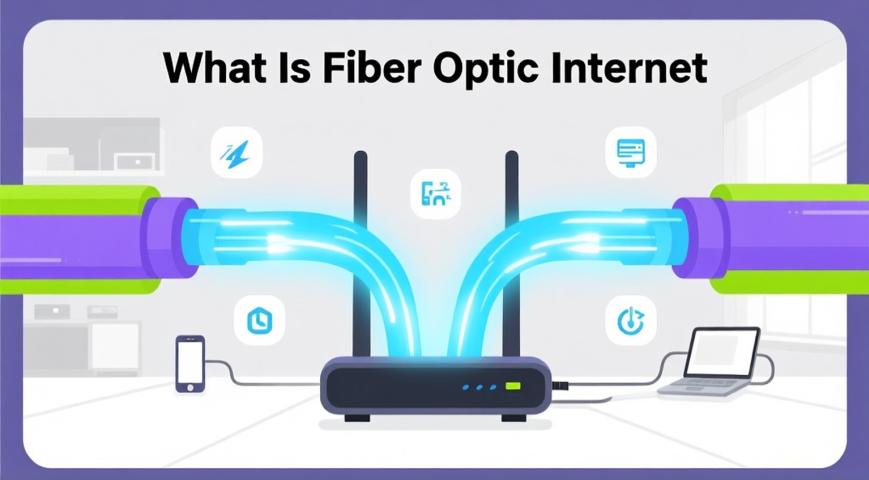
If you want the best home internet, go for Fiber Internet. This connection type uses fiber-optic cables thin glass strands that send data using light instead of electrical signals. It’s very fast, highly reliable, and designed for heavy internet use.
How Fiber Works
Fiber moves data at nearly the speed of light. Unlike DSL and Cable, fiber isn’t affected by distance or neighborhood congestion.
Why People Choose Fiber
- Fastest speeds available today
- Symmetrical downloads and uploads
- Perfect for large households
- Ultra-reliable for Zoom, cloud backups, smart homes, and 4K/8K streaming
- Extremely low latency (great for gaming)
Where Fiber Falls Short
- Availability is still limited in many areas
- Installation can be costly in new neighborhoods
- Not as widespread as DSL or Cable
Best For
Heavy internet users, work-from-home professionals, gamers, streamers, creators, and anyone who wants the smoothest, fastest possible online experience.
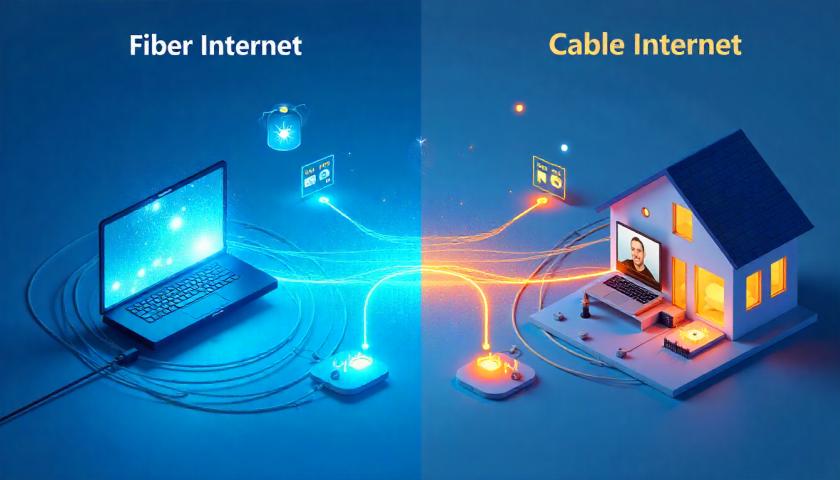
Cable vs Fiber vs DSL: Which One Is Actually Best?
Each type of internet connection has a unique place, and the “best” version depends on your needs. Here’s a simple breakdown:
Choose DSL Internet if you want:
- A low-cost option
- A connection for basic browsing and streaming
- A solution for rural or hard-to-reach areas
Choose Cable Internet if you want:
- Fast speeds at an affordable price
- A strong and reliable connection for most households
- A mix of speed and availability
Choose Fiber Internet if you want:
- The fastest, most powerful wired internet
- High upload speeds for video calls or content creation
- Performance that never slows down with more users
Which Internet Type Fits Your Home?
Still unsure whether DSL, Cable, or Fiber is best? Ask yourself:
- How many devices are connected at once?
- Do you stream in 4K or play games online?
- Do you upload large files or rely on video meetings?
- What options are available in your zip code?
- Do you want the fastest speeds or the most affordable?
Your answers will point you in the right direction instantly.
- If speed matters most, Fiber wins.
- If balance matters most, Cable wins.
- If price matters most, DSL wins.
Conclusion
Choosing the right connection in the Cable vs Fiber vs DSL debate doesn’t have to be hard. Each option serves a different purpose:
- DSL Internet gives you affordability and wide availability.
- Cable Internet offers speed and reliability for most homes.
- Fiber Internet delivers unmatched performance and is the future of wired internet.
The best choice is the one that matches your life>
FAQs About Cable vs Fiber vs DSL
1. Which is faster: Cable vs Fiber vs DSL?
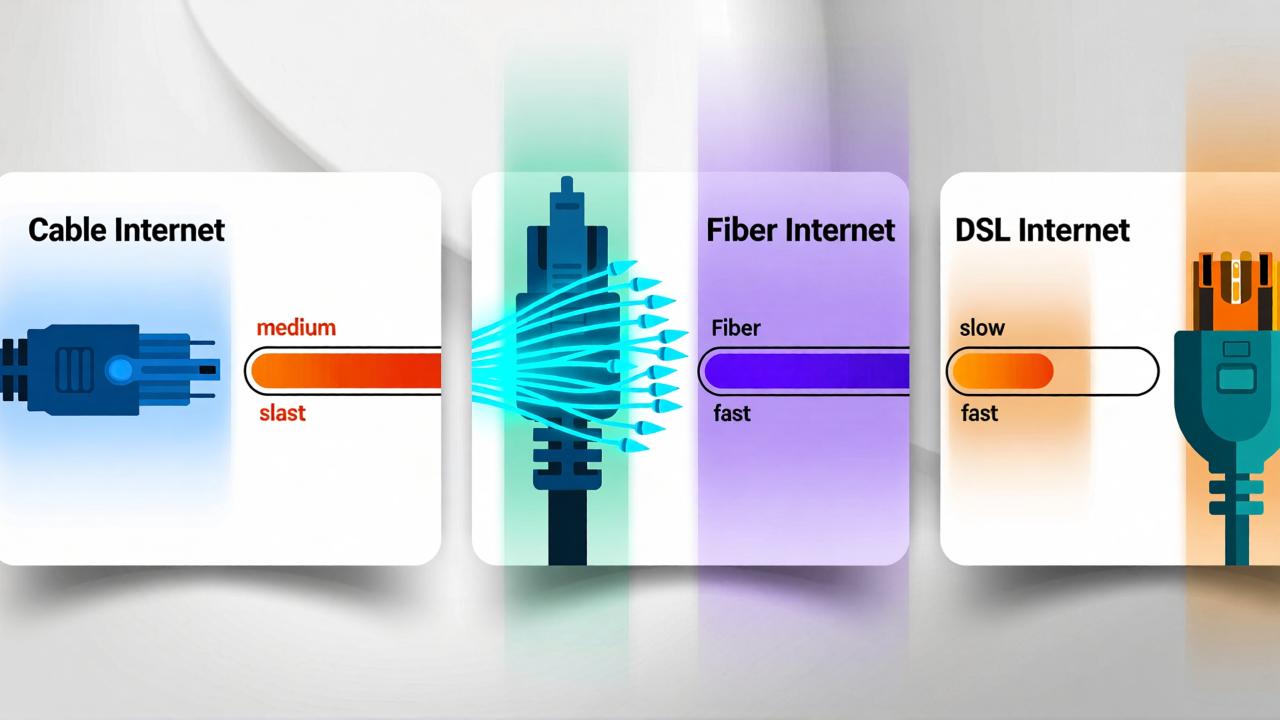
Fiber is the fastest by a large margin, followed by Cable. DSL is the slowest.
2. Is fiber internet better than cable?
Yes. Fiber offers higher speeds, equal upload speeds, lower lag, and more dependable performance.
3. Is DSL Internet still worth it in 2025?
Yes, if you have light usage or live in a rural area where DSL is the most reliable or affordable choice.
4. Does Cable Internet slow down?
Sometimes. Because it’s shared with nearby homes, cable speeds can drop during peak evening hours.
5. What’s the best type of internet for working from home?
Fiber is ideal, but Cable also works well. DSL may have trouble with video calls and multiple devices.