The first CRM decision feels bigger than it is and smaller than it should be at the same time. Founders agonise over the logo on the login screen, then under-invest..
In today’s fast-paced world, CRM automation is no longer a luxury — it’s a business essential. Sales reps waste as much as 30% of their week on manual data entry,..
In 2025, the integration of artificial intelligence (AI) and automation in CRM software development services is projected to reshape how businesses engage with their customers. According to industry research, about..
For any business, particularly a startup, the choice of a business management system (BMS) can be one of the most crucial decisions it will make. In today’s digital age, where..
Most growing businesses hit the same wall around the 40–60 employee mark. The CRM they picked two years ago made sense at 15 people. Now it's slow, bloated with features..
Customer Relationship Management (CRM) systems have become an important part of modern business operations. They help organizations manage customer interactions, track sales activities, improve communication, and make better business decisions...
Most of us maintain a comfortable fiction about our networks. We know thousands of people on LinkedIn, have email threads going back years, and can probably rattle off a dozen..
Customer Relationship Management (CRM) systems were never designed to be intelligent. They were built to record, organize, and retrieve customer information in a structured way. For a long time, that..
Insurance leaders are increasingly viewing CRM as a strategic investment rather than just a contact management tool. Modern CRM for insurance agents enables personalized customer experiences, streamlines operations, centralizes customer..
IntroductionIn recent years, customer relationship management has evolved far beyond simple data storage systems. Modern enterprises are now shifting toward intelligent, conversational, and automated workflows that reduce manual effort and..
IMARC Group’s report, “Plastic Manufacturing Plant Project Report 2026: Industry Trends, Plant Setup, Machinery, Raw Materials, Investment Opportunities, Cost and Revenue,” offers a comprehensive guide for establishing a manufacturing plant...
IMARC Group’s report, “Tablet Manufacturing Plant Project Report 2026: Industry Trends, Plant Setup, Machinery, Raw Materials, Investment Opportunities, Cost and Revenue,” offers a comprehensive guide for establishing a manufacturing plant...
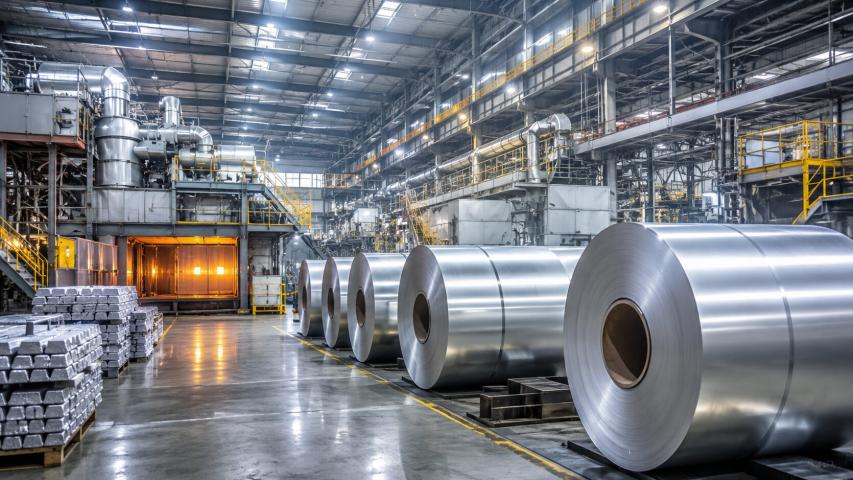
IMARC Group’s “Aluminum Manufacturing Plant Project Report 2026: Industry Trends, Plant Setup, Machinery, Raw Materials, Investment Opportunities, Cost and Revenue” provides a detailed roadmap for establishing a successful aluminum manufacturing..
IMARC Group’s report, “LED Chip Manufacturing Plant Project Report 2026: Industry Trends, Plant Setup, Machinery, Raw Materials, Investment Opportunities, Cost and Revenue,” offers a comprehensive guide for establishing a manufacturing..
In today’s highly competitive industrial landscape, manufacturers are under constant pressure to optimize operations, reduce costs, and improve productivity. Traditional reporting methods and siloed data systems often fail to provide..
The manufacturing industry is rapidly evolving with the integration of advanced technologies, and AI in manufacturing is at the forefront of this transformation. Businesses are leveraging artificial intelligence to improve..
In the industrial world, manufacturing methodologies play a crucial role in optimizing production, reducing costs, and improving efficiency. Whether you're launching a startup or scaling an existing business, understanding different..
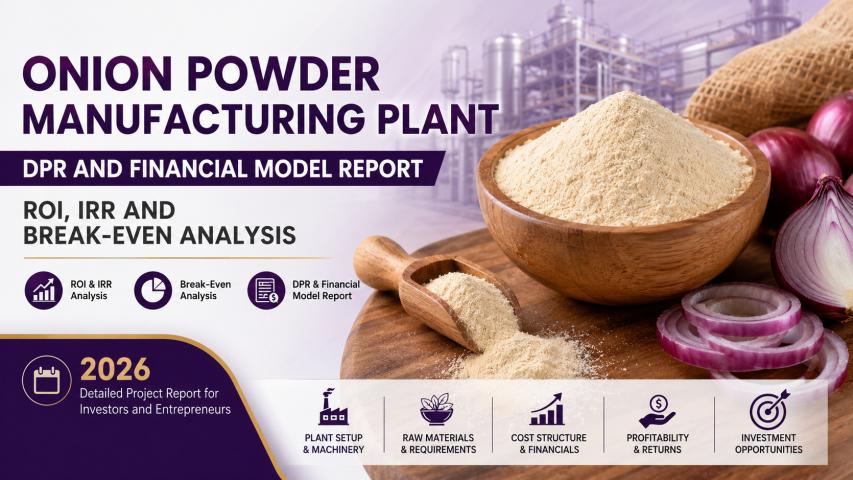
IMARC Group's report, "Onion Powder Manufacturing Plant Project Report 2026: Industry Trends, Plant Setup, Machinery, Raw Materials, Investment Opportunities, Cost and Revenue", offers a comprehensive guide for establishing a manufacturing..