In today’s security landscape, enterprise networks face growing threats from both external attacks and internal lateral movement. As organizations scale, segmenting the network becomes essential to protecting sensitive data, minimizing attack surfaces, and maintaining compliance. FortiGate firewalls offer a powerful framework for enterprise-level segmentation by combining advanced security controls, flexible policy creation, and centralized management. Whether you're enhancing your cybersecurity skills or complementing your Fortinet NSE 4 certification, understanding segmentation with FortiGate is critical for building a resilient and secure network architecture.
Why Segmentation Matters in Enterprises
Network segmentation divides the network into smaller,
isolated zones to ensure that threats or unauthorized users cannot freely move
across the environment. The benefits include:
- Reduced
lateral movement in case of a breach
- Improved
regulatory compliance (PCI-DSS, HIPAA, GDPR)
- Optimized
traffic control
- Clear
separation of user groups, workloads, and devices
- Stronger
Zero Trust implementation
FortiGate firewalls support both macro- and
micro-segmentation, enabling businesses to apply granular security controls
across on-premises, cloud, and hybrid infrastructures.
Macro-Segmentation with FortiGate
Macro-segmentation divides the network into large,
high-level zones such as:
- User
networks
- Server
networks
- Guest
Wi-Fi
- Data
centers
- Branch
offices
FortiGate firewalls allow enterprises to enforce security
policies between these zones using:
- Firewall
policies
- Virtual
domains (VDOMs)
- Virtual
LANs (VLANs)
- Routing
segmentation using VRFs
These tools help organizations streamline traffic flows and
apply a strong security baseline across all major segments.
Micro-Segmentation with FortiGate
Micro-segmentation takes segmentation a step further by
isolating individual applications, workloads, or devices—even if they exist
within the same subnet.
FortiGate enables micro-segmentation through:
1. Identity-Based Policies
Policies that enforce segmentation based on:
- User
identity
- Device
type
- Role
or group membership
This is essential for implementing Zero Trust Network Access
(ZTNA) with Fortinet solutions.
2. Tag-Based Segmentation
FortiGate integrates with Fortinet Security Fabric products
to create dynamic segmentation based on security tags, enabling automatic
policy updates when endpoint posture changes.
3. Internal Segmentation Firewalls (ISFW)
ISFWs sit deep inside the network, isolating east-west
traffic between servers and internal applications.
Micro-segmentation significantly reduces the blast radius of
cyber incidents and improves visibility into internal traffic patterns.
Using VDOMs for Multi-Tenant Segmentation
Virtual domains (VDOMs) are a powerful feature of FortiGate
firewalls that allow a single physical device to function as multiple virtual
firewalls. Each VDOM can:
- Have
independent routing tables
- Apply
separate security policies
- Maintain
customized administrative access
- Support
unique interfaces and segmentation rules
VDOMs are ideal for service providers, large enterprises,
and organizations requiring strict separation between business units or
environments.
Role of Security Profiles in Segmentation
Segmentation isn’t only about separating networks—it also
requires applying the right security controls to each segment. FortiGate allows
enterprises to attach security profiles such as:
- Antivirus
- Web
filtering
- IP
reputation
- Application
control
- IPS
(Intrusion Prevention Systems)
- SSL/TLS
inspection
Using these profiles ensures that every segment receives
tailored protection based on its risk level and operational requirements.
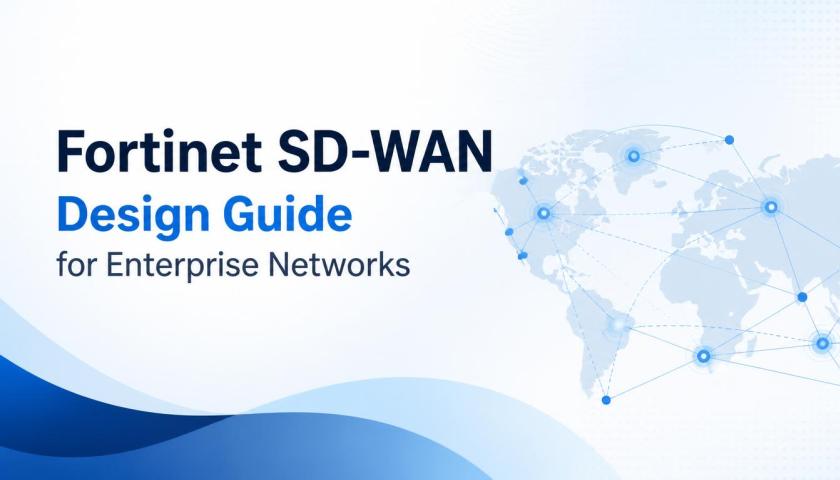
SD-WAN and Segmentation Integration
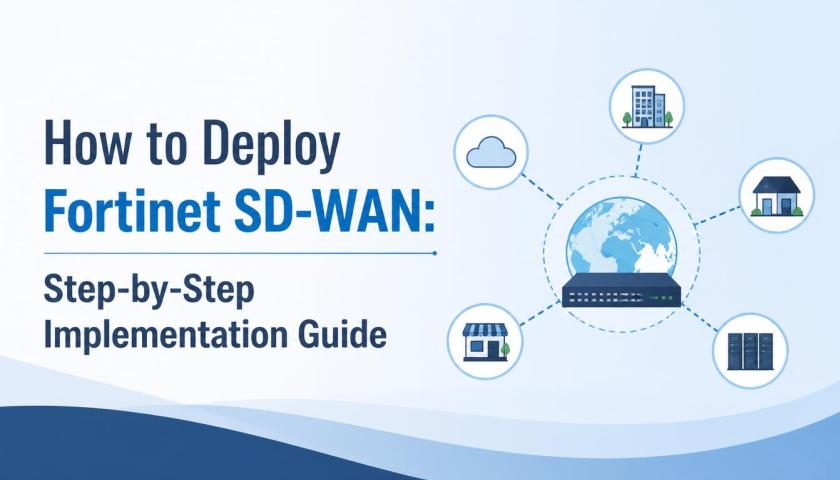
FortiGate’s SD-WAN capabilities allow enterprises to combine
segmentation with intelligent traffic steering. Network segments can route
traffic via:
- MPLS
links
- Broadband
connections
- LTE/5G
- Direct
cloud connections
SD-WAN enhances segmentation by ensuring high performance
and secure routing paths for each traffic type.
Segmentation in Hybrid and Multi-Cloud Environments
As businesses extend to the cloud, segmentation models must
also scale across platforms like AWS, Azure, and Google Cloud. FortiGate VM and
Fortinet Security Fabric allow unified segmentation across:
- On-prem
firewalls
- Cloud-native
networks
- Virtualized
environments
- Containers
and Kubernetes clusters
This consistency prevents policy mismatches and ensures
tight security across distributed infrastructures.
Best Practices for Enterprise Segmentation Using
FortiGate
- Start
with a clear segmentation blueprint based on business functions
- Use
dynamic and identity-based policies for Zero Trust environments
- Deploy
ISFWs to secure internal traffic
- Apply
security profiles consistently to reduce blind spots
- Maintain
centralized visibility using Forti Manager and Forti Analyzer
- Continuously
monitor logs and traffic flows to fine-tune segmentation rules
A well-designed segmentation strategy reduces risk, improves
compliance, and enhances operational efficiency.
Conclusion
FortiGate firewalls provide a comprehensive and flexible
approach to enterprise-level segmentation, enabling organizations to secure
their networks from the inside out. With support for macro- and
micro-segmentation, identity-based policies, VDOMs, and dynamic security
controls, FortiGate delivers the tools needed to build a robust Zero Trust
architecture. For those advancing their cybersecurity skills—or complementing
their NSE 4—mastering segmentation is a vital step
toward protecting modern enterprise environments effectively.