Introduction
Why Is Watching TV in an RV Harder Than It Sounds?
Why Is Watching TV in an RV Harder Than It Sounds?
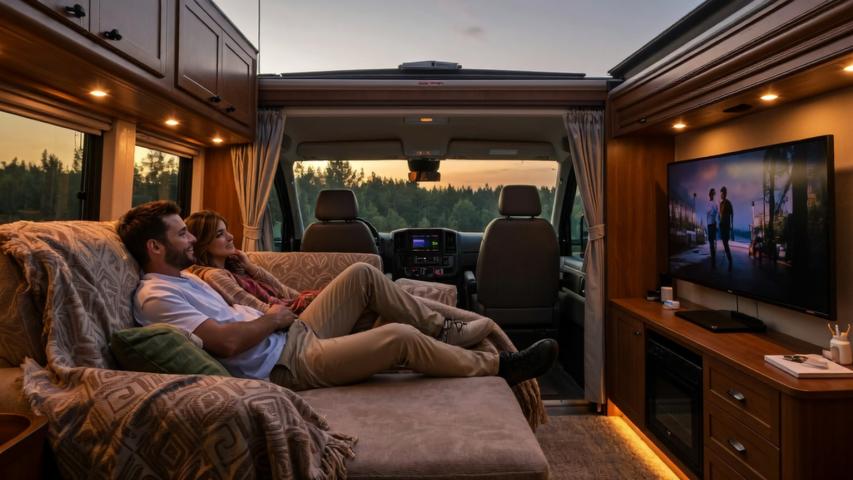
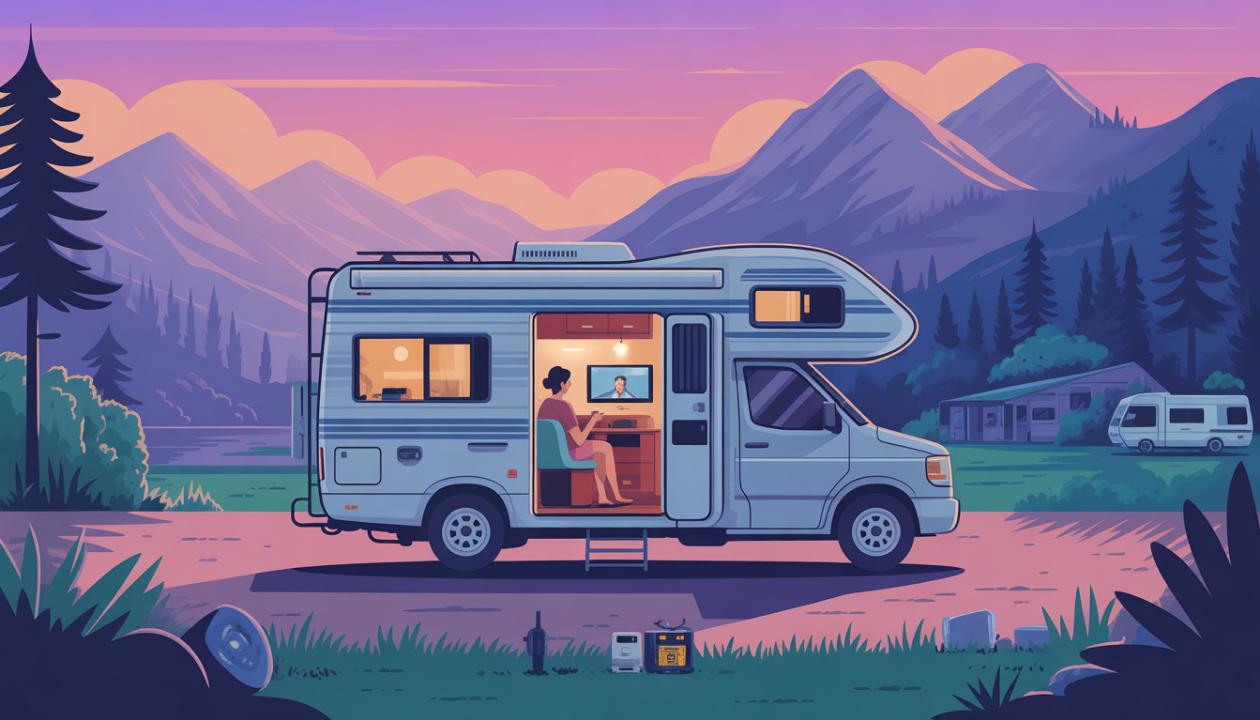
The first time I tried to watch TV in an RV, I thought it would be easy. I planned to plug in the TV, scan for channels, maybe connect to the internet, and then relax after a long drive.
That didn’t happen. Instead, I found myself staring at a bright “No Signal” message. I was surrounded by cables and Googling “how to set up TV in an RV without Wi-Fi.” I slowly realized that RV life challenges many assumptions we have about home entertainment.
If you’ve ever asked yourself:
How do people actually watch TV while camping?
Do I really need cable in an RV?
Is it possible to watch TV without internet or Wi-Fi?
You’re not alone.
This guide is based on real RV travel, trial, error, frustration, and eventually figuring out what works. There’s no hype or tech rabbit holes, just practical ways to watch TV while traveling in an RV, no matter where you park.
Understanding the Reality of RV TV Setup
Here’s the honest truth upfront:
Watching TV in an RV isn’t about finding one “perfect” setup. It’s about choosing the right option for how and where you travel.
Campgrounds, national parks, rest stops, and remote boondocking all change what’s possible. Some nights, you’ll have a strong signal. Other nights, there will be nothing at all. The good news is that there are reliable ways to watch TV whether you have full internet, a weak signal, or no connection at all.
Option 1: Over-the-Air Antenna (The Simplest Starting Point)
Most RVs already come with a built-in TV antenna. If yours does, start here.
How It Works
An antenna picks up free local broadcast channels like:
ABC
CBS
NBC
FOX
PBS
This is often the easiest way to:
Watch TV in an RV without Wi-Fi
Catch local news or live sports
Avoid subscriptions completely
What You’ll Need
RV TV antenna (roof-mounted or portable)
TV with a digital tuner
Channel scan after parking
Pros
No internet required
No monthly cost
Works surprisingly well near towns and cities
Cons
Limited channel selection
Signal depends heavily on location
Not reliable in very remote areas
Even with the downsides, this is still one of the best ways to get TV in a camper without overthinking things.
Option 2: Streaming With Internet (Flexible, but Location-Dependent)
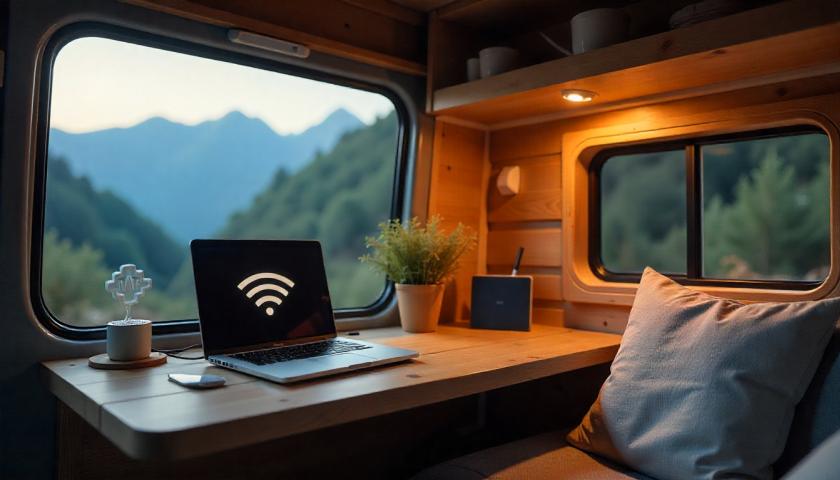
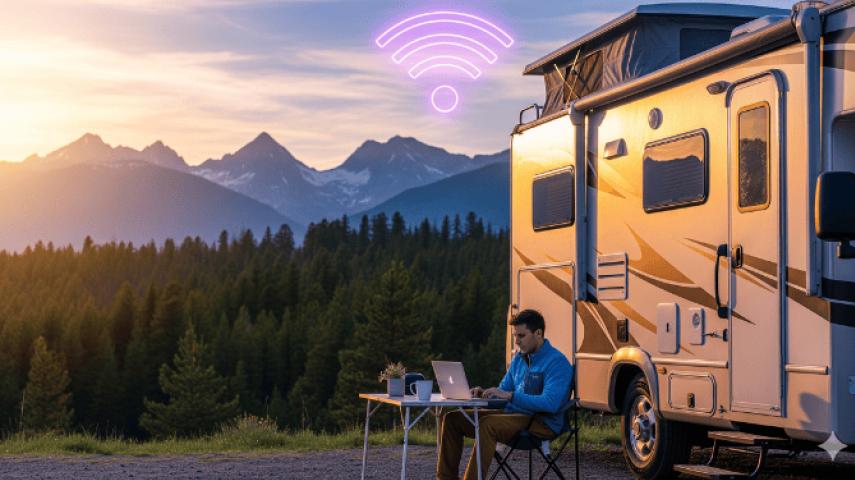
Streaming feels normal because it’s what most of us use at home, but on the road, it needs planning. To watch TV while camping using services like Netflix, Hulu, Prime Video, or YouTube TV, you need a stable internet connection.
Internet Options RVers Commonly Use
Campground Wi-Fi (often unreliable)
Phone hotspots
Dedicated mobile internet devices
Over time, I noticed RVers usually talk about three names:
UbiFi – Known for working well in rural areas
TravelFi – Simple plug-and-play option for shorter trips
T-Mobile – Solid coverage in cities and along highways
From my experience, UbiFi consistently held a connection in places where others struggled, while TravelFi and T-Mobile worked best in populated areas. This isn’t about promotion; it’s just what actually worked when campground Wi-Fi didn’t.
When Streaming Works Best
RV parks with strong cellular signal
Longer stays in one location
Travelers who already rely on streaming
When It Gets Frustrating
Remote camping spots
Congested campgrounds
Data limits if you’re not careful
Streaming is powerful, but it’s not always the easiest option on the road.
Option 3: Satellite TV (Reliable, But Not for Everyone)
Satellite TV is one of the few ways to watch TV in an RV without cable or Wi-Fi, even far from civilization.
How It Works
A portable or roof-mounted satellite dish connects to providers like DISH or DirecTV.
Pros
Works far from cities
Consistent channel lineup
Familiar experience if you’re used to satellite
Cons
Expensive upfront
Needs a clear view of the sky
Setup can take time
Satellite makes sense if TV is a major part of your daily routine, especially for full-time RVers, but it’s overkill for many travelers.
Option 4: Download Before You Go (Underrated and Stress-Free)
This is one of the smartest and most overlooked solutions.
Before leaving:
Download shows or movies on Netflix, Prime, or YouTube
Store them on phones, tablets, or laptops
Connect devices to your RV TV using HDMI
Why This Works So Well
No signal required
Zero buffering
Nothing to set up after parking
It’s not live TV, but after a long hike or drive, it’s often more than enough.
Setting Up TV in an RV: Practical Tips That Actually Help
No matter which option you choose, these tips save time and frustration.
1. Always Rescan Channels
If you use an antenna, scan every time you move.
2. Label Your Inputs
RV TVs often have confusing input menus. Label them once.
3. Bring the Right Cables
HDMI cables, adapters, and a small surge protector go a long way.
4. Test Before the Trip
Try your setup at home or a nearby campground first.
5. Don’t Expect Home-Level Convenience
RV TV setups work, but flexibility matters more than perfection.
Watching TV Without Wi-Fi or Cable: What Actually Works Best?
If your goal is to watch TV in an RV without Wi-Fi or cable, here’s the honest ranking:
Antenna – Best for simplicity and free TV
Downloaded content – Most reliable everywhere
Satellite – Best for live TV in remote areas, but costly
Most experienced RVers use a combination of these.
A Realistic Take: Do You Even Need TV While Traveling?
Something no one tells you at first:
After a while, TV becomes less important. Some nights, you’ll want it, like during bad weather, long drives, or downtime. Other nights, a campfire, a book, or a quiet environment is better. Having options matters more than chasing the “perfect” setup.
Conclusion
Choose Flexibility Over Complexity
Learning how to watch TV while traveling in an RV isn’t about copying someone else’s setup; it’s about matching your travel >
The key lesson is simple: Keep it flexible. Keep it simple. Don’t let technology take over the experience. TV should support RV life, not control it.
Frequently Asked Questions (FAQs)
1. Can I watch TV in an RV without Wi-Fi?
Yes. Antennas, satellite TV, and downloaded content all work without Wi-Fi.
2. What’s the easiest way to set up TV in an RV?
Using the built-in antenna and scanning for local channels.
3. How do people watch TV while camping without internet?
Most rely on antennas, satellite dishes, or offline media.
4. Is cable TV worth it in an RV?
For most travelers, no. It’s less flexible than other options.
5. What’s the best TV setup for full-time RV living?
A mix of OTA TV, offline content, and mobile internet provides the best balance.