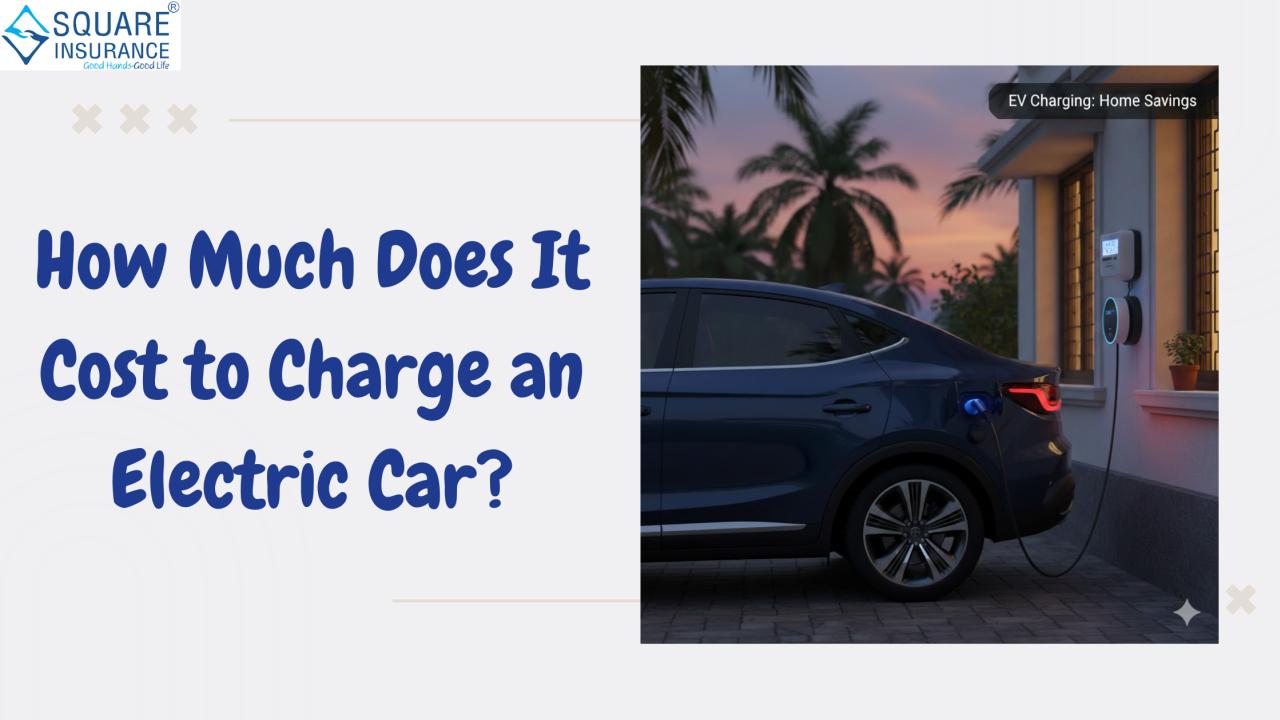
Electric vehicles (EVs) are becoming increasingly common on Indian roads.
Rising fuel prices, improved charging infrastructure, and government incentives
have made EVs a practical alternative to petrol and diesel cars. However, one
of the most important questions for potential buyers remains: How much does it
cost to charge an electric car?
For anyone planning to switch to electric
mobility, understanding The Cost of Charging an Electric Car in
India is crucial before making a purchase decision. It plays
a major role in determining overall affordability, monthly running expenses,
and long-term savings compared to conventional fuel-powered vehicles.
Understanding charging costs is essential for calculating the total cost of
ownership and comparing EVs with traditional cars. This guide explains charging
expenses in India, cost per kilometer, public vs home charging, and the
long-term financial impact
What
Determines the Cost of Charging an Electric Car?
The cost of charging an EV depends
on several practical factors:
- Battery capacity (kWh)
- Electricity tariff (₹ per
unit)
- Charging location (home or
public station)
- Type of charger (AC slow
charger or DC fast charger)
- State electricity policies
Let’s break these down.
Battery
Capacity and Its Impact on Cost
Electric cars store power in
kilowatt-hours (kWh). The higher the battery capacity, the more electricity is
required for a full charge.
For example:
- Small EV: 25–30 kWh battery
- Mid-size EV: 35–45 kWh battery
- Premium EV: 60–80+ kWh battery
If a vehicle has a 40 kWh battery,
it requires around 40 units of electricity for a full charge.
Cost
of Charging at Home in India
Home charging is the most affordable
and convenient option for most EV owners.
Average
Residential Electricity Rate
Electricity tariffs in India
generally range from ₹6 to ₹10 per kWh depending on the state and usage slab.
Let’s calculate an example:
- Battery size: 40 kWh
- Electricity rate: ₹8 per kWh
Total charging cost = 40 × 8 = ₹320
per full charge
If the vehicle offers a range of 300
km per full charge:
Cost per km = ₹320 ÷ 300 = ₹1.06 per
km
This is significantly lower than
petrol-powered vehicles.
Cost
of Charging at Public Stations
Public charging stations are more
expensive due to infrastructure and operational costs.
Typical
Charging Rates:
- AC Public Charging: ₹12–₹18 per kWh
- DC Fast Charging: ₹18–₹25 per kWh
If you use a fast charger at ₹20 per
kWh:
40 × 20 = ₹800 per full charge
Cost per km (300 km range):
₹800 ÷ 300 = ₹2.67 per km
While still economical compared to
petrol, it is nearly double the cost of home charging.
Monthly
Charging Expense Estimate
Assume:
- Monthly driving distance: 1,200 km
- Cost per km (home charging average): ₹1.2
Monthly expense:
1,200 × 1.2 = ₹1,440
Even if you partially depend on
public chargers, monthly expenses usually range between ₹1,500 to ₹2,500
depending on usage patterns.
EV
Charging vs Petrol Cost Comparison
Let’s compare realistically.
Petrol vehicle:
- Mileage: 15 km per litre
- Petrol price: ₹105 per litre
Cost per km:
₹105 ÷ 15 = ₹7 per km
EV vehicle (home charging):
₹1 to ₹1.5 per km
If you drive 15,000 km annually:
Petrol cost per year:
15,000 × 7 = ₹1,05,000
EV charging cost per year:
15,000 × 1.2 = ₹18,000
Estimated annual savings:
₹80,000+
This difference makes EVs highly
attractive for daily commuters and fleet operators.
Installation
and Additional Costs
Although charging is cheaper than
fuel, there are some additional considerations:
1.
Home Charging Equipment
Installing a home charger may cost
between ₹30,000 to ₹70,000 depending on infrastructure requirements.
2.
Electricity Load Upgrade
Some homes may require an upgrade in
sanctioned load capacity.
3.
Fast Charging Dependency
Frequent reliance on DC fast
charging may slightly increase long-term costs.
State-Wise
Differences in Charging Cost
Electricity rates differ across
Indian states. Some states offer special EV tariffs, while others follow
standard residential rates.
Before estimating savings, always
check:
- Local electricity slab rate
- EV-specific tariff policies
- Fixed connection charges
State policies can significantly
impact your actual charging cost.
Long-Term
Financial Benefits of EV Charging
Over a 5-year ownership period:
EV charging cost (approx.): ₹20,000
per year
5-year cost: ₹1,00,000
Petrol fuel cost (average usage):
₹1,00,000 per year
5-year cost: ₹5,00,000
Even after accounting for charger
installation and insurance, EVs often provide substantial long-term savings.
Does
Charging Cost Affect Car Insurance?
While charging cost itself does not
directly impact insurance premiums, overall vehicle usage and battery value do.
Important considerations:
- EV batteries are expensive to replace
- Battery protection add-ons are useful
- Dedicated EV motor insurance policies offer better
coverage
As electric mobility grows, insurers
are adapting policies to include charging equipment and battery protection.
Is
Charging an Electric Car Always Cheaper?
In most scenarios, yes.
Homeowners with access to dedicated
charging points benefit the most. However, those relying heavily on public fast
chargers may see slightly higher costs, though still cheaper than petrol
vehicles.
Cost efficiency depends on:
- Driving frequency
- Access to home charging
- Local electricity tariff
- Battery size
Conclusion
Charging an electric car in India
typically costs between ₹1 and ₹2.5 per
kilometer, depending on whether you charge at home or at a public fast
charging station. Compared to petrol vehicles, the savings over time are
substantial.
However, buyers should evaluate the
full picture — including installation expenses, battery coverage, and insurance
protection — before making a switch.
At Square Insurance, we understand that
electric vehicles require specialized coverage. Whether you are insuring a new
EV or reviewing your current policy, selecting the right motor insurance plan
ensures financial security and long-term peace of mind.
Frequently Asked Questions
1.
How much does a full EV charge cost in India?
It usually ranges between ₹300 and
₹800 depending on battery size and charging method.
2.
What is the average cost per km of an electric car?
Approximately ₹1 to ₹2.5 per km.
3.
Is home charging cheaper than public charging?
Yes, home charging is significantly
more economical.
4.
How much is the monthly charging expense?
For average city driving, it ranges
from ₹1,200 to ₹2,500.
5.
Is EV charging cheaper than petrol?
Yes, EV charging is generally 4–6
times cheaper per kilometer.