In today’s always-on digital world,
downtime is no longer acceptable. Users expect applications, websites, and
services to be available 24/7 with consistent performance. High availability is
not just a technical goal—it is a business necessity. One of the most critical
pillars supporting high availability is Monitoring & Logging. When
implemented correctly, Monitoring & Logging provide real-time visibility,
faster issue detection, and actionable insights that keep systems stable and
reliable.
This blog explores Monitoring
& Logging best practices for high availability, explaining why they
matter, how they work together, and how organizations can implement them
effectively across modern IT environments.
Understanding Monitoring & Logging in High Availability
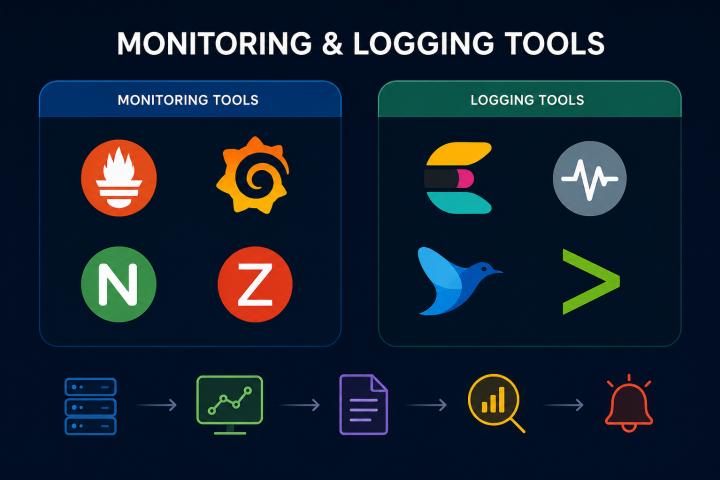
Monitoring & Logging are often
mentioned together, but they serve different yet complementary purposes.
Monitoring focuses on system health
and uptime, performance metrics, resource usage, alerts, and thresholds.
Logging focuses on detailed event records, application behavior, errors,
exceptions, and audit trails.
For high availability, Monitoring& Logging must work in tandem. Monitoring tells you when something is
wrong, while logging explains why it happened.
Why Monitoring & Logging Are Critical for High Availability
High availability depends on early
detection and fast resolution. Without proper Monitoring & Logging,
failures often go unnoticed until users complain. This reactive approach
increases downtime and damages user trust.
Key benefits of Monitoring &
Logging include proactive issue detection, reduced Mean Time to Detect (MTTD),
reduced Mean Time to Resolve (MTTR), improved system reliability, and better
capacity planning. Organizations that prioritize Monitoring & Logging
consistently outperform those that rely on manual checks or reactive
troubleshooting.
Monitoring Everything That Impacts Availability
To achieve high availability,
Monitoring & Logging must cover all critical components of the IT
environment.
Infrastructure monitoring includes
servers, virtual machines, containers, and network devices. Key metrics include
CPU usage, memory utilization, disk I/O, and network latency.
Application-level Monitoring &
Logging help track response times, error rates, request throughput, and
dependency health. Database Monitoring & Logging provide insight into query
performance, connection counts, replication status, and storage usage.
Comprehensive Monitoring &
Logging ensure no critical layer is overlooked.
Real-Time Monitoring & Logging
High availability requires immediate
awareness of problems. Real-time Monitoring & Logging allow teams to react
before issues escalate into major failures.
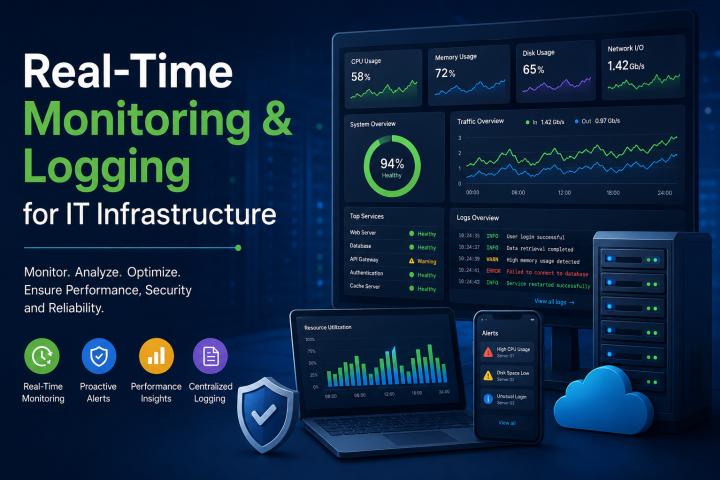
Real-time alerts, streaming logs,
and live dashboards help teams observe system behavior as it happens. This
approach reduces downtime and makes Monitoring & Logging far more effective
than delayed reporting.
Defining Meaningful Metrics and KPIs
Not all metrics are equally
valuable. Effective Monitoring & Logging focus on metrics that directly
impact availability.
- Important indicators include uptime percentage,
- error rates, latency, request success ratio,
- and Service Level Indicators (SLIs).
Aligning Monitoring & Logging metrics with Service Level Objectives (SLOs) ensures monitoring efforts support business goals.
Smart Alerting Without Alert Fatigue
Alerts are essential for maintaining high availability, but poorly configured alerts can overwhelm teams. Monitoring & Logging systems should generate alerts only when action is required.
- Using intelligent thresholds,
- correlating logs with metrics,
and prioritizing alerts by severity help reduce
alert fatigue while ensuring critical issues are never missed.
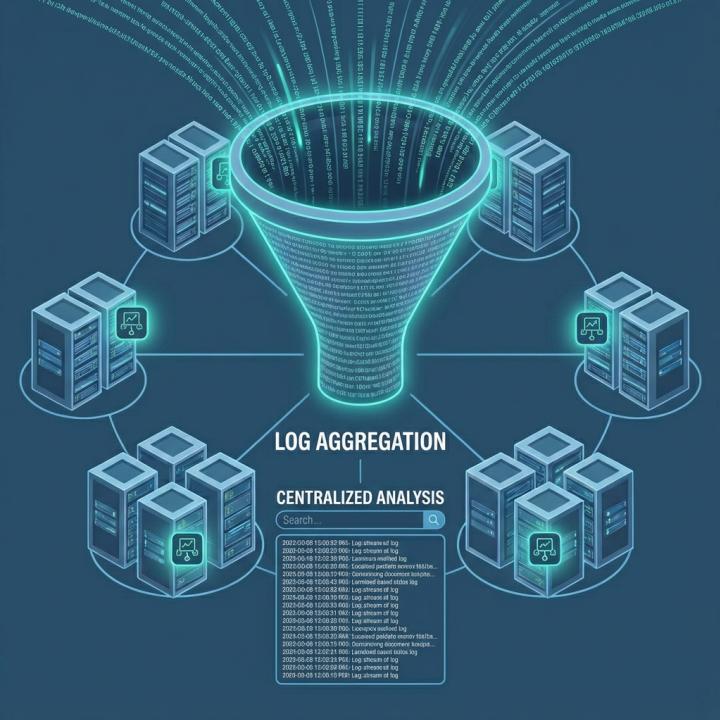
Centralized Monitoring & Logging for Better Visibility
Modern IT environments are
distributed across cloud platforms, containers, and microservices. Centralized
Monitoring & Logging bring all data into a single platform.
Centralization enables faster troubleshooting,
- unified dashboards,
- easier event correlation,
- and improved visibility across services.
Centralized Monitoring & Logging are especially
important for cloud-native and hybrid environments.
Correlating Monitoring & Logging for Root Cause Analysis
Monitoring identifies performance
symptoms, while logging provides the context needed to understand failures.
Correlating Monitoring & Logging enables accurate root cause analysis.
For example, Monitoring may detect
increased latency, while Logging reveals database timeout errors. This
correlation helps teams resolve issues faster and prevent future incidents.
Monitoring Redundancy and Failover Systems
High availability relies on redundancy
mechanisms such as load balancers, backup nodes, and failover systems.
Monitoring & Logging must ensure these systems function correctly.
Tracking load balancer health,
replication lag, backup readiness, and failover execution time ensures
redundancy mechanisms deliver true high availability.
Automation with Monitoring & Logging
Automation enhances Monitoring &
Logging by minimizing manual intervention. Automated actions may include
restarting failed services, scaling resources automatically, or redirecting
traffic during outages.
By combining automation with
Monitoring & Logging, organizations can reduce downtime and improve system
resilience.
Log Retention and Historical Analysis
- Log retention is essential for long-term reliability,security, and compliance.
- Effective Monitoring & Logging strategies include defined retention periods,
- secure storage, indexed search,
and efficient archiving.
- Historical Monitoring & Logging data help teams identify trends,
- analyze past incidents, and improve future
system performance.
Continuous Improvement of Monitoring & Logging
Monitoring & Logging are not
static processes. As applications evolve, monitoring strategies must adapt.
- Regular reviews of alerts,
- dashboards, metrics,
and logs ensure Monitoring & Logging remain aligned
with changing workloads and high availability requirements.
Common Mistakes in Monitoring & Logging
Common mistakes include monitoring
irrelevant metrics, ignoring log structure, failing to test alerts, and lacking
documentation.
Avoiding these issues ensures
Monitoring & Logging provide actionable insights rather than unnecessary
noise.
Monitoring & Logging in Cloud and DevOps Environments
Cloud and DevOps environments
introduce dynamic infrastructure, microservices, and frequent deployments.
Monitoring & Logging become even more critical in these fast-changing
systems.
Scalable, flexible, and
automation-friendly Monitoring & Logging tools support high availability
across containers, hybrid environments, and distributed architectures.
Measuring the Success of Monitoring & Logging
The success of Monitoring &
Logging can be measured through reduced downtime,
- faster incident resolution,
- improved performance stability
- and fewer customer complaints.
Regular measurement ensures
Monitoring & Logging strategies continue delivering real business value.
Conclusion
High availability is impossible
without effective Monitoring & Logging. From real-time visibility
and proactive alerting to root cause analysis and automation, Monitoring &
Logging form the backbone of reliable systems. By monitoring critical
components, centralizing data, correlating metrics with logs, and continuously
improving strategies, organizations can significantly reduce downtime and
deliver consistent user experiences.
In a world where even minutes of
downtime can cause major losses, investing in strong Monitoring & Logging
practices is essential for achieving and sustaining high availability in modern
IT environments.