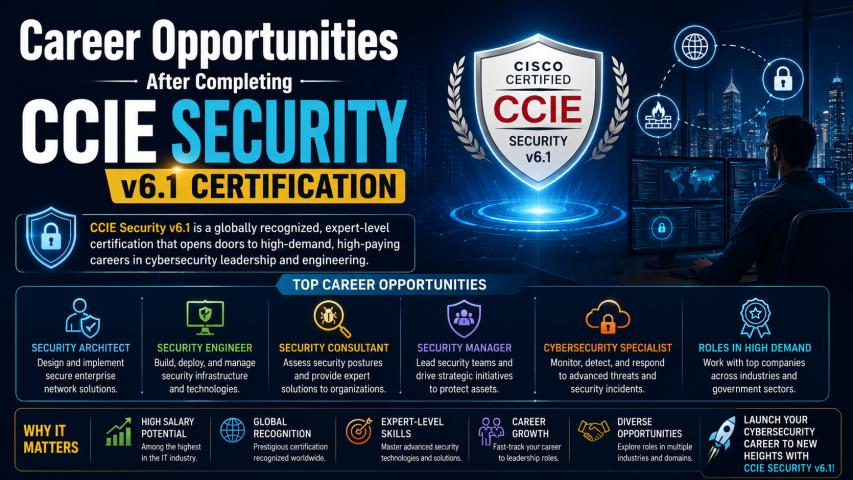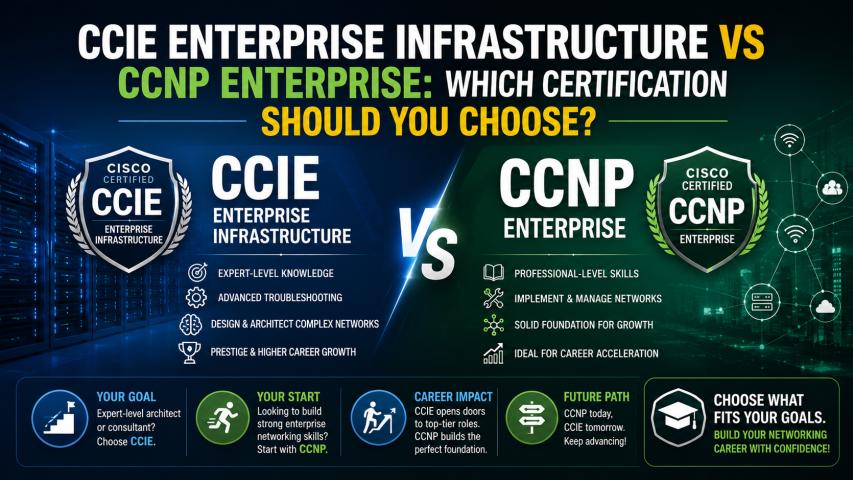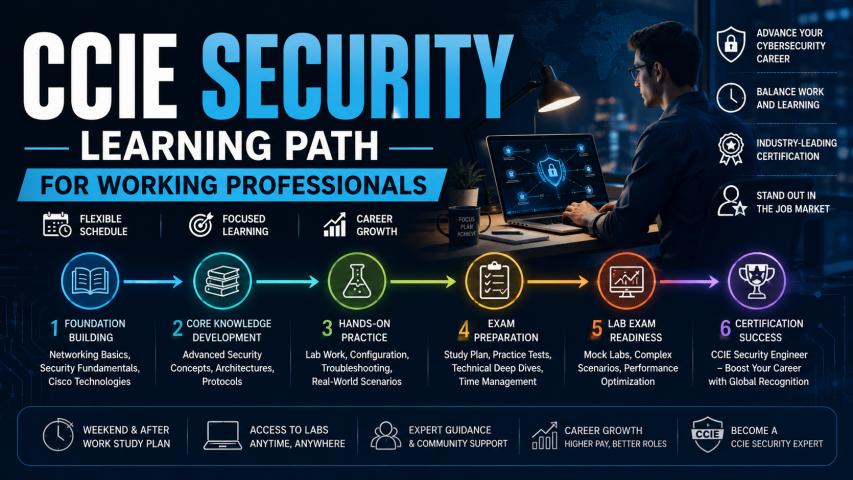

India’s cybersecurity ecosystem is expanding rapidly as organizations across industries accelerate digital transformation. Cloud adoption, remote work, regulatory requirements, and increasing cyber threats have made advanced network security a strategic priority. In this context, CCIE Security Training in India—including intensive learning paths such as a Cisco CCIE Security Bootcamp—plays an important role in developing expert-level professionals capable of securing complex enterprise environments.
This blog explores how CCIE Security fits into India’s
growing cybersecurity ecosystem and why it continues to hold long-term
relevance.
India’s Cybersecurity Landscape Is Evolving Fast
India is witnessing a surge in cybersecurity demand across
sectors such as banking, IT services, telecom, healthcare, government, and
cloud services. Organizations are no longer focused only on perimeter
protection; they now require holistic security strategies that cover networks,
users, applications, and data.
As cyber threats become more sophisticated, there is a
growing need for professionals who understand security at scale. This is where
CCIE Security expertise becomes highly relevant.
Demand for Expert-Level Network Security Skills
While entry- and mid-level security roles are common,
India’s ecosystem increasingly requires experts who can design, implement, and
troubleshoot large security architectures. CCIE Security professionals bring
deep technical knowledge and structured problem-solving ability.
They are often involved in designing secure enterprise
networks, handling critical incidents, and guiding security strategy rather
than performing routine operations. This expert-level contribution strengthens
organizational resilience.
Supporting Enterprise and Cloud Security Growth
Indian enterprises are rapidly adopting hybrid and
multi-cloud models. Securing connectivity between on-premises infrastructure
and cloud environments is a major challenge.
CCIE Security skills align closely with these needs by
emphasizing secure connectivity, segmentation, identity-based access, and
policy consistency. Professionals trained at this level help organizations
adopt new technologies without compromising security.
Role in Managed Security and IT Services
India is a global hub for IT services and managed security
providers. These organizations support clients across geographies and
industries, often managing large and complex networks.
CCIE Security professionals play a key role in these
environments by designing scalable security solutions, troubleshooting
high-impact issues, and supporting client compliance requirements. Their
expertise enhances service quality and trust.
Strengthening Government and Critical Infrastructure
Security
Government initiatives, digital governance, and critical
infrastructure projects have increased the need for robust network security in
India. These environments require structured, auditable, and resilient security
designs.
CCIE Security expertise supports such requirements by
promoting disciplined architecture, controlled access, and strong monitoring
practices. This contributes to national-level cybersecurity readiness.
Enabling a Shift from Reactive to Proactive Security
One of the key contributions of CCIE Security professionals
is shifting organizations from reactive security to proactive design. Instead
of responding only after incidents occur, experts focus on reducing risk
through architecture and policy design.
This proactive mindset is essential in India’s fast-growing
digital economy, where downtime and breaches can have widespread impact.
Building Security Leadership and Mentorship
As India’s cybersecurity workforce grows, experienced
professionals are needed to guide teams and set technical standards. CCIE
Security professionals often take on mentorship, lead engineer, or architecture
roles.
Their depth of understanding helps raise overall security
maturity within organizations and across the ecosystem.
Long-Term Career and Ecosystem Value
CCIE Security is not just about certification—it is about
developing a way of thinking. The skills gained during preparation remain
valuable even as technologies evolve.
Professionals who continue learning alongside CCIE-level
expertise contribute meaningfully to India’s cybersecurity ecosystem over the
long term.
Conclusion
CCIE Security plays a significant role in India’s growing
cybersecurity ecosystem by developing expert-level professionals capable of
securing complex, large-scale networks. From enterprise and cloud security to
government projects and managed services, CCIE Security expertise supports
resilience, scalability, and strategic security design.
For professionals investing in CCIE Security Training in
India, whether through structured learning or a Cisco CCIE Security Bootcamp, the certification represents more than personal career growth—it
contributes to strengthening India’s broader cybersecurity capability in an
increasingly digital world.