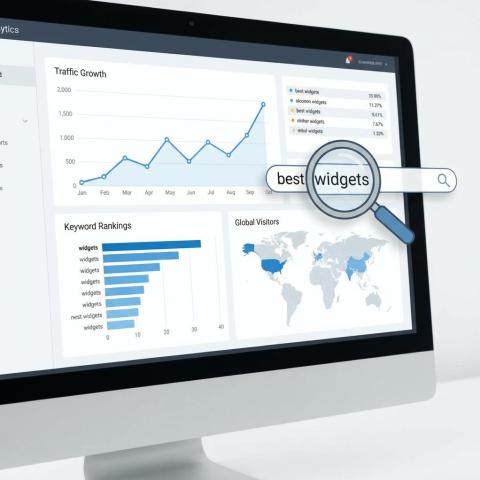

eCommerce analytics helps online businesses understand how users interact with their stores and why sales succeed or fail. It turns raw data into clear insights that guide smarter decisions.
As competition grows across digital channels, relying on intuition alone is no longer enough. Brands that track and analyze performance data consistently outperform those that don’t.
In this guide, you’ll learn what eCommerce analytics is, which metrics truly matter, the tools professionals rely on, and practical strategies to increase online sales.
What Is eCommerce Analytics?
eCommerce analytics is the process of collecting, analyzing, and interpreting data from an online store to improve performance. It connects customer behavior, marketing efforts, and revenue outcomes.
This data-driven approach allows businesses to understand what’s working, what’s not, and where optimization is needed. The goal is to make decisions backed by evidence, not assumptions.
Why eCommerce Analytics Matters for Online Growth
Without analytics, online stores operate blindly. Analytics provides visibility into customer journeys, sales funnels, and marketing efficiency.
It helps teams identify friction points that prevent conversions. Over time, these insights compound into sustainable revenue growth.
Better Understanding of Customer Behavior
Analytics shows how users navigate product pages, add items to carts, and complete purchases. This reveals buying patterns and drop-off points.
By studying this behavior, businesses can refine UX, product placement, and messaging.
Smarter Marketing Decisions
Every campaign generates data across channels like search, social, and email. Analytics highlights which channels drive qualified traffic and revenue.
This allows marketers to reallocate budgets toward high-performing campaigns.
Key eCommerce Metrics You Must Track
Not all metrics are equally valuable. Focusing on the right KPIs ensures clarity and prevents data overload.
These metrics connect directly to sales performance and customer value.
Conversion Rate
Conversion rate measures the percentage of visitors who complete a purchase. It reflects how effective your store is at turning traffic into revenue.
Low conversion rates often indicate UX issues, trust gaps, or unclear value propositions.
Average Order Value (AOV)
AOV shows how much customers spend per transaction. Increasing AOV can significantly boost revenue without increasing traffic.
Tactics like bundling, upsells, and free shipping thresholds often improve this metric.
Customer Acquisition Cost (CAC)
CAC calculates how much it costs to acquire a new customer. It includes ad spend, tools, and campaign costs.
Tracking CAC ensures profitability and prevents overspending on low-return channels.
Customer Lifetime Value (CLV)
CLV estimates the total revenue a customer generates over time. It helps businesses understand long-term growth potential.
When CLV exceeds CAC, the business model becomes scalable and sustainable.
Essential Tools for eCommerce Analytics
Modern analytics relies on a combination of platforms, each serving a specific purpose. Choosing the right tools depends on store size and goals.
Most successful brands integrate multiple tools for deeper insights.
Google Analytics and GA4
Google Analytics remains the foundation for tracking traffic, user behavior, and conversions, as documented in Google’s official analytics documentation and industry research. GA4 adds event-based tracking and cross-device insights.
It’s essential for understanding acquisition sources and funnel performance.
Heatmaps and Session Recordings
Tools like Hotjar or Microsoft Clarity visualize how users interact with pages. They show clicks, scroll depth, and hesitation points.
These insights uncover UX issues that raw numbers often miss.
CRM and Customer Data Platforms
CRM tools connect analytics with customer profiles and purchase history. This enables segmentation and personalized marketing.
They are especially useful for retention-focused strategies.
How to Use eCommerce Analytics to Increase Sales
Collecting data alone doesn’t drive results. Action comes from interpreting insights and applying them strategically.
A structured approach ensures analytics support revenue growth.
Optimize the Customer Journey
Analyze where users abandon carts or exit product pages using eCommerce analytics in checkout optimization. Small improvements in checkout flow often lead to immediate gains.
Reducing friction directly improves conversion rates.
Improve Product Performance
Analytics reveals which products sell well and which underperform. This data guides pricing, inventory, and merchandising decisions.
It also highlights opportunities for cross-selling and upselling.
Personalize Marketing Campaigns
Segment customers based on behavior, location, or purchase history. Personalized campaigns consistently outperform generic messaging.
This approach increases engagement and repeat purchases.
Common eCommerce Analytics Mistakes to Avoid
Many businesses track too much data without clear goals. This leads to confusion rather than clarity.
Others focus on vanity metrics that don’t impact revenue. Avoid metrics that don’t influence decisions.
Ignoring Trends Over Time
Single data snapshots rarely tell the full story. Trends reveal patterns that drive smarter long-term strategies.
Consistent analysis ensures continuous improvement.
Conclusion
eCommerce analytics empowers businesses to move from guesswork to precision. It connects customer behavior, marketing performance, and revenue outcomes.
By tracking the right metrics and using reliable tools, brands can uncover actionable insights. These insights lead to better UX, smarter campaigns, and higher sales.
The most successful online stores treat analytics as an ongoing process, not a one-time task. Continuous optimization is where real growth happens.
Review your current analytics setup, apply these strategies, and start turning data into measurable sales improvements.