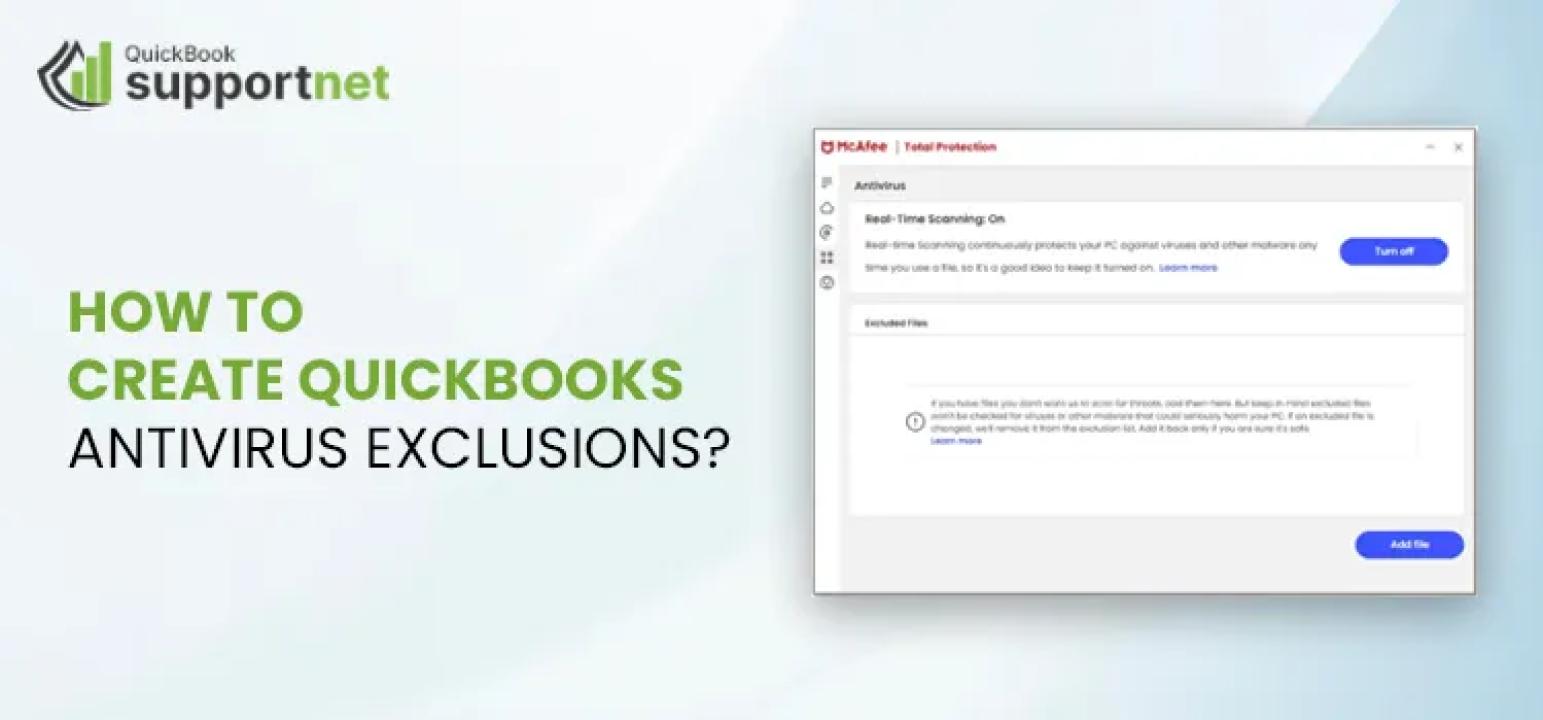
QuickBooks is one of the most powerful accounting tools used by businesses worldwide, but sometimes antivirus software mistakenly treats QuickBooks files and processes as suspicious. This can result in slow performance, installation errors, company file access issues, or unexpected crashes. The best solution is to Create QuickBooks Antivirus Exclusions properly so your antivirus stops interfering with critical QuickBooks components.
Learn how to create QuickBooks antivirus exclusions in 2026 to stop errors, improve speed, and avoid file issues. Call +1(866)500-0076 today.
If you are tired of QuickBooks freezing, lagging, or showing random errors, this guide will help you fix the issue step-by-step. By applying the correct settings, you can keep your system protected while allowing QuickBooks to run smoothly without interruptions.
In this 2026 updated guide, we’ll explain why antivirus conflicts happen, what folders and files to exclude, and how to configure exclusions the right way.
Why You Need to Create QuickBooks Antivirus Exclusions
Many antivirus tools are designed to scan files in real time. QuickBooks constantly reads and writes data in company files, database folders, and background services. This activity can trigger antivirus scanning repeatedly.
When antivirus blocks QuickBooks, you may experience:
- QuickBooks running slow
- QuickBooks company file not opening
- Multi-user mode errors
- QuickBooks installation failures
- QuickBooks update not working
- Error codes like H202, H505, 6000 series, 6123
- QuickBooks database server manager issues
- Direct deposit processing delays
That’s why it becomes essential to Create QuickBooks Antivirus Exclusions to avoid unnecessary scanning and interruptions.
Benefits of QuickBooks Antivirus Exclusions (2026)
When exclusions are added correctly, QuickBooks becomes faster and more stable. Here are the major benefits:
- Faster company file loading time
- Reduced freezing and crashing problems
- Better multi-user mode performance
- Smooth payroll and tax updates
- Fewer QuickBooks error codes
- Improved network connection reliability
This is especially important for businesses that rely on QuickBooks Desktop, QuickBooks Enterprise, and QuickBooks Payroll daily.
Before You Start: Important Notes (Must Read)
Before applying exclusions, follow these safety tips:
- Update QuickBooks Desktop to the latest release
- Make sure Windows is updated
- Use administrator login access
- Restart your computer once exclusions are added
- Ensure your antivirus is licensed and active
Exclusions should only be added for trusted QuickBooks folders and processes, not random unknown files.
Step-by-Step: Create QuickBooks Antivirus Exclusions (2026 Updated)
Below are the most important folders, files, and processes you should exclude.
1. Exclude QuickBooks Installation Folders
QuickBooks program files are often blocked during updates or repairs. Add exclusions for these folders:
For 64-bit Windows:
- C:\Program Files\Intuit\QuickBooks (Year)\
- C:\ProgramData\Intuit\QuickBooks (Year)\
For 32-bit Windows:
- C:\Program Files (x86)\Intuit\QuickBooks (Year)\
- Common additional QuickBooks folders:
- C:\Users\Public\Public Documents\Intuit\QuickBooks\
- C:\ProgramData\Intuit\
Adding these folders ensures that QuickBooks core program files are not scanned constantly.
2. Exclude QuickBooks Company File Location
Your QuickBooks company file is usually stored in a dedicated folder. Excluding it is crucial.
Example locations include:
- C:\Users\Public\Documents\Intuit\QuickBooks\Company Files\
- Custom location (wherever your
.QBWfile is stored) - Server shared folder (for multi-user mode)
- QuickBooks company files include:
- .QBW (company file)
- .QBB (backup file)
- .ND (network descriptor)
- .TLG (transaction log)
To reduce data corruption risk, you must Create QuickBooks Antivirus Exclusions for the entire company file folder, not just one file.
3. Exclude QuickBooks Database Server Manager Folder
If you use multi-user mode, QuickBooks uses database services to connect users.
Exclude this folder:
- C:\Program Files\Intuit\QuickBooks Database Server Manager\
- C:\ProgramData\Intuit\QuickBooks\DB\
This helps prevent H-series errors and multi-user disconnection issues.
4. Exclude QuickBooks Processes (Important for 2026)
Many antivirus tools block QuickBooks background processes, especially in Enterprise setups.
Exclude these QuickBooks processes:
- QBDBMgrN.exe
- QBDBMgr.exe
- QBW32.exe
- QuickBooksMessaging.exe
- IntuitSyncManager.exe
- FileManagement.exe
- dbmlsync.exe
- AutoBackupExe.exe
- QBUpdate.exe
These files run QuickBooks operations like database access, updates, messaging, and payroll syncing.
5. Exclude QuickBooks Ports (Multi-User Mode)
QuickBooks uses specific ports to connect multiple users on the same network. Some antivirus firewalls block these ports.
QuickBooks Desktop uses dynamic ports depending on the year version, but common ports include:
- 8019
- 56728
- 55378–55382
To ensure network performance, allow these ports inside antivirus firewall settings.
How to Add Antivirus Exclusions in Windows Defender (2026)
Windows Defender is one of the most common security tools used in Windows 10 and Windows 11. Follow these steps:
Step 1: Open Windows Security
- Click Start Menu
- Search Windows Security
- Open it
Step 2: Go to Virus & Threat Protection
- Select Virus & Threat Protection
Step 3: Manage Settings
- Click Manage settings under Virus & threat protection settings
Step 4: Add Exclusions
Scroll down and locate:
- Exclusions
- Click Add or remove exclusions
Step 5: Add Folder Exclusion
- Click Add an exclusion
- Select Folder
- Add QuickBooks folders like:
- C:\Program Files\Intuit\QuickBooks (Year)\
- C:\Users\Public\Documents\Intuit\QuickBooks\
Step 6: Add Process Exclusion
Repeat and add executable processes like:
- QBW32.exe
- QBDBMgrN.exe
Once done, restart your PC and launch QuickBooks.
How to Create QuickBooks Antivirus Exclusions in Norton, McAfee, Avast, or Bitdefender
Different antivirus programs have different menus, but the settings are usually found under:
- Settings
- Real-Time Protection
- Exceptions
- Exclusions
- Whitelist
General Steps:
- Open antivirus dashboard
- Go to Settings
- Locate Exclusions / Exceptions
- Add QuickBooks program folders
- Add QuickBooks company file folders
- Add QuickBooks executable processes
- Save changes and restart the computer
This is the safest and most universal way to Create QuickBooks Antivirus Exclusions across all antivirus brands.
Common Mistakes to Avoid While Adding QuickBooks Exclusions
Many users add exclusions incorrectly, which leads to repeated issues. Avoid these mistakes:
- Excluding only the
.QBWfile instead of the full folder - Forgetting
.TLGand.NDfiles - Not excluding Database Server Manager processes
- Blocking ports used in multi-user mode
- Adding exclusions but not restarting the PC
- Using outdated QuickBooks version folders
If you want stable performance in 2026, exclusions must be accurate and complete.
Signs Your Antivirus Is Still Blocking QuickBooks
Even after exclusions, antivirus may still interfere if settings are incomplete.
Look for these warning signs:
- QuickBooks still takes too long to open
- Payroll updates fail repeatedly
- Company file shows error codes
- Multi-user mode disconnects frequently
- QuickBooks freezes during backup
- QuickBooks won’t install updates
If you see these issues, revisit your exclusions list and confirm everything is added correctly.
Best Practice: Keep Antivirus ON but Exclude QuickBooks
A major misconception is that users must disable antivirus completely. That is not recommended.
Instead:
Keep antivirus enabled
Add QuickBooks folders and processes as exclusions
Keep Windows firewall rules updated
Update QuickBooks regularly
This ensures you get maximum security while maintaining QuickBooks performance.
Conclusion
Setting up exclusions is one of the smartest ways to protect QuickBooks from unnecessary scanning and blocking. When you properly Create QuickBooks Antivirus Exclusions, you reduce crashes, improve speed, and prevent company file issues that can disrupt your accounting workflow.
This is especially important for businesses using QuickBooks Desktop Enterprise and payroll services. A stable QuickBooks environment means fewer errors and smoother processing for financial tasks like QuickBooks Payroll Direct Deposit, tax filing, and multi-user access.
If QuickBooks is still lagging or facing repeated file access issues, it may be time to review your antivirus configuration again or apply updated 2026 folder and process exclusions.
FAQs
1. Why does QuickBooks need antivirus exclusions?
Because antivirus software can mistakenly block QuickBooks background processes, database services, and company files, causing slowdowns and errors.
2. What is the main focus keyword for this guide?
The focus keyword is Create QuickBooks Antivirus Exclusions, and it is essential for improving QuickBooks performance and reducing conflicts.
3. Which QuickBooks file types should be excluded?
You should exclude QuickBooks-related file types such as:
- .QBW
- .QBB
- .ND
- .TLG
These are critical for QuickBooks company file operations.
4. Do I need exclusions for QuickBooks Payroll?
Yes, exclusions help prevent payroll updates from failing and ensure smooth processing of payroll tasks like direct deposit.
5. Can antivirus exclusions fix QuickBooks multi-user mode errors?
Yes. When you Create QuickBooks Antivirus Exclusions for database services and ports, it can reduce common errors like H202 and H505.
6. Should I disable antivirus instead of adding exclusions?
No. Disabling antivirus completely is not recommended. The best solution is to keep antivirus enabled and only exclude trusted QuickBooks folders and processes.
7. How often should I update QuickBooks exclusions?
Whenever you upgrade QuickBooks to a new year version (like 2026), reinstall QuickBooks, or change your company file storage location, you should update exclusions.