You may think that your job description is good enough. The job description will outline the role, including responsibilities, qualifications, and maybe some company benefits. That said, if you are not drawing in the right applicants or even worse, losing good candidates partway through the process, the problem might be right in front of you.
With most hiring teams sourcing and screening with AI hiring software today, even the most sophisticated tools can only work with what they are given. An unclear, exaggerated, or mismatched job description jeopardizes your entire hiring funnel. Not only you get less applications, but you also get the wrong ones. And this is where the true value comes in.
Here's a breakdown of the most toxic job description mistakes that you can correct to stop shedding qualified candidates who haven't even hit the "Apply" button & skipped ahead.
1. Writing for Internal Clarity, Not Candidate Clarity
The job description mistake that is made most frequently is writing the process from an internal approach when it comes to your role. What you lay out is what the department needs, what the manager expects, what systems the candidate will have to abide by, but you fail to answer the question any candidate really wants to know:
“What’s in it for me?”
If you focus only on responsibilities and ignore impact, growth, and value, you create poor job descriptions that feel transactional rather than compelling.
You should clearly communicate:
· What success looks like in the role
· How the position contributes to business goals
· What growth opportunities exist
Write less like a piece of HR documentation and more like a piece of marketing copy (while not sacrificing clarity).
2. Overloading the Requirements Section
Listing 15 skills seems like a good way to scare away the weak. In actuality, it typically removes strong ones.
Excessive “must-haves” are among the most critical JD writing mistakes. Research has shown time and time again that top talent, particularly women and under-represented candidates, are reluctant to apply when they do not meet 100% of the criteria for the role.
If you write:
· Mid-Level: 10+ years’ experience
· Any tool that your team has ever utilized
· Unrealistic academic demands
You’re signaling rigidity, not excellence.
Instead, divide requirements into:
- Essential qualifications
- Preferred qualifications
This builds up the title optimization for what you have to offer while balancing access for talent to get through the doors for high potential candidates based on the overall profile.
3. Using Vague or Generic Language
“Fast-paced environment.”
“Self-starter.”
“Team player.”
You see those phrases everywhere and they mean virtually nothing.
Perhaps one of the simplest job description faux pas to steer clear of, yet still ridiculously prevalent is generic language. What makes you worthy of a great candidate choosing you when your write-up sounds like every other writing found on the internet.
You need specificity:
- Replace “fast-paced” with measurable expectations.
- Instead of “good communication skills,” say something like (client presentations, cross-functional meetings, etc.)
- Change lead projects to definitional scope and outcomes.
Clarity increases application quality. Ambiguity increases drop-offs.
4. Ignoring Structure and Readability
When candidates see a job description resembling a legal contract, you know they are not going to read it in full. They scan.
Walls of text are a silent conversion killer. Crammed copy, inconsistent formatting, and unstructured sections make it hard for candidates to quickly determine fit.
There are lots of deeper things strong formatting that helps a lot for the job description optimization, like:
- Use short paragraphs
- Clear headings
- Logical flow (About the Company → Role Overview → Responsibilities → Requirements → Benefits → Application Process)
You want candidates saying: This is straightforward not this is tiring.
5. Failing to Align Title with Responsibilities
Candidates feel misled if a job title says "Manager" but the role has no direct reports. There is a great way to destroy trust by calling a role ‘Senior’ but paying entry level salary.
While the job description errors themselves may seem like a minor detail, misalignment between the title and expectations is one of the most harmful mistakes because it undermines employer credibility.
You should:
· Benchmark titles against industry standards
· Ensure compensation aligns with scope
· Do Not Exaggerate Titles to Grab Attention
Transparency builds trust. Misleading titles destroy it.
6. Forgetting to Sell the Company Culture
Most job descriptions lay out the job required of a candidate, but not as clearly on who they will work with and what the culture is like.
The best people do not consider roles; they assess ecosystems.
Without Culture, Mission, and Values you churn out shitty job descriptions that sound robotic.
You should include:
· Team dynamics
· Leadership >
· Flexibility policies
· Remote/hybrid expectations
· Learning and development support
Candidates seek alignment more than employment.
7. Not Updating for Modern Expectations
However, what worked through 2020 is not always a sure bet now. Hiring expectations evolve quickly.
If you are not keeping up with trends such as:
· Skills-based hiring
· Remote work transparency
· DEI language clarity
· Salary transparency
· You risk appearing outdated.
A practical quick guide to write Job description for 2026 would include:
- Clear skills instead of rigid degree filters
- Defined outcomes instead of generic duties
- Transparent salary ranges
- Growth pathways
- Inclusive, bias-free language
If you’re not evolving your job descriptions, you’re competing with companies that are.
8. Overlooking Inclusive Language
Language subtly influences who applies.
Using masculine-coded words such as “dominant,” “aggressive,” or “rockstar” may dissuade applicants from underrepresented backgrounds. Likewise, using culturally specific jargon can prevent you from attracting talent without even realising it.
Using inclusive language is not about political correctness, it is about expanding your qualified candidate pool.
Many modern AI job description generator tools automatically help identify unnecessarily biased or exclusionary language. However, alignment with brand tone and maintaining authenticity would still require human review.
If you need to attract not just the noisiest-but the best candidate, you need to listen very carefully to your wording.
9. Writing Once and Never Measuring Performance
You track marketing conversion rates.
You track sales KPIs.
But what about job description performance? Do YOU track it?
Treating the job description as a static document is one of the biggest mistakes in JD writing.
You should measure:
· Application-to-interview ratio
· Drop-off rates
· Time-to-fill by job description version
· Quality-of-hire metrics
That’s real job description optimization, treating it as a conversion asset, not an administrative task.
Analysis iterates on structure, language, and requirements based on outcomes, not assumptions.
10. Not Using Technology Strategically
You might already be using an ATS or recruiting platform, but are you employing intelligent tools to optimize the actual job description?
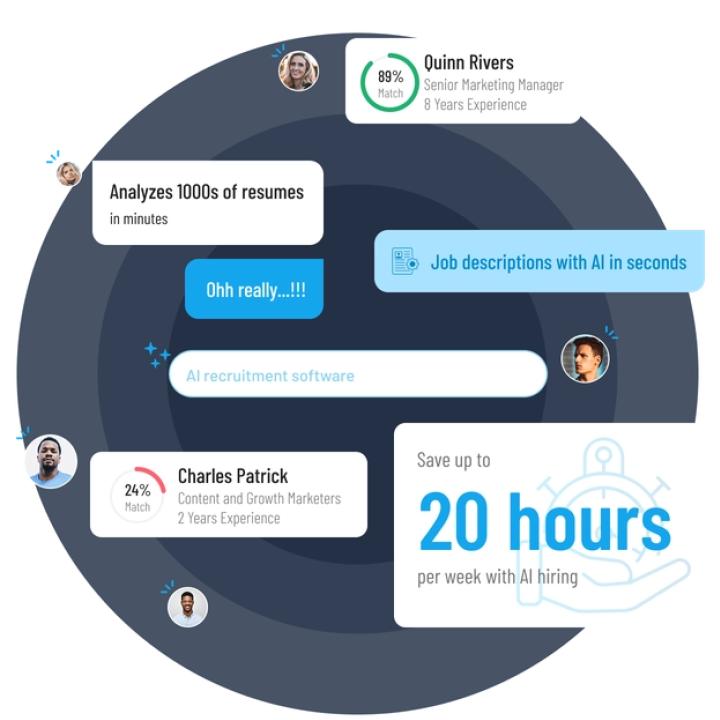
Modern AI hiring software can:
· Analyse skill gaps
· Suggest competency-based phrasing
· Predict candidate match likelihood
· Improve clarity and inclusivity
Conversely, if you have an AI job description generator at your disposal, you can draft a properly organized and optimized role in a matter of minutes. But automating without strategy is still a mediocrity generator.
The Cost of Getting It Wrong
Every one of these job description mistakes to avoid carries real cost:
- Longer time-to-hire
- Higher recruitment expenses
- Lower-quality applicants
- Increased turnover
You don’t just lose applicants, you lose momentum.
Strong candidates often evaluate multiple offers simultaneously. If your job description lacks clarity, structure, or alignment, they move on before you ever engage them.
Final Thoughts
To get better candidates you have to have better job descriptions to begin with.
- Regularly audit your postings.
- You should measure performance metrics.
- You should refine requirements strategically.
Now, you need to pair it with human insights and present-day tools.
When you follow this tips, avoiding common job description mistakes is not a cosmetic revamping, but creating the foundation for smarter hiring.
Because your job description is not just a document in the current highly competitive market for talent.
It’s your first interview.