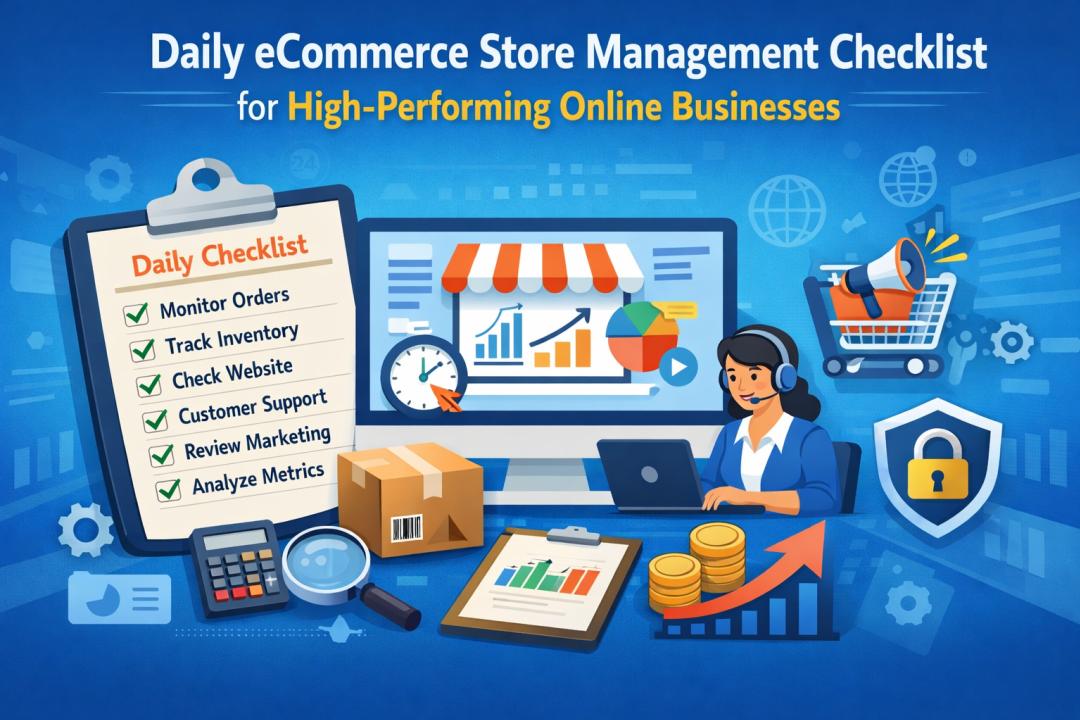
Running an online store is more than listing products and waiting for orders to arrive. Effective eCommerce Management ensures your operations run smoothly every single day.
Without a structured daily process, even minor operational gaps can lead to delayed shipments, stock issues, or lost customers. This is why managing your store consistently is critical for long-term growth.
In this guide, you will learn a practical daily checklist that helps improve performance, maintain accuracy, and strengthen your overall eCommerce Management strategy.
Why Daily eCommerce Management Matters
Daily store activities directly influence customer experience and revenue. A structured eCommerce Management process helps prevent costly mistakes and improves operational efficiency.
High-performing online businesses rely on consistent monitoring of store performance, inventory, and customer interactions. These daily actions reduce friction across your operations and improve decision-making.
Ignoring routine management tasks often leads to inaccurate stock data, delayed fulfillment, and missed sales opportunities.
Monitor Orders & Transactions
Order accuracy is the foundation of trust in online selling. Reviewing daily transactions helps ensure customers receive what they paid for on time.
Check Order Processing Status
Confirm that new orders are being processed correctly through your system. Identify any delays or technical issues that may impact fulfillment.
Verify Payment Gateway Functionality
Ensure all payments are processed successfully. Failed or delayed transactions should be reviewed immediately to avoid customer dissatisfaction.
Process Refunds Promptly
Refund requests must be handled quickly. Delays can damage brand credibility and affect repeat purchases.
Inventory Tracking & Stock Updates
Inventory accuracy is a critical part of successful eCommerce Management. Monitoring stock levels daily helps avoid overselling or running out of popular products.
Review Low-Stock Alerts
Identify items nearing depletion and plan restocking in advance. This prevents missed sales during peak demand.
Update Inventory Records
Ensure real-time stock updates reflect recent purchases or returns. Automated tracking tools can simplify this process.
Manage Supplier Coordination
Stay in contact with suppliers to prevent unexpected stock shortages or delivery delays.
Website Performance & UX Checks
Your store must function smoothly across all devices. Poor website performance directly impacts conversions and customer retention.
Test Page Load Speed
Slow-loading pages increase bounce rates, which is why monitoring performance through tools like Google PageSpeed Insights is essential. Monitor performance regularly to maintain optimal user experience.
Inspect Checkout Flow
Ensure customers can complete purchases without errors. A seamless checkout process improves trust and sales.
Confirm Mobile Responsiveness
Most shoppers browse on mobile devices. Daily checks ensure your layout remains consistent and accessible.
Customer Support & Communication
Customer service plays a key role in overall eCommerce Management. Daily support checks help maintain satisfaction and loyalty.
Respond to Customer Queries
Reply to emails, chats, or support tickets promptly. Fast responses build confidence in your brand.
Track Customer Complaints
Recurring issues should be analyzed and resolved quickly. This helps improve future store operations.
Update Shipping Information
Keep customers informed about order status and delivery timelines to reduce uncertainty.
Product Listings & Catalog Maintenance
Accurate product information improves customer decision-making. Regular catalog updates are essential for store credibility.
Review Product Descriptions
Ensure all listings are clear and up to date. Remove outdated information immediately.
Check Product Images
High-quality visuals improve engagement. Replace low-resolution images when necessary.
Adjust Pricing When Needed
Daily price reviews help maintain competitiveness in dynamic markets.
Marketing & Campaign Monitoring
Marketing efforts must be reviewed daily for performance insights, especially when planning how to scale eCommerce Content across growing product categories. This supports data-driven eCommerce Management decisions.
Track Ad Performance
Analyze campaign results to identify high-performing products or audiences.
Monitor Email Campaigns
Review open rates and conversions to optimize future promotions.
Check Website Traffic
Daily analytics help identify trends or sudden drops in visitor activity.
Security & Data Protection
Protecting customer data is a non-negotiable aspect of store management. Daily security checks prevent fraud or system vulnerabilities.
Monitor Login Activity
Identify suspicious account access attempts. Prompt action reduces risks.
Update Software Plugins
Ensure all store tools remain updated to maintain security standards.
Backup Store Data
Daily backups protect against accidental data loss or system failure.
Analyze Performance Metrics
Tracking store performance helps refine your strategy over time. Metrics reveal areas that need improvement.
Review Conversion Rates
Analyze how effectively visitors are turning into customers.
Monitor Cart Abandonment
Identify patterns and adjust checkout processes accordingly.
Track Revenue Trends
Daily monitoring helps predict demand and plan marketing efforts.
Conclusion
Daily operational checks are essential for maintaining a stable online store. Structured routines improve efficiency and reduce unexpected disruptions.
Effective eCommerce Management allows businesses to respond quickly to customer needs and market changes. It also supports better inventory control and smoother fulfillment processes.
When you consistently monitor orders, performance, and customer interactions, your store becomes easier to scale. Small daily improvements often lead to long-term success.
Apply this checklist to your workflow and refine your strategy regularly to strengthen your eCommerce Management approach.