Early MLM Systems and Manual Operations
In the early stages of the MLM industry, most operations were handled manually. Distributors relied on physical records, spreadsheets, and in-person meetings to manage sales, recruit new members, and track commissions. Companies maintained large administrative teams responsible for calculating payouts, verifying downline structures, and ensuring compliance with compensation plans.
These traditional systems had several limitations. Data processing was slow, errors were common, and scalability was difficult. As networks expanded, tracking distributor performance and commission structures became increasingly complex. Communication with distributors was also limited, often relying on phone calls, printed materials, or periodic events. Despite these challenges, traditional MLM systems laid the foundation for structured network marketing businesses.
Transition to Digital MLM Software
With the rise of personal computers and the internet in the late 1990s and early 2000s, MLM companies began adopting digital solutions. Early MLM software platforms introduced basic automation for managing distributors, calculating commissions, and maintaining genealogy structures. These systems reduced manual errors and improved operational efficiency.
Digital MLM platforms allowed companies to centralize data management. Distributor onboarding, product orders, and commission tracking became more organized and transparent. Web-based dashboards enabled distributors to monitor their sales performance, view their downline growth, and access training materials online.
During this phase, MLM software also started integrating with e-commerce systems. Companies could sell products directly through online platforms while automatically updating distributor commissions and bonuses. This integration helped MLM businesses expand into global markets without relying solely on physical distribution channels.
Cloud-Based MLM Platforms
The next major shift occurred with the adoption of cloud computing. Cloud-based MLM platforms significantly improved accessibility, scalability, and security. Instead of installing software on local systems, companies could manage their entire MLM operations through web-based platforms hosted on secure servers.
Cloud technology allowed businesses to handle large distributor networks with minimal infrastructure investment. Updates, maintenance, and system improvements could be deployed instantly without disrupting operations. It also enabled real-time data synchronization across different regions, making it easier for global MLM companies to manage operations efficiently.
Another important benefit of cloud-based MLM platforms was enhanced reporting and analytics. Business owners could access detailed performance metrics, sales reports, and growth patterns. These insights helped companies refine compensation plans, identify high-performing distributors, and improve strategic decision-making.
Mobile Integration and Real-Time Network Management
As smartphones became widely used, MLM platforms adapted by introducing mobile-friendly systems and dedicated applications. Mobile integration transformed how distributors interacted with MLM platforms. They could now track sales, recruit members, and access training resources directly from their devices.
Real-time notifications and updates improved communication between companies and distributors. Mobile MLM platforms also supported digital payment systems, allowing faster commission payouts and easier financial management. This mobility increased engagement and productivity within MLM networks.
Additionally, social media integration began influencing MLM growth strategies. Distributors leveraged digital marketing, content sharing, and online community building to expand their networks more effectively than traditional offline methods.
The Emergence of AI MLM Software
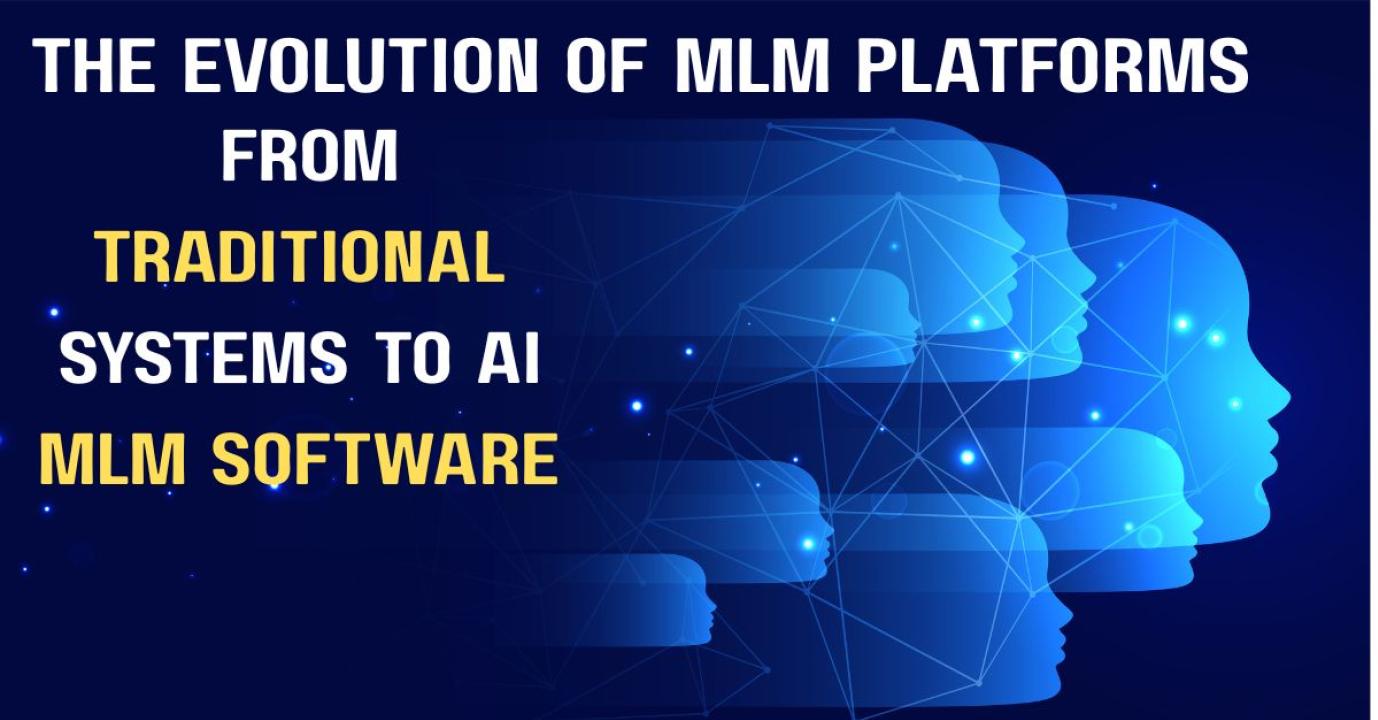
The latest stage in the evolution of MLM platforms involves the integration of artificial intelligence. AI-powered MLM software is transforming how companies manage networks, analyze data, and optimize business strategies.
AI systems can process large volumes of distributor and sales data to identify patterns and trends. Predictive analytics helps businesses forecast sales performance, detect potential churn among distributors, and identify opportunities for network expansion. This level of insight was not possible with earlier MLM systems.
Automation powered by AI also enhances operational efficiency. Tasks such as commission calculations, fraud detection, compliance monitoring, and customer support can now be handled more intelligently. AI chatbots, for example, assist distributors by answering queries, guiding onboarding processes, and providing training recommendations.
Another significant advantage of AI MLM software is personalized distributor engagement. AI algorithms analyze distributor behavior and performance to recommend targeted incentives, marketing strategies, or training programs. This personalization improves distributor retention and productivity.
Furthermore, AI enhances security and transparency within MLM platforms. Advanced monitoring systems can detect suspicious activities, prevent manipulation of compensation structures, and ensure fair network operations. This is particularly important as MLM businesses expand globally and handle larger volumes of transactions.
Future Outlook for MLM Technology
The evolution of MLM platforms continues as new technologies emerge. Future MLM systems are expected to integrate advanced AI models, blockchain-based transaction verification, and deeper analytics capabilities. These technologies will further improve transparency, trust, and operational efficiency within network marketing ecosystems.
Companies adopting modern AI MLM software will gain a strategic advantage by leveraging intelligent automation and data-driven insights. As competition grows in the MLM industry, technology-driven platforms will play a crucial role in supporting sustainable growth and distributor success.
Conclusion
The journey from traditional MLM systems to AI-powered platforms illustrates how technology reshapes business models. Early manual processes gradually gave way to digital software, cloud-based systems, and mobile integration. Today, AI MLM software represents the most advanced stage of this transformation, offering intelligent automation, predictive analytics, and improved network management.
For MLM companies aiming to scale efficiently and remain competitive, adopting modern MLM platforms is no longer optional. The evolution of MLM technology demonstrates that businesses that embrace innovation are better positioned to manage complex networks, support distributors effectively, and achieve long-term growth.