In today’s fast-moving digital economy, understanding the market is no longer a periodic exercise—it is a continuous necessity. Customer preferences shift overnight, competitors launch new offerings rapidly, and global events reshape industries in real time. In such an environment, traditional research methods that rely on surveys, focus groups, and quarterly reports often fall short. This is where AI market research is transforming the landscape.
AI market research refers to the use of artificial intelligence technologies such as machine learning, natural language processing, predictive analytics, and big data processing to collect, analyze, and interpret vast volumes of market data. Instead of relying solely on manual interpretation, businesses now leverage AI systems that process millions of data points in seconds, revealing patterns and insights that would otherwise remain hidden.
The Shift from Traditional to AI-Powered Research
Traditional market research has served businesses well for decades. Surveys, interviews, and statistical sampling helped companies understand consumer behavior and market demand. However, these methods have limitations. They are time-consuming, expensive, and often based on small data samples. Additionally, human bias can influence interpretation, and by the time insights are compiled, market conditions may have already changed.
AI market research addresses these challenges by automating data collection and analysis at scale. It allows organizations to analyze structured data, such as sales figures and CRM records, alongside unstructured data, including social media conversations, customer reviews, call transcripts, and browsing behavior. This multidimensional analysis offers a more accurate and dynamic understanding of market trends.
How AI Market Research Works
AI market research systems operate through several interconnected processes. First, they gather data from multiple digital and enterprise sources. This includes social platforms, websites, transaction systems, marketing tools, and customer support channels. Unlike manual methods that rely on selected data samples, AI systems capture comprehensive datasets in real time.
Next, machine learning algorithms analyze this data to detect patterns, correlations, and anomalies. For example, AI can identify changes in customer sentiment toward a product by analyzing online reviews and social discussions. Natural language processing allows the system to interpret human language, detect emotional tone, and categorize feedback automatically.
Predictive analytics then uses historical and behavioral data to forecast future trends. Businesses can anticipate demand fluctuations, emerging customer preferences, and potential risks before they become significant issues. The result is a continuous feedback loop where insights are constantly updated and refined.
Benefits of AI Market Research for Businesses
The impact of AI market research goes beyond faster reporting. It fundamentally changes how organizations make decisions.
One of the primary advantages is speed. AI systems can process enormous volumes of data within minutes, enabling real-time insights. This agility allows companies to respond quickly to market shifts and competitor moves.
Accuracy is another major benefit. By analyzing comprehensive datasets rather than limited samples, AI reduces errors and improves predictive reliability. Continuous learning mechanisms also refine models over time, enhancing precision.
Cost efficiency plays a significant role as well. Automated data processing reduces the need for extensive manual research teams and repetitive analysis tasks. Businesses can allocate resources more strategically while maintaining deeper market visibility.
AI market research also enables hyper-personalization. Instead of targeting broad demographics, companies can identify micro-segments based on behavior, interests, and engagement patterns. This supports more effective marketing campaigns and product development strategies.
Real-Time Consumer Sentiment Analysis
Understanding customer sentiment has always been critical for brand positioning. AI enhances this capability by analyzing millions of conversations across digital platforms instantly. It can detect whether customers feel positive, negative, or neutral about a product or campaign.
This real-time sentiment analysis allows brands to adjust messaging, resolve concerns, and improve customer experiences proactively. Rather than waiting for quarterly reports, businesses gain immediate visibility into public perception.
Competitive Intelligence Through AI
Monitoring competitors manually can be challenging and incomplete. AI market research tools automatically track competitor pricing, product launches, marketing strategies, and customer feedback. By analyzing these insights, companies can identify gaps in the market, refine positioning, and anticipate competitor strategies.
This data-driven competitive intelligence provides a strategic advantage in crowded markets.
Predictive Market Trend Forecasting
Perhaps one of the most transformative aspects of AI market research is predictive forecasting. Machine learning models analyze historical sales data, economic indicators, consumer behavior patterns, and seasonal trends to forecast demand and revenue opportunities.
For example, retailers can predict which products will gain popularity during upcoming seasons. Financial institutions can anticipate shifts in customer investment preferences. Technology companies can forecast feature adoption trends. Predictive insights empower organizations to act before trends become mainstream.
Industry Applications of AI Market Research
AI market research is not limited to a single industry. Its applications span across sectors.
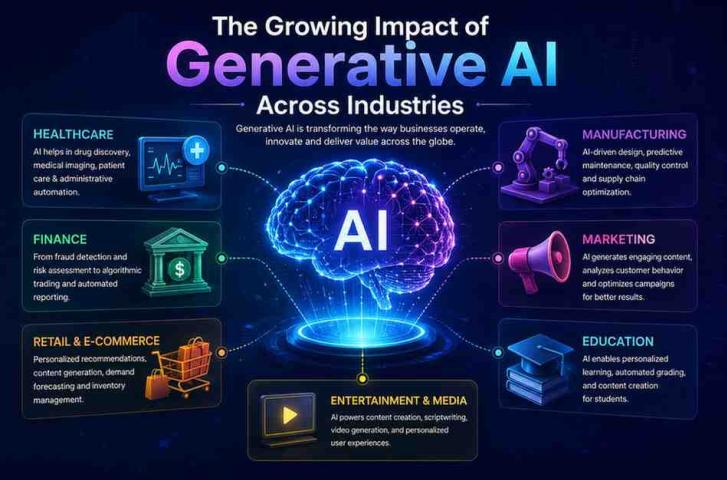
In retail and e-commerce, AI analyzes purchasing patterns, browsing history, and product reviews to optimize pricing and promotions. Retailers can refine inventory management and personalize customer recommendations.
In banking and financial services, AI examines customer transaction data and engagement patterns to understand product demand and financial behavior. This supports targeted financial products and improved customer retention.
Healthcare providers use AI-driven research to analyze patient feedback, treatment outcomes, and public sentiment. This enables service improvement and strategic planning.
Technology and SaaS companies rely on AI insights to evaluate feature usage, user engagement, and customer churn risks. By identifying patterns early, they can improve product development and customer satisfaction.
Data Quality and Ethical Considerations
While AI market research offers immense benefits, it requires high-quality data to produce accurate results. Inconsistent or incomplete data can distort insights and lead to flawed strategies. Therefore, businesses must prioritize data governance and cleaning processes.
Ethical considerations are equally important. AI systems must comply with data privacy regulations and ensure transparent data handling practices. Organizations should implement strong security protocols and responsible AI frameworks to maintain customer trust.
Bias mitigation is another crucial factor. AI models trained on biased datasets may produce skewed insights. Continuous monitoring and diverse data inputs help ensure fairness and reliability.
Integration with Business Systems
For AI market research to deliver full value, it must integrate seamlessly with existing enterprise systems such as CRM platforms, ERP software, and marketing automation tools. This integration ensures that insights are not isolated but actively influence decision-making processes across departments.
Cloud-based architectures often support scalable AI deployment, enabling organizations to process large datasets efficiently while maintaining flexibility.
The Role of Strategic Technology Partners
Implementing AI market research solutions requires expertise in data engineering, machine learning, system integration, and governance. Many organizations collaborate with experienced technology partners to design and deploy scalable AI frameworks.
Companies like Appinventiv support businesses in building customized AI-driven research platforms aligned with their operational goals. From data strategy development to model implementation and optimization, strategic partnerships ensure sustainable success.
The Future of AI Market Research
The future of AI market research lies in autonomous and adaptive intelligence systems. As models become more sophisticated, they will not only analyze data but also recommend strategic actions. AI systems will generate scenario simulations, test marketing strategies virtually, and predict potential outcomes before real-world implementation.
Voice and image analytics will further enhance research capabilities, enabling deeper insights into multimedia content. Real-time dashboards powered by advanced analytics will provide leadership teams with continuous visibility into market performance.
Human-AI collaboration will also strengthen. While AI handles data processing and pattern recognition, human experts will interpret strategic implications and drive creative decision-making. This balanced approach ensures both efficiency and innovation.
Conclusion
AI market research is redefining how businesses understand their customers, competitors, and industry landscapes. By combining large-scale data processing, predictive analytics, and intelligent automation, it enables faster, more accurate, and more strategic decision-making.
Organizations that adopt AI-powered research frameworks gain a competitive advantage through real-time insights, improved forecasting, and personalized engagement strategies. As markets become increasingly complex and data-driven, AI market research will shift from being an optional innovation to a fundamental business necessity.
Companies that embrace this transformation today position themselves to lead tomorrow’s markets with clarity, agility, and confidence.
Also Read - latest machine learning trends