The furniture industry is rapidly shifting toward digital platforms. Customers now prefer browsing sofas, beds, tables, and home décor from their smartphones rather than visiting multiple physical stores. A multi-vendor furniture marketplace app allows different furniture sellers to list products under one platform, giving customers more choices while enabling businesses to scale faster.
If you're planning to build a furniture marketplace app like IKEA Marketplace, Wayfair, or Urban Ladder, this guide will walk you through the entire process — from planning and features to technology stack and cost considerations.
What Is a Multi-Vendor Furniture Marketplace App?
A multi-vendor furniture marketplace app is a platform where:
- Multiple furniture sellers register and list products
- Customers browse, compare, and purchase furniture
- Admin manages vendors, commissions, and operations
- Delivery partners handle logistics
Unlike a single-brand store, this model creates a centralized ecosystem for buyers and sellers.
Why Invest in a Furniture Marketplace App?
Here’s why this model is gaining traction:
- Growing online furniture demand
- Increased trust in digital payments
- Rising urban home décor spending
- AR-based product visualization
- Scalable commission-based revenue model
Furniture is a high-ticket category, which means higher margins and better commission opportunities.
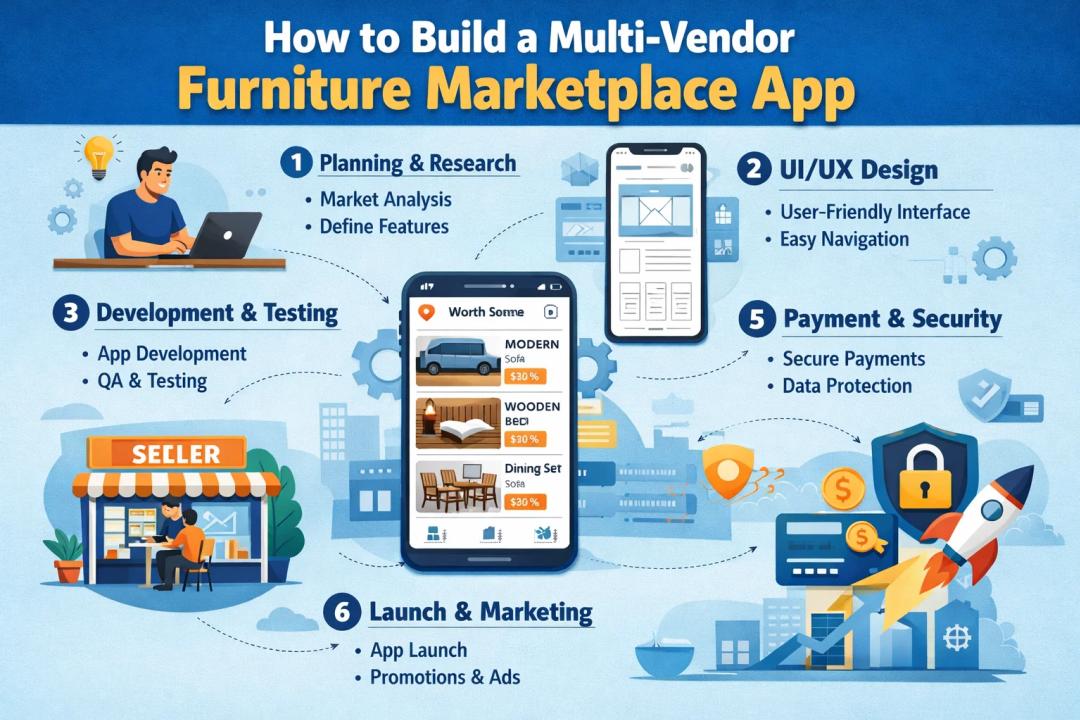
Step-by-Step Guide to Build a Multi-Vendor Furniture Marketplace App
Here are the steps for furniture ecommerce app development.
Step 1: Market Research & Niche Selection
Before development, define:
- Target audience (urban buyers, premium segment, budget shoppers)
- Product focus (luxury furniture, office furniture, custom furniture)
- Geographic scope (city-based, national, global)
- Competitive analysis
Understanding demand helps you design the right feature set.
Step 2: Define the Business Model
Choose how your marketplace will earn revenue:
- Commission per sale
- Vendor subscription fees
- Featured product listings
- Delivery charges
- In-app advertising
A hybrid model often works best for long-term profitability.
Step 3: Core Features Required
A multi-vendor marketplace requires three panels:
Customer App Features
- Easy registration & login
- Advanced search & filters (size, color, material, price)
- High-resolution product images & videos
- 360-degree product view
- AR room visualization
- Wishlist & cart
- Secure checkout
- Order tracking
- Reviews & ratings
- Push notifications
Furniture buyers rely heavily on visuals and detailed product descriptions.
Vendor Panel Features
- Vendor registration & verification
- Product upload & management
- Inventory control
- Pricing management
- Order management dashboard
- Sales reports & analytics
- Commission tracking
Vendors should have complete control over their catalog and sales insights.
Admin Panel Features
- Vendor approval & management
- Commission setup
- Order monitoring
- Payment settlements
- Product moderation
- Promotional campaign management
- Customer support management
- Analytics dashboard
The admin panel ensures smooth marketplace operations.
Advanced Features for Competitive Advantage
To stand out in 2026, consider:
- AI-based product recommendations
- Virtual room planner
- AR product placement
- EMI & financing integration
- Multi-language & multi-currency support
- Real-time inventory sync
- Social commerce integration
AR and AI can significantly enhance user engagement and reduce return rates.
Cost to Build a Multi-Vendor Furniture Marketplace App
The furniture ecommerce app development cost depends on features, technology, and development location.
Estimated Development Cost (2026)
| App Type | Estimated Cost |
|---|---|
| Basic MVP | $5,000 – $8,000 |
| Standard Marketplace | $10,000 – $15,000 |
| Advanced App with AR & AI | $15,000+ |
Factors Affecting Cost
- Number of platforms (iOS + Android)
- UI/UX complexity
- AR & AI integration
- Backend scalability
- Number of vendors supported
- Third-party integrations
- Development team location
Maintenance typically costs 15–25% of the initial development cost annually.
Final Thoughts
Building a multi-vendor furniture marketplace app in 2026 is a high-investment but high-return opportunity. With the right combination of:
- Strong vendor ecosystem
- Advanced visualization tools
- Seamless checkout
- Scalable backend
- Smart monetization
You can create a powerful digital furniture ecosystem.
Start with an MVP, validate demand, and scale strategically with AI, AR, and personalization features.