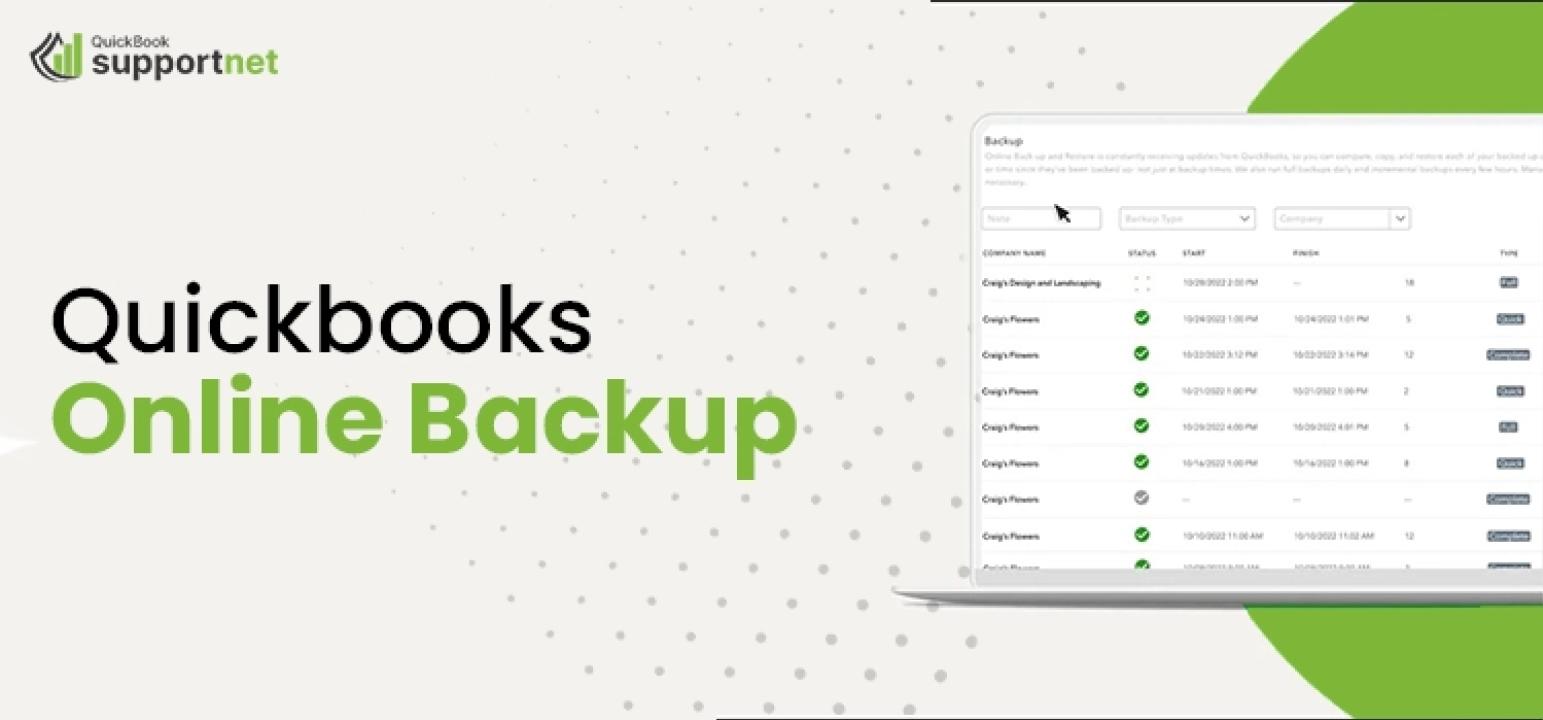
Losing your financial data is not a glitch — it is a catastrophe. For small business owners who rely on QuickBooks, the stakes could not be higher. That is exactly why QuickBooks Online Backup has become one of the most critical investments any business can make in 2026. Whether it is a ransomware attack, accidental deletion, or a platform outage, having a solid backup strategy means the difference between a minor inconvenience and a full-blown financial nightmare.
Protect your financial data with the best QuickBooks Online Backup tools. Compare top solutions, features & pricing. Need help? Call +1(866)500-0076 today.
But here is the thing most business owners do not know — QuickBooks Online does not automatically back up your data the way you might think. Intuit stores your data on their servers, yes, but that does not protect you from user errors, third-party app conflicts, or account-level data corruption. You need an independent backup layer. And in this guide, we are breaking down the best tools to help you sleep a little easier at night.
Why QuickBooks Online Backup Matters More Than Ever in 2026
Cyber threats have escalated dramatically. Small businesses are now the primary targets of ransomware attacks, with over 43% of all cyberattacks aimed at companies with fewer than 50 employees. Meanwhile, accidental data deletion inside QuickBooks — a wrong click, a merged vendor, a deleted transaction — happens more than anyone wants to admit.
Here is what is truly at risk without a proper QuickBooks Online Backup plan:
- Years of transaction history wiped in seconds
- Payroll records that trigger compliance issues
- Invoices and receivables that disappear mid-audit
- Customer and vendor data that takes months to rebuild
- Tax preparation data lost right before filing season
What to Look for in a QuickBooks Online Backup Tool
Before jumping into the list, here is what separates a good backup solution from a great one:
- Automated, scheduled backups — Manual backups get forgotten. Look for tools that run daily or on-demand without you lifting a finger.
- Granular restore options — You should be able to restore a single deleted invoice, not just the entire account.
- Version history — The ability to roll back to a specific date is priceless during audits or disputes.
- Data encryption — Your financial data must be encrypted both in transit and at rest.
- Integration depth — The tool should back up customers, vendors, transactions, payroll, attachments, and settings — not just surface-level data.
- Compliance standards — Look for SOC 2 Type II, GDPR compliance, or similar certifications.
Best QuickBooks Online Backup Tools for Small Businesses in 2026
1. Rewind Backups — The Gold Standard
Rewind has become synonymous with QuickBooks Online Backup for a reason. It offers automatic daily backups, unlimited version history, and one-click restore capabilities that even non-technical users can handle confidently.
Key Features:
- Daily automatic backups with on-demand backup triggers
- Granular restore — restore individual transactions, customers, or entire accounts
- 256-bit AES encryption with SOC 2 Type II compliance
- Visual comparison of data changes over time
- 30-day free trial available
2. Backupify (by Datto) — Enterprise Reliability, SMB Pricing
Backupify brings serious enterprise muscle to the small business world. It captures three daily backups automatically and retains data indefinitely, making it a strong contender for businesses with strict compliance requirements.
Key Features:
- Three automated daily backups
- Unlimited storage with no data caps
- Centralized dashboard for multi-client management (great for accountants)
- Export backups to local storage for offline copies
- HIPAA-compliant options available
3. Skyvia — Budget-Friendly with Powerful Automation
Skyvia punches well above its price point. It offers cloud-to-cloud backup specifically designed for SaaS platforms, including a robust QuickBooks Online Backup workflow that requires zero coding to configure.
Key Features:
- Scheduled and incremental backups
- Restore to the same or a different QuickBooks account
- CSV export for offline archiving
- Supports over 150 cloud data sources
- Strong API-level data capture
4. Transaction Pro — For Data Migration and Backup Combined
Transaction Pro is not a traditional backup tool — it is a data management powerhouse that doubles as a backup solution. It allows businesses to export all QuickBooks data into structured formats that can be stored, archived, and re-imported at any time.
Key Features:
- Full QuickBooks data export to Excel, CSV, and IIF formats
- Ideal for creating manual point-in-time snapshots
- Supports data migration between QuickBooks versions or company files
- Detailed field-level mapping for precise data control
5. Saasyan Assure — Compliance-First Backup
For businesses operating under strict regulatory frameworks, Saasyan Assure offers a compliance-first approach to QuickBooks Online Backup. It captures comprehensive audit trails alongside your financial data, making it particularly valuable for legal, medical, and government contractors.
Key Features:
- Real-time change tracking and audit logs
- Automated policy-based backup schedules
- Immutable backup storage (data cannot be altered post-backup)
- Detailed reporting for compliance documentation
Comparing the Top QuickBooks Online Backup Tools at a Glance
| Tool | Auto Backup | Granular Restore | Compliance | Starting Price |
|---|---|---|---|---|
| Rewind | Daily | Yes | SOC 2 Type II | ~$9/month |
| Backupify | 3x Daily | Yes | HIPAA Option | ~$25/month |
| Skyvia | Scheduled | Yes | Standard | Free / $15+ |
| Transaction Pro | Manual | Partial | Standard | ~$20/month |
| Saasyan Assure | Real-Time | Yes | Advanced | Custom |
How to Set Up QuickBooks Online Backup the Right Way
Getting started does not have to be complicated. Here is a practical setup approach:
- Audit your current risk — Identify what data would be catastrophic to lose and how often it changes.
- Choose a tool that matches your compliance needs — A freelancer and a medical billing company have very different requirements.
- Connect via OAuth — Most tools use secure OAuth authorization to connect to your QuickBooks Online account without storing your password.
- Run your first manual backup immediately — Do not wait for the first scheduled backup. Capture a clean baseline right away.
- Test a restore — This step gets skipped constantly. Practice restoring a single transaction to verify everything works before you actually need it.
- Set up backup notifications — Know instantly if a backup fails rather than discovering it during a crisis.
Common Mistakes Small Businesses Make with QuickBooks Backup
- Assuming Intuit has you covered — Intuit protects against platform failures, not user errors or data corruption.
- Relying on manual backups alone — Life gets busy. Automation is not optional, it is essential.
- Never testing restores — A backup you have never tested is a backup you cannot trust.
- Ignoring attachment backups — Receipts, contracts, and documents attached to transactions are often overlooked by basic tools.
- Using only one backup location — Follow the 3-2-1 rule: three copies, two different media, one offsite.
Conclusion
In 2026, QuickBooks Online Backup is not a luxury — it is the financial safety net your business cannot operate without. Whether you choose Rewind for its simplicity, Backupify for its depth, or Skyvia for its flexibility, the most important thing is that you choose something and set it up today.
Your financial data tells the story of your business. Protect that story. If you need guidance on the right backup setup for your specific situation, reach out at +1(866)500-0076 for expert assistance.
Read This Blog:- Windows Firewall is Blocking QuickBooks
Frequently Asked Questions
Q1: Does QuickBooks Online automatically back up my data?
QuickBooks Online stores your data on Intuit's servers, but this does not protect against accidental deletion, user errors, or data corruption caused by third-party integrations. A dedicated QuickBooks Online Backup tool provides the independent protection layer you actually need.
Q2: How often should I back up my QuickBooks Online data?
For most small businesses, daily automated backups are sufficient. However, businesses processing high transaction volumes — like retail or e-commerce — benefit from real-time or multiple-daily backups to minimize potential data loss windows.
Q3: Can I restore just one deleted transaction, or does it have to be an entire account restore?
Top-tier tools like Rewind and Backupify offer granular restore, meaning you can recover a single invoice, customer record, or vendor entry without touching the rest of your data.
Q4: Is my financial data safe with third-party backup tools?
Reputable tools use 256-bit AES encryption and comply with standards like SOC 2 Type II. Always verify a tool's compliance certifications before connecting it to your QuickBooks account.
Q5: How much does QuickBooks Online Backup cost?
Pricing varies widely — from free tiers with limited features (Skyvia) to approximately $9–$25/month for full-featured solutions. Given that data recovery can cost thousands of dollars, the ROI is nearly instant.
Q6: What happens if my QuickBooks Online account gets hacked?
If your account is compromised and data is altered or deleted, a backup tool with version history allows you to roll back to a clean pre-incident state. Without a backup, recovery options are extremely limited.
Q7: Who should I contact for help setting up QuickBooks Online Backup?
For personalized guidance on choosing and configuring the right backup solution for your business, call +1(866)500-0076 to speak with a knowledgeable professional.