
In today’s digital-first economy, businesses rely heavily on technology to manage operations, improve efficiency, and stay competitive. A professional Software development company plays a critical role in building powerful systems that streamline workflows and support long-term growth. Enterprise software solutions are specifically designed to meet the complex needs of large organizations, helping them manage data, automate processes, and enhance decision-making across departments.
This complete guide explains what enterprise software solutions are, their types, benefits, and how businesses can choose the right development partner.
What Are Enterprise Software Solutions?
Enterprise software solutions are large-scale applications designed to support business processes across an entire organization. Unlike regular software tools, these systems are built to handle high volumes of data, multiple users, advanced security requirements, and integration with other enterprise systems.
They help organizations manage:
Customer relationships
Human resources
Supply chain operations
Financial management
Business intelligence and reporting
Enterprise solutions are usually customized to match specific business requirements, ensuring flexibility and scalability.
Key Types of Enterprise Software Solutions
1. Enterprise Resource Planning (ERP)
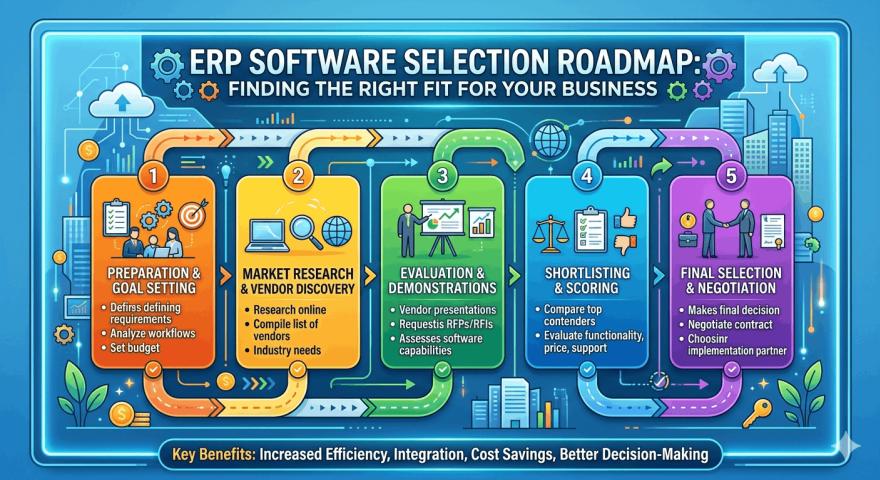
ERP systems integrate core business functions such as finance, HR, procurement, and operations into a single unified platform.
2. Customer Relationship Management (CRM)
CRM systems help manage customer data, sales pipelines, marketing campaigns, and service interactions.
3. Supply Chain Management (SCM)
SCM software optimizes logistics, inventory, supplier relationships, and distribution networks.
4. Business Intelligence (BI)
BI tools analyze data to provide actionable insights for strategic decision-making.
5. Human Resource Management Systems (HRMS)
These platforms automate payroll, recruitment, performance tracking, and employee management.
Why Enterprise Software Solutions Are Important
1. Improved Operational Efficiency
Automation reduces manual work, minimizes errors, and improves productivity across departments.
2. Centralized Data Management
All business data is stored in one system, making it easier to access, analyze, and manage.
3. Better Decision-Making
Real-time reporting and analytics allow management teams to make informed decisions.
4. Enhanced Collaboration
Integrated systems improve communication between departments.
5. Scalability
Enterprise software grows with your business, supporting expansion and increased user demand.
Custom vs Off-the-Shelf Enterprise Software
Businesses often face the choice between ready-made solutions and custom-built systems.
Off-the-Shelf Software
Faster implementation
Lower upfront cost
Limited customization
Custom Enterprise Software
Tailored to business needs
Greater flexibility
Better long-term ROI
Scalable architecture
For organizations with unique workflows, working with a custom crm software development company can ensure the solution aligns perfectly with operational goals and customer management strategies.
Key Features of Enterprise Software Solutions
High-level security and compliance
Cloud and on-premise deployment options
API integrations
Role-based access control
Real-time analytics dashboards
Mobile accessibility
These features ensure the system supports both operational efficiency and strategic growth.
Industries That Benefit Most
Enterprise software solutions are widely used in:
Healthcare
Finance and banking
Retail and eCommerce
Manufacturing
Education
Logistics
Each industry requires specialized functionalities to manage complex processes efficiently.
How to Choose the Right Enterprise Software Partner
When selecting a development partner, consider:
Industry experience
Technical expertise
Scalability capabilities
Security standards
Post-launch support
Transparent communication
The right partner will understand your business challenges and deliver a solution that drives measurable results.
Future Trends in Enterprise Software
AI-powered automation
Cloud-native applications
Advanced data analytics
Low-code and no-code platforms
Cybersecurity enhancements
Staying updated with these trends ensures long-term competitiveness.
Conclusion
Enterprise software solutions are vital for organizations that want to streamline operations, enhance productivity, and achieve sustainable growth in a competitive marketplace. These solutions are designed to integrate and manage core business functions such as finance, human resources, supply chain, sales, and customer service within a unified system. By centralizing data and automating repetitive processes, enterprise software reduces manual errors, improves accuracy, and enables faster decision-making.
Solutions like Enterprise Resource Planning (ERP) systems help manage business resources efficiently, while Customer Relationship Management (CRM) platforms strengthen customer engagement and retention. Additionally, advanced analytics and business intelligence tools provide real-time insights that support strategic planning and performance optimization.
To gain maximum value, businesses must first assess their operational needs, define clear objectives, and evaluate available software options carefully. Choosing a scalable and flexible solution ensures that the system can grow alongside the organization. Partnering with experienced technology providers also plays a key role in successful implementation, customization, integration, and employee training.
When implemented effectively, enterprise software solutions improve collaboration, increase transparency, reduce operational costs, and enhance overall efficiency. Ultimately, investing in the right enterprise technology empowers businesses to innovate, adapt to market changes, and achieve long-term success.