Running a startup is hard without figuring out your finances alone. Most founders are great at building products. But when it comes to financial management, cash flow forecasting, and building a financial roadmap, many feel stuck. That is exactly where a virtual CFO steps in.
This guide covers everything you need to know about hiring the right CFO services, what to look for, and how to get real value fast.
What Is a Virtual CFO?
A virtual CFO is a senior financial professional who works with your business on a part-time or contract basis. They bring the same financial expertise as a full-time CFO but at a fraction of the cost.
Instead of paying $200,000 to $400,000 a year, startups get high-level financial leadership on flexible terms. This model is also called a fractional CFO or outsourced CFO depending on the structure of the engagement.
The virtual CFO handles strategic financial planning, financial reporting, investor relations, board presentations, and everything in between. They plug into your team and add value almost immediately.
Why Startups Need a Virtual CFO
Early-stage startups usually rely on a bookkeeper or accountant. That works at first. But as you grow, financial needs get more complex. You need someone who thinks strategically, not just records transactions.
A bookkeeper records what happened. A virtual CFO tells you what it means and what to do next.
Startups without solid financial guidance burn through cash faster than expected. They miss growth opportunities because there was no financial model to guide decisions. They lose investor confidence because their financial statements were not investor-ready.
A virtual CFO fixes all of this. They bring structure, strategy, and clarity to your financial operations from day one.
Core Services a Virtual CFO Provides
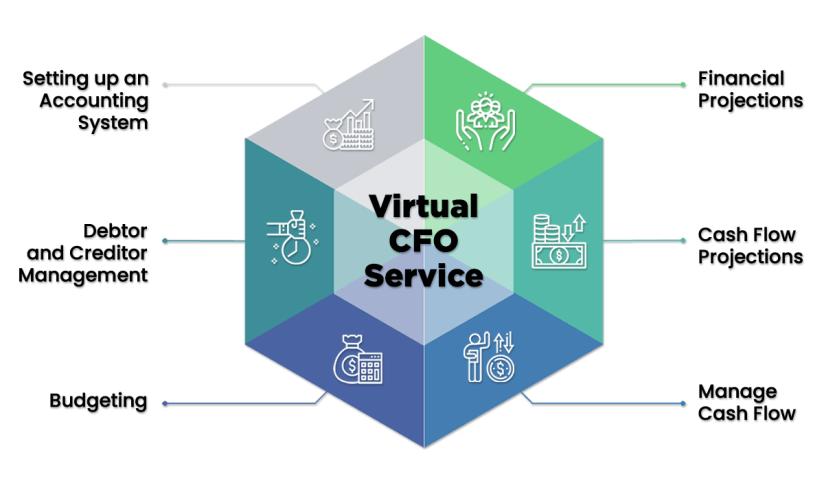
Cash Flow Management and Forecasting
Poor cash flow management is one of the top reasons startups fail. A virtual CFO builds a cash flow forecasting system so you always know where you stand.
They monitor your burn rate, alert you when cash is getting tight, and help you plan months ahead. With proper cash flow analysis, you stop reacting and start planning.
Strategic Financial Planning
A virtual CFO helps you figure out where you are going, not just where you are. They build a financial roadmap aligned with your business strategy and growth path.
This includes scenario planning so you can see what happens if sales drop, headcount grows, or you raise a new round. Better data means better decisions.
Financial Reporting and Statements
Investors, boards, and lenders need accurate and timely financial reports. A virtual CFO makes sure your profit and loss statements, balance sheets, and cash flow reports are clean and ready when needed.
They also manage board reporting and board presentations so you look confident and prepared in every meeting.
Fundraising Support
Raising money is one of the hardest parts of running a startup. A virtual CFO builds investor-ready models, prepares financial projections, and helps you tell a compelling financial story.
They know what investors look for, what questions they ask, and how to present unit economics that build confidence. Good fundraising support from a CFO can be the difference between yes and no.
VAT, Tax and Regulatory Compliance
Tax laws are complex and change often. A virtual CFO works with your advisors to stay compliant with federal tax prep, state sales tax, and broader regulatory compliance requirements.
For startups operating across borders, VAT compliance is a growing challenge. Getting your VAT filings right from the start protects you from costly penalties later. Using a VAT calculation tool alongside your virtual CFO helps keep filings accurate and on time.
A good tax strategy minimizes liability without cutting corners. It is not just about saving money. It is about protecting the business long term.
Financial Systems and Tools
Great financial management needs great tools. A virtual CFO helps you set up scalable financial systems using platforms like QuickBooks Online, Zoho Books, Power BI, ERP solutions, and FP&A tools.
The right setup means better data, faster reporting, and fewer errors. As the business grows, your systems grow with it.
For document-heavy workflows like contract management and financial record keeping, a solid business document solution helps your finance team stay organized and audit-ready.
Risk Mitigation and Internal Policies
A virtual CFO identifies financial risks early and puts internal policies in place to reduce exposure. They advise on venture debt, cap table management, and decisions that carry long-term consequences.
Virtual CFO vs Fractional CFO vs Outsourced CFO
These terms are used interchangeably but there are small differences.
A virtual CFO typically works fully remote and supports multiple clients. A fractional CFO works part-time on a set hours-per-week basis. An outsourced CFO usually means a firm handles the full CFO function externally.
In practice all three deliver similar financial leadership value. What matters most is the quality of the person and fit with your business. Fractional CFO services are growing fast because they give startups executive talent without executive overhead.
What to Look for in a Virtual CFO
Not all CFOs are equal. Here is what matters when hiring one.
Startup experience is essential. A CFO from large corporations may not understand the pace of early-stage companies. Look for someone who has worked at your stage.
Industry knowledge helps. SaaS startups need someone who understands MRR, churn, and LTV. E-commerce businesses have different metrics. Match the CFO to your model.
Strategic thinking beats number crunching. You need a financial coach and business advisor, not just someone who reads spreadsheets. The best combine CPA qualifications with strong business strategy instincts.
Clear communication matters. A great CFO explains complex topics in plain language and is comfortable giving business advice to founders and boards alike.
Tech fluency is a must. Your virtual CFO should know modern financial tools and accounting management platforms. This makes reporting faster and more reliable.
How to Find the Right Virtual CFO for Your Startup
The best way to find the right fit is to look for someone with a proven track record with early-stage companies. They should understand your industry, your stage, and your goals before they start advising you.
A good place to start is exploring dedicated virtual CFO services for business startups that specialise in startup financial leadership. The right firm will cover everything from cash flow management and financial forecasting to fundraising support and financial decision-making.
What separates a great virtual CFO from an average one is their ability to make your numbers mean something. They do not just deliver financial reports. They tell you what to do next. Look for practical, specific financial guidance grounded in real startup experience rather than generic business advice.
When Should a Startup Hire a Virtual CFO?
Many founders wait too long. By the time they realize they need financial help, they are already in trouble.
Here are the clearest signs it is time to bring one in.
You are preparing to raise a funding round and need investor-ready models. Your burn rate is climbing and you are unsure of your runway. You are scaling fast and existing financial systems cannot keep up. Investors or a board expect professional financial reporting. You are making major decisions around hiring or expansion and need solid financial analysis.
The earlier you bring in financial leadership, the better positioned you are to grow sustainably.
The Real Cost of Not Having One
Some founders skip the CFO because it feels like an unnecessary expense. That thinking is costly.
Without proper financial management, startups overspend in the wrong areas, underprice products, and run out of cash before hitting the next milestone. They also miss tax strategy opportunities that could save tens of thousands.
A virtual CFO typically costs between $2,000 and $10,000 per month. Compare that to the cost of one bad financial decision. Good financial guidance pays for itself many times over.
Building a Long-Term Financial Partnership
The best virtual CFO relationships are partnerships, not transactions. The CFO learns your business over time and becomes a trusted voice in major decisions. They build scalable financial systems and help you hire the right finance team at the right moment.
This financial leadership becomes a real competitive advantage. Businesses that manage their finances well grow faster, raise more easily, and handle downturns better.
Whether you are pre-revenue or heading toward $10M ARR, the right virtual CFO can fundamentally change your growth trajectory.
Frequently Asked Questions
How is a virtual CFO different from an accountant?
An accountant records transactions and handles tax filings. A virtual CFO focuses on strategy, using financial data to guide decisions and help the business grow. Most startups need both.
Can they help with fundraising?
Yes. They build financial models, prepare projections, create investor-ready materials, and coach founders through the process. A strong CFO meaningfully improves your chances of closing a round.
When should a startup hire one?
Most benefit once they hit $500K in annual revenue or are preparing to raise funding. Some founders bring in financial guidance much earlier if they lack a finance background.
What tools do they use?
Common tools include QuickBooks Online, Zoho Books, Power BI, ERP solutions, and FP&A tools. The right mix depends on business size and complexity.
Can they work with my existing bookkeeper or accountant?
Yes. A virtual CFO sits above the bookkeeper and accountant. They use that data to build strategy, create reports, and guide decisions.
Is a virtual CFO the same as a fractional CFO?
Very similar. Both provide part-time financial leadership. Fractional CFO usually means a set hours per week engagement. Virtual CFO is the broader term for remote flexible CFO services.
Do they handle VAT and tax compliance?
Yes. A virtual CFO coordinates with your tax advisors on federal tax prep, state sales tax, and VAT compliance. For cross-border businesses, getting VAT right early avoids serious penalties down the line.
How do I evaluate one before hiring?
Ask about startup experience, past results, and how they approach cash flow forecasting and financial systems. A strong virtual CFO asks smart questions about your business before making any recommendations.
Conclusion
A virtual CFO is not a luxury for startups. It is one of the smartest investments you can make at any stage of growth.
You get senior financial leadership, strategic guidance, and the kind of financial clarity that lets you make confident decisions. You avoid the costly mistakes that come from flying blind. And you build the financial foundation your business needs to scale, raise capital, and survive tough stretches.
The earlier you bring in the right financial expertise, the better. Whether you are just getting started or already growing fast, a virtual CFO helps you move with purpose instead of guesswork.
Find the right fit, give them context, and let them do what they do best. Your finances will thank you.