
The Growing Shift Toward Voice-Driven AI Experiences
Businesses today are witnessing a major shift in how customers interact with technology. While chatbots and messaging platforms once dominated digital conversations, voice-based interactions are quickly becoming the preferred channel for many users. People naturally communicate through speech, and organizations are now exploring ways to replicate that experience through artificial intelligence.
This shift has led to the rapid rise of AI voice agents—intelligent systems that can understand spoken language, process context, and respond with human-like voices. From customer service automation to appointment scheduling and sales calls, AI voice agents are transforming how companies handle large volumes of conversations. As a result, many organizations are actively investing in AI voice agent development to streamline operations and improve customer experiences.
However, building such systems requires careful planning, the right technology stack, and a clear understanding of development costs. Businesses often want to know not only how these systems work but also the cost to build an AI voice agent capable of delivering enterprise-level performance.
What Is an AI Voice Agent?
An AI voice agent is an advanced conversational system designed to interact with users through spoken language. Unlike traditional voice response systems that rely on fixed commands and rigid menus, AI voice agents use machine learning and natural language processing to understand user intent and respond intelligently.
At its core, an AI voice agent combines several technologies such as speech recognition, natural language understanding, and speech synthesis. These technologies allow the system to convert speech into text, interpret the meaning of the conversation, generate relevant responses, and deliver them through natural-sounding voice output.
Because of these capabilities, AI voice agents can perform complex tasks like answering customer queries, guiding users through service workflows, or even conducting outbound calls for sales and marketing campaigns. As voice interfaces become more sophisticated, businesses are realizing that AI voice agents can replace or assist human agents in many operational processes.
Why Businesses Are Investing in AI Voice Agent Development
Organizations across industries are increasingly adopting AI voice agents as part of their digital transformation strategies. One of the primary reasons behind this adoption is the growing demand for instant customer support. Customers expect quick responses and seamless service, and traditional call centers often struggle to handle high volumes of interactions efficiently.
AI voice agents provide a scalable solution by enabling companies to automate a large portion of their voice-based communications. These systems can operate around the clock, ensuring that customers receive assistance even outside regular business hours. This not only improves customer satisfaction but also reduces operational costs associated with maintaining large support teams.
Another factor driving adoption is the ability of AI voice agents to analyze conversations and extract insights from them. Businesses can gain valuable information about customer behavior, preferences, and common pain points. This data helps organizations refine their services and improve decision-making processes.
Real-World Applications of AI Voice Agents
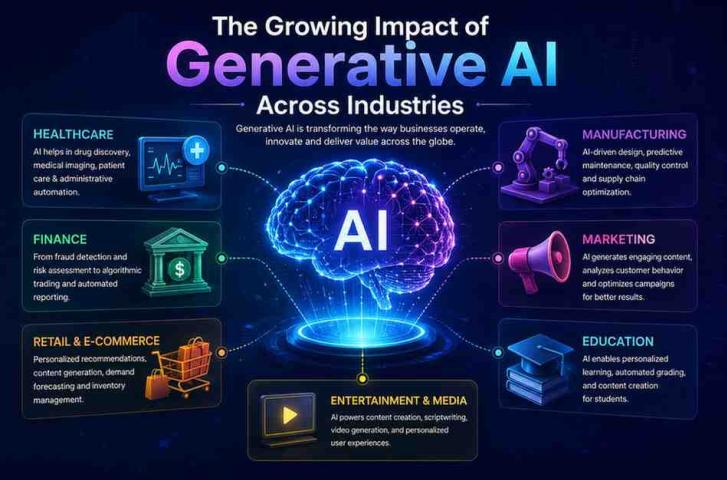
The adoption of AI voice agents spans across a wide range of industries, each using the technology to address specific operational challenges. In customer support environments, voice agents are frequently used to handle routine inquiries such as account information, order tracking, and troubleshooting assistance. By automating these repetitive tasks, companies can free human agents to focus on more complex issues that require empathy and critical thinking.
In the healthcare sector, AI voice agents are increasingly used for appointment scheduling and patient communication. Hospitals and clinics deploy voice assistants to manage appointment bookings, send reminders, and provide information about services. This reduces administrative workload while improving patient engagement.
Retail businesses also leverage voice agents to facilitate order placement and customer inquiries. Instead of navigating complex websites or waiting in call center queues, customers can simply speak to an AI assistant to check product availability, place orders, or track deliveries. Financial institutions, on the other hand, use voice agents for account management, transaction inquiries, and fraud detection notifications.
These diverse applications highlight how AI voice technology is evolving into a versatile tool capable of enhancing customer interactions across industries.
Understanding the Technology Behind AI Voice Agent Development
Developing a reliable AI voice agent requires a combination of several advanced technologies working together seamlessly. The first essential component is speech recognition, which converts spoken language into text that the system can process. High-quality speech recognition engines are crucial for ensuring that the system accurately interprets user input, even in noisy environments or when dealing with diverse accents.
Once the spoken input is converted into text, natural language understanding models analyze the message to determine the user’s intent. These models rely on machine learning algorithms that can identify patterns in language and extract relevant information from conversations. This stage allows the system to interpret questions, requests, or commands accurately.
After understanding the user's intent, the conversational engine generates an appropriate response. This component manages the flow of the conversation and ensures that the AI maintains context throughout the interaction. Finally, the generated response is converted into speech through text-to-speech technology, enabling the AI to communicate with the user in a natural and engaging voice.
Together, these technologies form the backbone of AI voice agent development and enable businesses to deliver seamless voice interactions.
The Development Process of an AI Voice Agent
The development of an AI voice agent begins with defining the business objectives that the system is expected to achieve. Organizations must identify the specific tasks the voice agent will perform, whether it involves handling customer support inquiries, assisting with sales calls, or managing internal workflows.
Once the objectives are established, developers design the conversational structure that guides how the AI interacts with users. This stage involves mapping out various conversation scenarios, defining potential user intents, and determining how the system should respond in different situations. A well-designed conversational framework is essential for ensuring that interactions feel natural and intuitive.
The next phase involves selecting the appropriate technology stack and training AI models. Developers integrate speech recognition tools, natural language processing frameworks, and voice synthesis engines to build the core system. Machine learning models are then trained on relevant datasets to improve the AI’s ability to understand industry-specific language and user behavior.
Before deployment, extensive testing is conducted to evaluate system performance, accuracy, and reliability. Developers simulate real-world scenarios to identify potential issues and optimize the AI’s responses. Continuous monitoring and improvements ensure that the voice agent evolves over time and delivers consistent performance.
Cost to Build an AI Voice Agent
One of the most frequently asked questions among businesses exploring this technology is the cost to build an AI voice agent. The total investment required for development can vary widely depending on the complexity of the system and the features involved.
A basic AI voice agent designed for simple customer queries may cost between $40,000 and $80,000. These systems typically rely on pre-built AI models and limited integrations. Mid-level solutions with more advanced conversational capabilities and multiple integrations may require an investment ranging from $80,000 to $180,000.
For large enterprises seeking highly customized AI voice solutions, development costs can exceed $200,000 to $400,000 or more. These advanced systems often involve custom AI model training, large-scale infrastructure deployment, and integration with multiple enterprise platforms. Despite the higher initial investment, such systems can deliver significant long-term cost savings and operational efficiency.
Key Factors Influencing AI Voice Agent Development Costs
Several factors influence the overall cost of AI voice agent development. One of the most important considerations is the complexity of the conversational AI system. Voice agents designed to handle simple tasks require less development effort compared to systems capable of managing complex multi-step interactions.
Another factor is the level of AI customization required. Businesses operating in specialized industries may need AI models trained on domain-specific data, which increases development time and cost. Integration requirements also play a major role, as connecting the voice agent to existing enterprise systems can require additional engineering resources.
Infrastructure requirements are another critical cost factor. Voice agents designed to handle thousands of simultaneous calls require robust cloud infrastructure and scalable architecture. Additionally, the quality of voice synthesis technology can impact costs, especially if businesses choose premium solutions that offer more natural and expressive voices.
Challenges Businesses Face in AI Voice Agent Implementation
Despite the many advantages of AI voice agents, implementing these systems can present certain challenges. Speech recognition accuracy remains a common concern, particularly in environments with background noise or when users speak with diverse accents and dialects.
Another challenge lies in maintaining conversation context. Human conversations often involve multiple topics and subtle nuances, and training AI systems to manage these complexities requires sophisticated models and extensive training data.
Security and data privacy are also critical considerations. Voice agents often process sensitive information such as personal data and financial details, making it essential for organizations to implement strong security protocols and comply with data protection regulations.
Overcoming these challenges requires a combination of advanced technology, careful planning, and continuous optimization.
The Future of AI Voice Agents
The capabilities of AI voice agents are expected to expand significantly in the coming years as artificial intelligence technologies continue to evolve. Future systems will likely incorporate emotional intelligence, enabling them to detect user sentiment and adjust responses accordingly.
Another emerging trend is multilingual voice agents capable of seamlessly communicating with users across different languages. This will allow global organizations to provide consistent support experiences for customers in multiple regions.
Additionally, advancements in generative AI and autonomous agents will enable voice systems to perform complex tasks independently, further reducing the need for manual intervention. As these technologies mature, AI voice agents will play an increasingly important role in shaping the future of customer interaction.
Conclusion
The rise of voice-driven interactions is transforming how businesses communicate with customers and manage operational workflows. AI voice agents represent a powerful advancement in conversational AI, enabling organizations to automate voice interactions while maintaining a natural and engaging user experience.
Successful AI voice agent development requires a strong understanding of conversational design, machine learning technologies, and system integration strategies. While the cost to build an AI voice agent can vary depending on complexity and requirements, the long-term benefits often outweigh the initial investment.
As voice technology continues to evolve, organizations that adopt AI voice agents early will be better positioned to deliver faster service, improve customer satisfaction, and gain a competitive advantage in the rapidly changing digital landscape.