
Introduction
Voice AI is no longer limited to smart speakers or basic customer service chatbots. Today, enterprises are building intelligent voice agents that can answer complex questions, automate workflows, retrieve business data, and deliver personalized experiences across every customer touchpoint. However, as organizations expand their AI initiatives, many discover that generic voice assistants often fall short of meeting industry-specific requirements, security standards, and business objectives.
This is where custom AI voice agent development becomes a strategic advantage. Instead of adapting your processes to fit a pre-built solution, a custom voice AI agent is designed around your business—from its conversation flows and knowledge base to enterprise applications and compliance requirements. The result is a voice assistant that understands your customers, integrates seamlessly with your systems, and continuously improves as your business evolves.
In this guide, we'll explore what custom AI voice agent development is, why enterprises are investing in tailored voice solutions, how the development process works, and the best practices for building scalable, secure, and intelligent voice experiences.
What Is Custom AI Voice Agent Development?
Custom AI voice agent development is the process of designing, developing, training, and deploying AI-powered voice assistants that are tailored to an organization's unique business processes, customer interactions, and operational goals.
Unlike off-the-shelf voice assistants that offer standardized capabilities, custom voice AI agents are built to understand your industry terminology, connect with enterprise software, automate business-specific workflows, and deliver personalized conversations. They can handle everything from answering customer inquiries and scheduling appointments to processing transactions, assisting employees, and supporting complex decision-making.
By combining speech recognition, natural language processing (NLP), large language models (LLMs), retrieval-augmented generation (RAG), and enterprise integrations, custom voice agents provide highly contextual and accurate responses that align with business objectives.
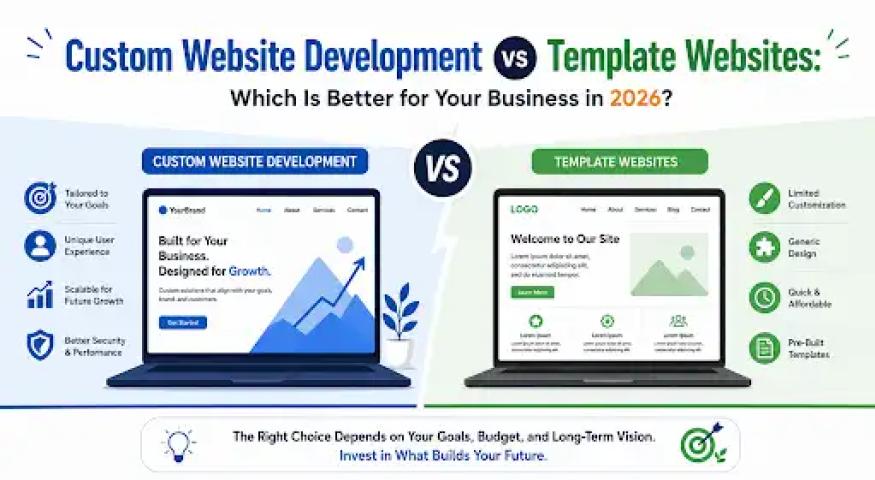
Why Off-the-Shelf Voice Assistants Aren't Enough
Many businesses begin their AI journey with ready-made voice assistants because they are quick to deploy. While these solutions work well for basic use cases, they often struggle when organizations require deeper customization, industry-specific intelligence, or secure access to enterprise data.
Custom AI voice agents eliminate these limitations by allowing businesses to define conversation logic, integrate proprietary knowledge, enforce compliance policies, and create workflows tailored to internal operations. Instead of forcing teams to adapt to software limitations, organizations gain a solution built specifically for their customers, employees, and business goals.
This flexibility makes custom development particularly valuable for enterprises operating in highly regulated industries such as healthcare, finance, insurance, and manufacturing.
How Custom AI Voice Agents Work
Every interaction begins when a user speaks to the AI agent through a phone call, mobile application, website, kiosk, or smart device. Automatic Speech Recognition (ASR) converts spoken language into text while filtering out background noise and recognizing different accents.
The text is then processed using Natural Language Understanding (NLU) and large language models to determine user intent, understand conversational context, and generate the most relevant response. If additional information is needed, the AI securely connects with enterprise systems such as CRMs, ERPs, customer databases, knowledge bases, or scheduling platforms.
Once the response is generated, advanced Text-to-Speech (TTS) technology converts it into natural, human-like speech, enabling smooth and engaging conversations. Throughout the interaction, analytics and monitoring tools collect insights that help continuously improve performance and accuracy.
Core Components of Custom AI Voice Agent Development
Building a high-performing voice AI solution requires multiple technologies working together.
Automatic Speech Recognition (ASR)
ASR converts spoken language into text with high accuracy, even in noisy environments or across different accents.
Natural Language Processing (NLP)
NLP enables the voice agent to understand user intent, extract key information, and maintain conversational context.
Large Language Models (LLMs)
LLMs allow the AI agent to generate intelligent, contextual, and human-like responses while handling complex conversations.
Retrieval-Augmented Generation (RAG)
RAG connects the AI with enterprise knowledge bases, enabling responses based on accurate, up-to-date business information rather than relying solely on model training.
Text-to-Speech (TTS)
TTS transforms AI-generated responses into realistic speech that feels natural and engaging for users.
Enterprise Integrations
Custom APIs connect the voice AI agent with internal systems, allowing it to retrieve customer information, update records, process requests, and automate business workflows.
Key Features of a Custom AI Voice Agent
A custom voice AI solution offers capabilities that go beyond basic voice interactions.
Key features include:
- Human-like conversations with contextual understanding
- Multi-language and multilingual support
- Personalized customer interactions
- CRM and ERP integration
- Appointment scheduling and booking automation
- Voice authentication and identity verification
- Intelligent call routing
- Real-time analytics and reporting
- Conversation memory
- Sentiment detection
- Omnichannel communication
- Workflow automation
- Secure enterprise-grade deployment
- Human agent escalation when required
Together, these capabilities enable organizations to automate customer engagement while maintaining a high-quality user experience.
The Custom AI Voice Agent Development Process
Successful development begins with understanding business objectives rather than selecting technology. Organizations should first identify the problems they want the voice AI agent to solve, whether that involves improving customer service, reducing operational costs, or streamlining internal workflows.
After defining business goals, developers design conversational experiences that feel natural while supporting multiple user scenarios. AI models are then selected based on language support, latency requirements, and deployment preferences.
The next stage focuses on integrating enterprise applications so the voice agent can securely access customer data, business documents, inventory systems, or scheduling platforms. Extensive testing follows to evaluate conversation quality, speech accuracy, edge cases, and system performance before deployment.
Once launched, continuous monitoring and optimization ensure the AI adapts to changing customer behavior and evolving business requirements.
Business Benefits of Custom AI Voice Agent Development
Custom voice AI agents provide measurable value across both customer-facing and internal operations.
Businesses can automate repetitive conversations without sacrificing personalization, resulting in shorter wait times and improved customer satisfaction. Support teams spend less time answering routine questions and more time resolving complex issues that require human expertise.
Because custom solutions integrate directly with enterprise systems, employees gain instant access to information, reducing manual tasks and increasing productivity. Organizations also benefit from improved scalability, better customer insights, lower operational costs, stronger compliance, and more consistent service delivery.
Unlike generic voice assistants, custom AI solutions continue evolving alongside business processes, making them a long-term investment rather than a temporary automation tool.
Industry Applications
Healthcare
Hospitals and healthcare providers use custom voice AI agents to schedule appointments, answer patient questions, provide medication reminders, and assist administrative staff while maintaining compliance with healthcare regulations.
Financial Services
Banks and financial institutions deploy voice AI to authenticate users, process account inquiries, detect suspicious activities, and guide customers through financial services securely.
Retail and E-commerce
Retail businesses automate order tracking, returns, product recommendations, and customer support while delivering personalized shopping experiences.
Insurance
Insurance companies simplify claims processing, policy inquiries, and customer onboarding through intelligent voice automation.
Manufacturing
Manufacturers use voice AI agents to assist employees with maintenance procedures, inventory management, production reporting, and operational support.
Travel and Hospitality
Hotels, airlines, and travel agencies enhance guest experiences by automating reservations, itinerary updates, booking modifications, and multilingual customer support.
Security and Compliance Considerations
Enterprise voice AI systems often process sensitive customer and business information, making security a critical component of development.
Organizations should implement end-to-end encryption, role-based access control, secure API integrations, data masking, audit logging, and regulatory compliance measures. Regular security assessments and AI governance practices help ensure that voice agents remain reliable, trustworthy, and aligned with industry standards.
Challenges in Custom AI Voice Agent Development
Although custom development provides significant advantages, organizations should prepare for challenges such as integrating legacy systems, managing conversational complexity, supporting multiple languages, minimizing response latency, and maintaining AI accuracy over time.
Building high-quality training datasets, continuously monitoring model performance, and establishing human oversight help overcome these challenges while ensuring long-term success.
Best Practices for Building Enterprise Voice AI Agents
The most successful voice AI projects begin with a clear business strategy rather than a technology-first mindset. Organizations should focus on solving high-value use cases, design conversations around user intent, integrate trusted knowledge sources, and implement governance frameworks from the beginning.
Regular testing, analytics-driven optimization, continuous model improvement, and seamless collaboration between AI systems and human agents ensure long-term scalability and business value.
The Future of Custom AI Voice Agent Development
Voice AI is evolving beyond simple virtual assistants into intelligent digital coworkers capable of reasoning, planning, and completing complex business processes autonomously.
Future custom voice agents will combine generative AI, multimodal capabilities, real-time analytics, emotional intelligence, and autonomous decision-making to deliver increasingly personalized experiences. They will collaborate with other AI agents, interact across multiple communication channels, and automate end-to-end workflows with minimal human intervention.
As enterprises continue investing in AI-driven transformation, custom voice agents will become a core component of customer engagement, employee productivity, and operational excellence.
Conclusion
Custom AI voice agent development empowers organizations to create intelligent voice experiences that align with their unique business needs instead of relying on one-size-fits-all solutions. By combining advanced speech recognition, natural language processing, large language models, and seamless enterprise integrations, businesses can automate conversations, enhance customer experiences, and streamline operations at scale.
As AI technologies continue to advance, organizations that invest in tailored voice solutions today will be better positioned to improve efficiency, strengthen customer relationships, and build future-ready conversational ecosystems that deliver measurable business value.