Updated: Natural Rubber Prices February 2026
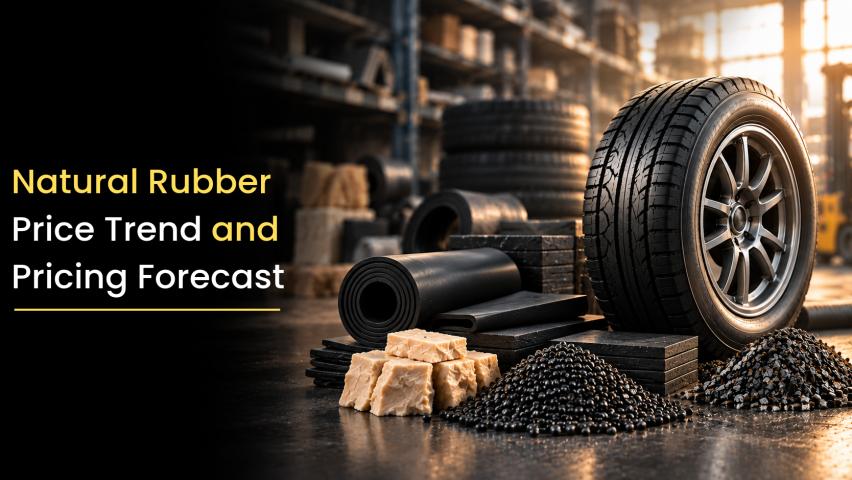
The Natural Rubber Price Index in February 2026 reflected moderate variation across major global regions, influenced by supply conditions, weather patterns in rubber-producing countries, and demand from tire manufacturing and industrial applications. Natural rubber remains an essential raw material for automotive tires, footwear, and industrial products. According to the Natural Rubber Price Forecast, prices may continue to fluctuate depending on plantation output, transportation costs, and global automotive production.
Natural Rubber Price Index Analysis in Global Benchmark: 2025 Breakdown
The Natural Rubber Price Index for the global benchmark stood at USD 1.92/Kg in February 2026. Pricing levels were influenced by stable supply from major producing countries and consistent demand from tire manufacturing industries. Seasonal harvesting patterns also contributed to price stability during the period. The Natural Rubber Price Forecast indicates that global benchmark prices may adjust gradually depending on production levels and automotive industry demand.
Note: The analysis can be tailored to align with the customer's specific needs.
Natural Rubber Price Index Analysis in Northeast Asia: 2025 Breakdown
In Northeast Asia, the Natural Rubber Price Index reached USD 2.26/Kg in February 2026, representing one of the highest regional price levels. Demand from tire manufacturing and automotive component production supported stable consumption throughout the month. Import dependence and logistics costs also influenced pricing conditions. According to the Natural Rubber Price Forecast, prices may fluctuate depending on regional industrial demand and supply availability.
Regional Analysis: The price analysis can be extended to provide detailed Ascorbic Acid price information for the following list of Northeast Asia regions.
China, Japan, South Korea, North Korea, Mongolia, among other Asian countries.
Natural Rubber Price Index Analysis in Europe: 2025 Breakdown
Europe recorded a Natural Rubber Price Index of USD 1.85/Kg in February 2026. Demand from automotive tire production and industrial rubber goods helped maintain balanced consumption during the period. Import supply from major producing regions supported steady availability. The Natural Rubber Price Forecast suggests that prices may move moderately depending on automotive production activity and global supply conditions.
Regional Analysis: The price analysis can be extended to provide detailed Ascorbic Acid price information for the following list of European regions.
such as Germany, France, the United Kingdom, Italy, Spain, Russia, Turkey, the Netherlands, Poland, Sweden, Belgium, Austria, Ireland, Switzerland, Norway, Denmark, Romania, Finland, the Czech Republic, Portugal, and Greece, along with other European nations.
Natural Rubber Price Index Analysis in Indonesia: 2025 Breakdown
Indonesia reported a Natural Rubber Price Index of USD 1.88/Kg in February 2026. As one of the major producers of natural rubber, the country maintained stable supply levels during the period. Demand from export markets and domestic processing industries supported price stability. According to the Natural Rubber Price Forecast, prices may shift depending on weather conditions, plantation output, and international demand.
Note: The analysis can be tailored to align with the customer's specific needs.
Natural Rubber Price Index Analysis in Malaysia: 2025 Breakdown
Malaysia recorded a Natural Rubber Price Index of USD 2.15/Kg in February 2026. Pricing levels were influenced by demand from rubber processing industries and export markets. Supply conditions remained relatively balanced during the month. The Natural Rubber Price Forecast indicates that prices may fluctuate depending on plantation yields, export demand, and manufacturing consumption in major importing regions.
Note: The analysis can be tailored to align with the customer's specific needs.
Natural Rubber Price Index Analysis in Southeast Asia: 2025 Breakdown
Southeast Asia observed a Natural Rubber Price Index of USD 1.82/Kg in February 2026. The region’s strong production capacity helped maintain steady supply across global trade channels. Demand from tire manufacturing and industrial rubber product industries supported stable consumption. According to the Natural Rubber Price Forecast, prices may experience moderate movement depending on harvest output and export demand.
Regional Analysis: The price analysis can be extended to provide detailed Natural Rubber price information for the following list of Southeast Asia regions.
Indonesia, Malaysia, Thailand, Vietnam, Philippines, Singapore, Myanmar, Cambodia, Laos, Brunei, and Timor-Leste, among other Southeast Asia regions.
Natural Rubber Price Index Analysis in Thailand: 2025 Breakdown
Thailand reported a Natural Rubber Price Index of USD 1.78/Kg in February 2026. As one of the leading producers of natural rubber, the country maintained steady supply to global markets. Demand from tire manufacturing and export activities influenced pricing conditions. The Natural Rubber Price Forecast suggests that prices may fluctuate depending on weather conditions, harvesting levels, and international rubber demand.
Note: The analysis can be tailored to align with the customer's specific needs.
Natural Rubber Price Index Analysis in North America: 2025 Breakdown
North America recorded a Natural Rubber Price Index of USD 1.75/Kg in February 2026, reflecting comparatively lower prices among the listed regions. Demand from tire manufacturing, automotive production, and industrial rubber applications supported consumption levels. Import supply played a key role in maintaining availability. According to the Natural Rubber Price Forecast, prices may adjust gradually depending on automotive demand and global supply trends.
Regional Analysis: The price analysis can be extended to provide detailed Natural Rubber price information for the following list of North America regions.
United States, Canada, and Mexico, among other North America regions.
Natural Rubber Price Trends: News, Factors, History, and 2026 Forecast
Natural rubber prices show regional differences in February 2026. Northeast Asia stands at USD 2.26 per kg, Europe USD 1.85 per kg, Indonesia USD 1.88 per kg, Malaysia USD 2.15 per kg, Southeast Asia USD 1.82 per kg, Thailand USD 1.78 per kg, and North America USD 1.75 per kg. Global average hovers around USD 1.92 per kg, with slight down moves.
Recent News
Global demand will top production for sixth year in 2026, with 15.6 million tons demand versus 15.2 million tons supply. Automotive growth in emerging economies drives this.
Tokyo rubber gained 3 percent in early 2026 after 2025 drop. ANRPC sees 1.7 percent demand rise.
India rubber price averaged 9,757 INR per 100 kg in January 2026.
Key Factors:
- Weather like El Niño cuts supply from plantations in Southeast Asia. Aging trees and tapper shortages add pressure.
- Demand from tires (largest use), autos, and EVs grows steadily. Trade deals like EU-India boost flows.
- Currency and freight costs shift export competitiveness.
Price History:
- 2025 saw volatility with early surges from supply issues, then consolidation. Q4 2025 North America up 0.6 percent quarterly.
- 2024 output grew, but China imports fell. 2023 lows led to rebounds.
- Prices cycle with harvests, weather, and auto demand.
Forecast:
Prices firm in 2026 from supply gaps and tire needs. Global value grows 4.53 percent yearly to USD 30.8 billion by 2034. Watch the weather and EVs for shifts.
Summary — Key Points
- The Natural Rubber Price Index in February 2026 showed moderate variations across major regions, influenced by supply conditions in producing countries and demand from tire manufacturing and automotive industries.
- The global benchmark price reached USD 1.92/Kg, reflecting balanced supply and steady industrial consumption.
- Northeast Asia recorded the highest regional price at USD 2.26/Kg, driven by strong demand from automotive and tire production sectors.
- Malaysia followed with USD 2.15/Kg, supported by export demand and consistent processing activity.
- Indonesia reported USD 1.88/Kg, maintaining stable pricing due to steady plantation output and export supply.
- Europe (USD 1.85/Kg), Southeast Asia (USD 1.82/Kg), and Thailand (USD 1.78/Kg) reflected relatively balanced pricing supported by stable demand and production.
- North America recorded the lowest price at USD 1.75/Kg, influenced by moderate demand and consistent import supply.
- According to the Natural Rubber Price Forecast, future prices may fluctuate depending on plantation yields, weather conditions, global automotive production, and supply chain dynamics.
FAQs regarding Natural Rubber Price Trends, Index, and Forecast
What factors are influencing the Natural Rubber Price Index globally?
The Natural Rubber Price Index is influenced by several factors including weather conditions in major producing countries, plantation output, and global demand from the automotive and tire manufacturing industries. Changes in export volumes, logistics costs, and currency fluctuations can also affect pricing patterns. Additionally, shifts in vehicle production and industrial rubber consumption play a key role in shaping global price movements.
What is the expected Natural Rubber Price Forecast for 2026?
The Natural Rubber Price Forecast for 2026 suggests moderate price fluctuations driven by supply conditions in Southeast Asia and demand from the automotive sector. Rising tire production, infrastructure development, and manufacturing activity may support consumption. However, factors such as climate conditions, plantation productivity, and global economic activity will continue to influence future price directions.
Which regions currently show strong movement in the Natural Rubber Price Index?
Recent data from the Natural Rubber Price Index shows that Northeast Asia and Malaysia recorded relatively higher price levels, supported by strong industrial demand and import requirements. Producing countries such as Indonesia and Thailand maintained stable pricing due to consistent plantation output. Meanwhile, regions like North America and Southeast Asia showed comparatively moderate price levels due to balanced supply.
How does the automotive industry affect the Natural Rubber Price Trend?
The automotive sector plays a major role in shaping the Natural Rubber Price Index because natural rubber is a key raw material used in tire manufacturing. When global vehicle production increases, the demand for tires and rubber components rises, which can support higher prices. Conversely, slower automotive production or reduced transportation demand can lead to softer price movements.
Where can businesses access detailed Natural Rubber Price Forecast and regional price data?
Businesses looking for accurate insights into the Natural Rubber Price Forecast, historical pricing trends, and regional demand patterns can access specialized industry pricing reports. These reports typically provide quarterly price analysis, supply-demand insights, and regional comparisons, helping manufacturers, procurement teams, and investors make informed sourcing and strategic decisions.
Get the Real-Time Prices Analysis: https://www.imarcgroup.com/natural-rubber-pricing-report
About Us:
IMARC Group is a global management consulting firm that provides a comprehensive suite of services to support market entry and expansion efforts. The company offers detailed market assessments, feasibility studies, regulatory approvals and licensing support, and pricing analysis, including spot pricing and regional price trends. Its expertise spans demand-supply analysis alongside regional insights covering Asia-Pacific, Europe, North America, Latin America, and the Middle East and Africa. IMARC also specializes in competitive landscape evaluations, profiling key market players, and conducting research into market drivers, restraints, and opportunities. IMARC’s data-driven approach helps businesses navigate complex markets with precision and confidence.
Contact Us:
IMARC Group
134 N 4th St. Brooklyn, NY 11249, USA
Email: sales[@]imarcgroup.com
Tel No:(D) +91 120 433 0800
United States: +1-201971-6302