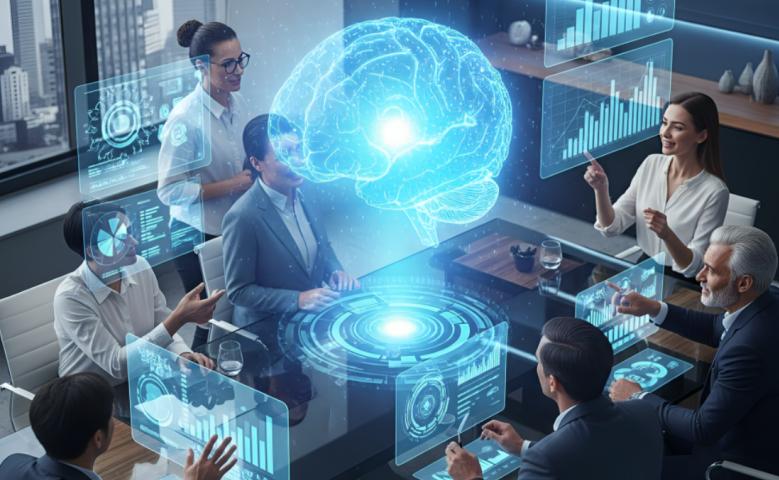

The Rise of Generative AI in Modern Enterprises
Over the past few years, generative AI has shifted from experimental technology to a strategic priority for organizations across industries. Businesses are no longer asking whether artificial intelligence will impact their operations; instead, they are exploring how quickly they can implement intelligent systems to remain competitive.
This shift has led to the growing demand for generative AI development services, which help organizations design, build, and deploy AI-driven solutions that automate processes, generate insights, and enhance digital experiences.
Generative AI systems can analyze large volumes of data, generate meaningful content, assist in decision-making, and automate repetitive workflows. From enterprise copilots to AI-powered customer support assistants, the technology is transforming the way companies operate.
For organizations looking to adopt AI responsibly and effectively, partnering with experienced AI development teams has become essential.
Understanding Generative AI Development Services
Generative AI development services refer to the process of building and deploying artificial intelligence systems capable of generating new data, content, insights, or recommendations based on existing datasets.
Unlike traditional machine learning models that primarily classify or predict outcomes, generative AI systems create entirely new outputs. These outputs may include written content, software code, design prototypes, conversational responses, or analytical summaries.
Modern generative AI solutions are powered by technologies such as:
-
Large Language Models (LLMs)
-
Transformer-based neural networks
-
Retrieval-Augmented Generation (RAG)
-
Vector databases
-
Prompt engineering frameworks
-
AI orchestration platforms
By combining these technologies, businesses can build scalable AI systems capable of improving productivity, accelerating product development, and enabling smarter decision-making.
Why Enterprises Are Investing in Generative AI
Organizations across industries are investing heavily in AI because the technology directly impacts efficiency, innovation, and competitive advantage.
Generative AI enables businesses to automate complex tasks that previously required human expertise. This reduces operational costs while increasing speed and scalability.
Several factors are driving enterprise adoption:
Intelligent Automation
Many business processes involve repetitive tasks such as document generation, reporting, customer communication, and internal knowledge retrieval. AI systems can automate these workflows while maintaining high accuracy.
Improved Decision-Making
Generative AI systems can analyze massive datasets and generate actionable insights, allowing leaders to make informed decisions quickly.
Faster Product Development
AI-powered tools can assist engineering teams in writing code, generating design concepts, and testing product ideas. This significantly accelerates innovation cycles.
Personalized Customer Experiences
Businesses can use AI assistants to deliver personalized responses, recommendations, and support across digital platforms.
Key Components of Enterprise Generative AI Solutions
Implementing generative AI requires a combination of data strategy, infrastructure, and intelligent model architecture.
Successful AI systems are typically built around several critical components.
Data Engineering Infrastructure
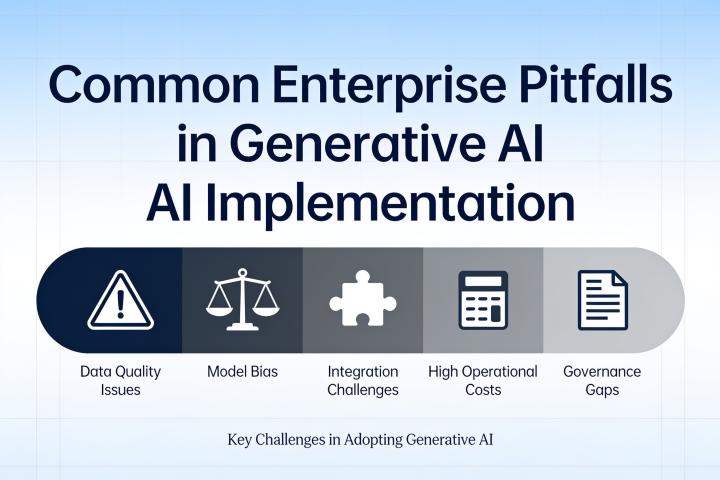
Data quality determines the effectiveness of AI models. Organizations must build pipelines that collect, clean, and structure data for training and inference.
This includes data storage systems, ETL pipelines, and secure data governance frameworks.
Large Language Models
Large language models form the foundation of many generative AI applications. These models understand natural language and can generate meaningful responses, summaries, or recommendations.
Businesses often customize these models through fine-tuning or contextual retrieval systems.
Retrieval-Augmented Generation (RAG)
RAG systems combine large language models with knowledge retrieval mechanisms. Instead of relying solely on training data, AI models can access real-time information from enterprise knowledge bases.
This improves accuracy and ensures that AI-generated responses remain contextually relevant.
Prompt Engineering
Prompt engineering plays a crucial role in shaping AI outputs. By carefully designing instructions and contextual cues, developers can guide models to produce more accurate and reliable responses.
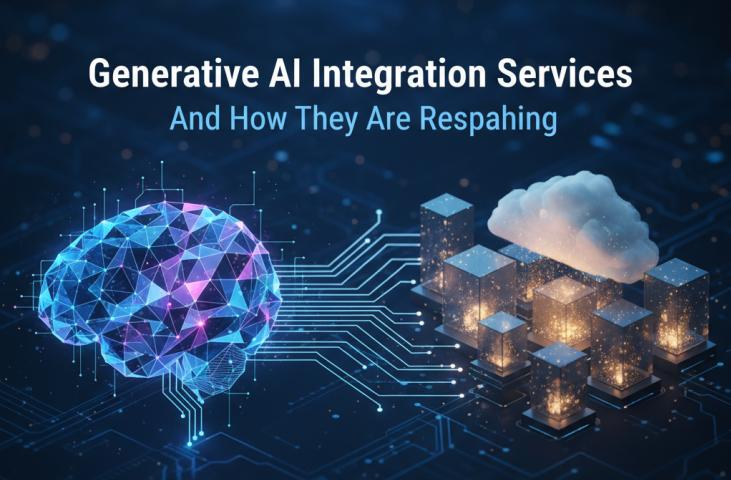
AI Integration Layer
Generative AI systems must integrate with existing enterprise platforms such as CRM systems, knowledge bases, analytics platforms, and internal tools.
This integration allows AI assistants to access operational data and perform meaningful tasks.
Real-World Applications of Generative AI
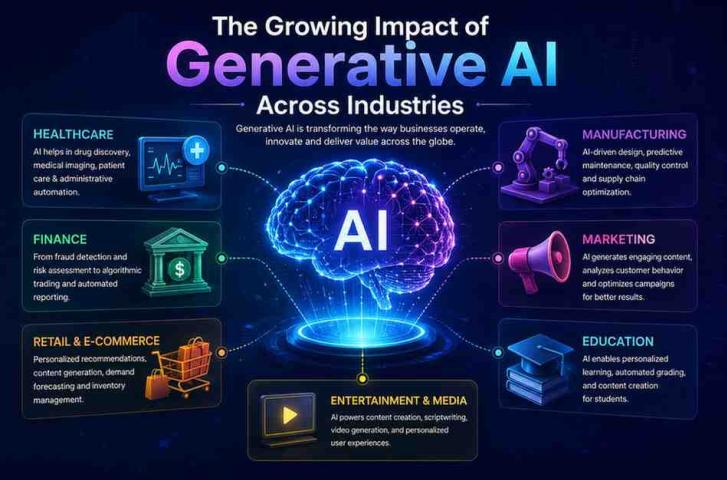
Generative AI is not limited to a single industry. Organizations across sectors are implementing AI solutions to transform operations.
Enterprise Knowledge Assistants
Large organizations often struggle with information silos. AI-powered knowledge assistants allow employees to retrieve information instantly from internal documentation and databases.
AI Copilots for Software Development
AI copilots assist developers by generating code suggestions, debugging software, and accelerating development workflows.
Customer Experience Automation
AI-powered virtual assistants can handle customer queries, provide recommendations, and resolve support issues automatically.
Workflow Intelligence Systems
Generative AI can analyze operational data and suggest workflow improvements, helping businesses optimize efficiency.
AI-Driven Product Design
Companies are increasingly using generative AI to explore design variations, simulate product behavior, and generate creative concepts.
Generative AI and the Future of Digital Transformation
Digital transformation initiatives increasingly depend on intelligent systems capable of adapting to rapidly changing environments.
Generative AI plays a critical role in this transformation by enabling organizations to build adaptive technology platforms that continuously learn from data.
Instead of static software systems, companies can deploy AI-driven platforms that evolve over time, improving performance and delivering more value as they process additional information.
This ability to learn and improve makes generative AI one of the most powerful technologies shaping the future of enterprise innovation.
Responsible AI Development and Governance
While generative AI offers significant benefits, responsible implementation remains essential.
Organizations must ensure that AI systems operate ethically, securely, and transparently.
Responsible AI frameworks typically include:
-
Model transparency and explainability
-
Bias detection and mitigation
-
Secure data handling
-
Compliance with regulatory standards
-
Human oversight in critical decision processes
By establishing strong governance frameworks, businesses can build trust in AI technologies while minimizing risks.
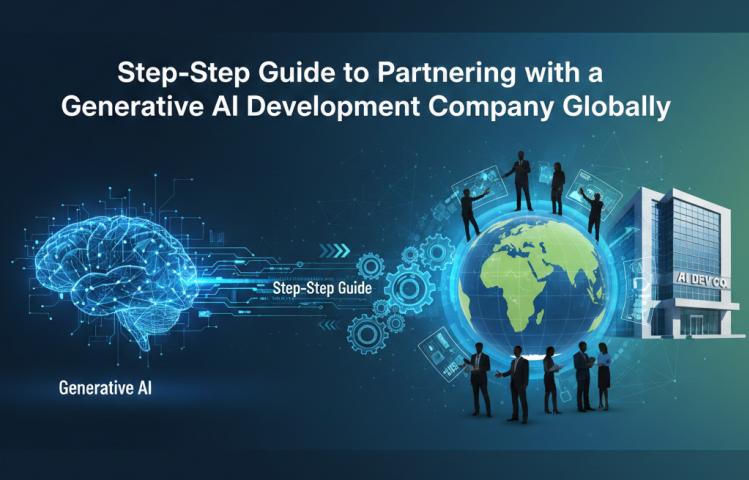
The Role of AI Development Partners
Developing enterprise-grade generative AI solutions requires specialized expertise in machine learning, data engineering, cloud infrastructure, and software architecture.
AI development partners help organizations:
-
Define AI strategy
-
Design scalable model architectures
-
Build custom AI applications
-
Integrate AI systems with existing platforms
-
Ensure long-term maintainability and performance
Working with experienced development teams allows businesses to accelerate AI adoption while avoiding common technical challenges.
Preparing for an AI-Driven Business Future
Generative AI is still evolving rapidly, but its impact on business operations is already undeniable.
Organizations that invest in intelligent systems today are positioning themselves for long-term innovation and competitive advantage.
By leveraging advanced generative AI development services, companies can unlock new opportunities for automation, efficiency, and digital transformation.
The businesses that succeed in the AI era will be those that embrace experimentation, invest in scalable technology infrastructure, and build AI solutions that solve real-world challenges.
Generative AI is not simply a technological upgrade—it represents a fundamental shift in how organizations design products, operate processes, and create value in the digital economy.