
Introduction: The Importance of AI Readiness
Artificial intelligence has rapidly evolved from a futuristic concept to a vital business tool. Organizations across industries are increasingly adopting AI to enhance decision-making, optimize operations, and create innovative customer experiences. However, despite its potential, many AI initiatives fail or underperform because organizations are not properly prepared. Launching AI projects without understanding the company’s readiness can lead to wasted resources, low adoption, and missed opportunities. An AI readiness assessment helps businesses understand their current capabilities, identify gaps, and develop a structured roadmap for AI implementation. By assessing readiness, companies can approach AI adoption with confidence, reducing risk and maximizing return on investment.
Artificial intelligence has rapidly evolved from a futuristic concept to a vital business tool. Organizations across industries are increasingly adopting AI to enhance decision-making, optimize operations, and create innovative customer experiences. However, despite its potential, many AI initiatives fail or underperform because organizations are not properly prepared. Launching AI projects without understanding the company’s readiness can lead to wasted resources, low adoption, and missed opportunities. An AI readiness assessment helps businesses understand their current capabilities, identify gaps, and develop a structured roadmap for AI implementation. By assessing readiness, companies can approach AI adoption with confidence, reducing risk and maximizing return on investment.
What Is an AI Readiness Assessment?
An AI readiness assessment is a structured evaluation of an organization’s preparedness to adopt AI technologies successfully. It evaluates the organization across multiple dimensions, including data, technology, people, and processes. The purpose of the assessment is to identify strengths and weaknesses, uncover gaps, and provide a roadmap that ensures AI initiatives are scalable, sustainable, and aligned with business objectives. For instance, assessing data readiness ensures that an organization has the quality, structure, and governance necessary for training AI models effectively. Evaluating technology readiness determines whether the company has sufficient infrastructure, cloud platforms, and AI tools to support deployment. Assessing people and skills readiness identifies whether employees and leadership have the knowledge and expertise to work with AI solutions. Finally, evaluating process and governance readiness ensures that workflows, compliance measures, and ethical frameworks are in place to support responsible AI adoption.
An AI readiness assessment is a structured evaluation of an organization’s preparedness to adopt AI technologies successfully. It evaluates the organization across multiple dimensions, including data, technology, people, and processes. The purpose of the assessment is to identify strengths and weaknesses, uncover gaps, and provide a roadmap that ensures AI initiatives are scalable, sustainable, and aligned with business objectives. For instance, assessing data readiness ensures that an organization has the quality, structure, and governance necessary for training AI models effectively. Evaluating technology readiness determines whether the company has sufficient infrastructure, cloud platforms, and AI tools to support deployment. Assessing people and skills readiness identifies whether employees and leadership have the knowledge and expertise to work with AI solutions. Finally, evaluating process and governance readiness ensures that workflows, compliance measures, and ethical frameworks are in place to support responsible AI adoption.
Why AI Readiness Assessment Is Critical
AI adoption without preparation often results in poor performance, high costs, and resistance from employees. Organizations may struggle with inaccurate AI outputs due to low-quality data, spend excessive resources on tools or infrastructure that do not deliver value, or face pushback from staff unprepared for AI-powered workflows. An AI readiness assessment mitigates these risks by providing a clear understanding of an organization’s current capabilities and challenges. It helps businesses prioritize initiatives, allocate resources efficiently, and build AI systems that align with strategic goals. Furthermore, it ensures that AI adoption is ethical and compliant with data privacy regulations, protecting organizations from potential legal and reputational risks. By conducting a readiness assessment, companies lay the groundwork for AI adoption that is both practical and sustainable.
AI adoption without preparation often results in poor performance, high costs, and resistance from employees. Organizations may struggle with inaccurate AI outputs due to low-quality data, spend excessive resources on tools or infrastructure that do not deliver value, or face pushback from staff unprepared for AI-powered workflows. An AI readiness assessment mitigates these risks by providing a clear understanding of an organization’s current capabilities and challenges. It helps businesses prioritize initiatives, allocate resources efficiently, and build AI systems that align with strategic goals. Furthermore, it ensures that AI adoption is ethical and compliant with data privacy regulations, protecting organizations from potential legal and reputational risks. By conducting a readiness assessment, companies lay the groundwork for AI adoption that is both practical and sustainable.
Evaluating Data Readiness
Data is the foundation of AI, and a company’s ability to leverage AI effectively depends on the quality and structure of its data. During an AI readiness assessment, organizations evaluate whether their data is accurate, comprehensive, and accessible. Many businesses find that their data is fragmented across departments, stored in incompatible formats, or incomplete. These issues can hinder AI model training and reduce the reliability of AI outputs. Companies also assess their data governance practices to ensure compliance with privacy regulations and to protect sensitive information. By identifying and addressing data gaps early, businesses can prepare datasets that are optimized for AI applications, ensuring models perform accurately and deliver actionable insights.
Data is the foundation of AI, and a company’s ability to leverage AI effectively depends on the quality and structure of its data. During an AI readiness assessment, organizations evaluate whether their data is accurate, comprehensive, and accessible. Many businesses find that their data is fragmented across departments, stored in incompatible formats, or incomplete. These issues can hinder AI model training and reduce the reliability of AI outputs. Companies also assess their data governance practices to ensure compliance with privacy regulations and to protect sensitive information. By identifying and addressing data gaps early, businesses can prepare datasets that are optimized for AI applications, ensuring models perform accurately and deliver actionable insights.
Assessing Technology and Infrastructure
AI solutions rely heavily on robust technology infrastructure. Organizations must have adequate computing power, storage, and access to AI platforms and frameworks to deploy and scale AI effectively. During an AI readiness assessment, technology evaluation includes reviewing cloud capabilities, on-premise servers, integration potential with existing enterprise systems, and the scalability of current infrastructure. Without sufficient technology readiness, AI initiatives can experience delays, operational inefficiencies, or failures. Ensuring that infrastructure can handle AI workloads allows organizations to deploy advanced models, process large datasets efficiently, and support continuous innovation. This step is crucial for building an AI ecosystem that can adapt and grow alongside evolving business needs.
AI solutions rely heavily on robust technology infrastructure. Organizations must have adequate computing power, storage, and access to AI platforms and frameworks to deploy and scale AI effectively. During an AI readiness assessment, technology evaluation includes reviewing cloud capabilities, on-premise servers, integration potential with existing enterprise systems, and the scalability of current infrastructure. Without sufficient technology readiness, AI initiatives can experience delays, operational inefficiencies, or failures. Ensuring that infrastructure can handle AI workloads allows organizations to deploy advanced models, process large datasets efficiently, and support continuous innovation. This step is crucial for building an AI ecosystem that can adapt and grow alongside evolving business needs.
People and Skills Readiness
AI adoption is not only about technology; it is fundamentally about people. Employees and leadership must understand AI capabilities, limitations, and implications for business processes. During an AI readiness assessment, organizations evaluate the skills and expertise of their workforce, the availability of data scientists and AI specialists, and the effectiveness of training programs. Leadership buy-in is essential to champion AI adoption and align initiatives with strategic goals. Employees need to understand how AI will complement their roles and enhance workflows rather than replace human expertise. Organizations that invest in people readiness can minimize resistance, foster collaboration, and ensure that AI is integrated successfully into day-to-day operations.
AI adoption is not only about technology; it is fundamentally about people. Employees and leadership must understand AI capabilities, limitations, and implications for business processes. During an AI readiness assessment, organizations evaluate the skills and expertise of their workforce, the availability of data scientists and AI specialists, and the effectiveness of training programs. Leadership buy-in is essential to champion AI adoption and align initiatives with strategic goals. Employees need to understand how AI will complement their roles and enhance workflows rather than replace human expertise. Organizations that invest in people readiness can minimize resistance, foster collaboration, and ensure that AI is integrated successfully into day-to-day operations.
Process and Governance Readiness
AI has significant implications for business processes, decision-making, and compliance. Evaluating process and governance readiness ensures that workflows are optimized for AI integration and that ethical, regulatory, and operational considerations are addressed. Organizations assess how decisions are currently made, whether processes are standardized for AI augmentation, and whether policies exist to manage AI-related risks. Ethical considerations, such as mitigating bias in AI models and ensuring transparency, are integral to responsible AI adoption. Companies also examine monitoring and evaluation frameworks to track AI performance and ensure continuous improvement. Strong governance ensures that AI initiatives are sustainable, accountable, and aligned with organizational values.
AI has significant implications for business processes, decision-making, and compliance. Evaluating process and governance readiness ensures that workflows are optimized for AI integration and that ethical, regulatory, and operational considerations are addressed. Organizations assess how decisions are currently made, whether processes are standardized for AI augmentation, and whether policies exist to manage AI-related risks. Ethical considerations, such as mitigating bias in AI models and ensuring transparency, are integral to responsible AI adoption. Companies also examine monitoring and evaluation frameworks to track AI performance and ensure continuous improvement. Strong governance ensures that AI initiatives are sustainable, accountable, and aligned with organizational values.
Conducting an AI Readiness Assessment
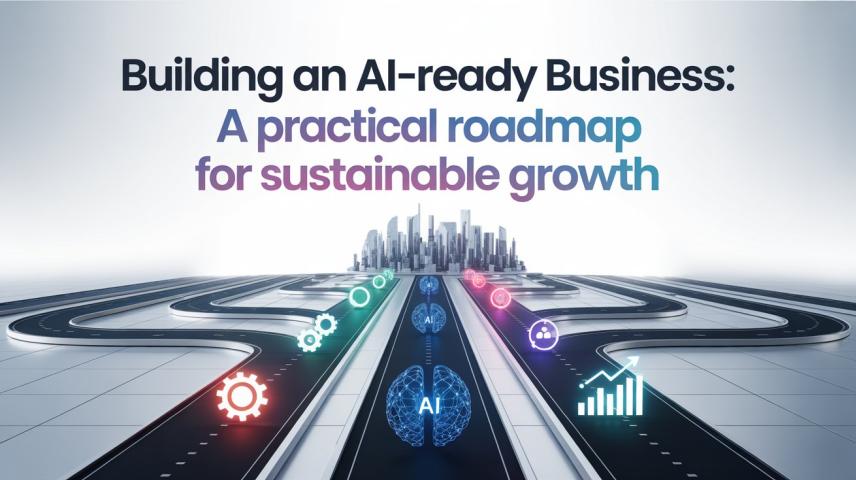
A comprehensive AI readiness assessment begins with defining objectives. Businesses must determine the goals AI adoption should support, such as automating routine tasks, enhancing customer experience, or generating predictive insights. The next step involves evaluating the current state across data, technology, people, and processes. Organizations then identify gaps and prioritize initiatives based on impact, feasibility, and alignment with strategic goals. The final step involves developing a roadmap for AI adoption, which includes timelines, budgets, technology requirements, training programs, and governance policies. By following a structured approach, organizations can ensure that AI projects are well-planned, actionable, and positioned for success.
A comprehensive AI readiness assessment begins with defining objectives. Businesses must determine the goals AI adoption should support, such as automating routine tasks, enhancing customer experience, or generating predictive insights. The next step involves evaluating the current state across data, technology, people, and processes. Organizations then identify gaps and prioritize initiatives based on impact, feasibility, and alignment with strategic goals. The final step involves developing a roadmap for AI adoption, which includes timelines, budgets, technology requirements, training programs, and governance policies. By following a structured approach, organizations can ensure that AI projects are well-planned, actionable, and positioned for success.
Benefits of AI Readiness Assessment
The advantages of conducting an AI readiness assessment are significant. Businesses can reduce implementation risks by identifying potential challenges before launching AI projects. Resources are allocated more efficiently, ensuring investments target initiatives with the highest ROI. Organizations can accelerate AI deployment because infrastructure, data, and processes are optimized beforehand. High-quality data and robust governance frameworks ensure accurate AI outputs and ethical operations. Employee engagement improves as teams are prepared and trained for AI adoption. Ultimately, businesses gain a strategic advantage by implementing AI initiatives that are both effective and sustainable.
The advantages of conducting an AI readiness assessment are significant. Businesses can reduce implementation risks by identifying potential challenges before launching AI projects. Resources are allocated more efficiently, ensuring investments target initiatives with the highest ROI. Organizations can accelerate AI deployment because infrastructure, data, and processes are optimized beforehand. High-quality data and robust governance frameworks ensure accurate AI outputs and ethical operations. Employee engagement improves as teams are prepared and trained for AI adoption. Ultimately, businesses gain a strategic advantage by implementing AI initiatives that are both effective and sustainable.
Real-World Applications
Industries that have benefited from AI readiness assessments include retail, healthcare, finance, and manufacturing. Retailers assess customer data, inventory management, and personalization workflows before deploying AI recommendation engines. Financial institutions evaluate regulatory compliance, risk management processes, and infrastructure before implementing AI for fraud detection or predictive analytics. Healthcare providers examine patient data quality and workflow readiness before deploying AI for diagnostics or predictive care. Manufacturers assess IoT integration and operational processes to implement AI for predictive maintenance, quality control, and supply chain optimization. In each case, readiness assessments provide the clarity needed to implement AI successfully.
Industries that have benefited from AI readiness assessments include retail, healthcare, finance, and manufacturing. Retailers assess customer data, inventory management, and personalization workflows before deploying AI recommendation engines. Financial institutions evaluate regulatory compliance, risk management processes, and infrastructure before implementing AI for fraud detection or predictive analytics. Healthcare providers examine patient data quality and workflow readiness before deploying AI for diagnostics or predictive care. Manufacturers assess IoT integration and operational processes to implement AI for predictive maintenance, quality control, and supply chain optimization. In each case, readiness assessments provide the clarity needed to implement AI successfully.
Partnering With AI Experts
Many organizations choose to work with specialized AI consulting companies to perform readiness assessments efficiently. Firms like Appinventiv help businesses evaluate data, technology, and skills gaps and provide guidance on AI adoption. By partnering with experienced consultants, organizations can develop a detailed roadmap, optimize infrastructure, train employees, and implement governance frameworks. Expert support accelerates AI adoption, reduces risk, and ensures that AI initiatives align with strategic objectives. Working with trusted AI partners ensures that businesses leverage AI effectively and responsibly.
Many organizations choose to work with specialized AI consulting companies to perform readiness assessments efficiently. Firms like Appinventiv help businesses evaluate data, technology, and skills gaps and provide guidance on AI adoption. By partnering with experienced consultants, organizations can develop a detailed roadmap, optimize infrastructure, train employees, and implement governance frameworks. Expert support accelerates AI adoption, reduces risk, and ensures that AI initiatives align with strategic objectives. Working with trusted AI partners ensures that businesses leverage AI effectively and responsibly.
Conclusion
An AI readiness assessment is a crucial first step for any organization seeking to implement AI successfully. By evaluating data, technology, people, and governance, businesses can identify gaps, mitigate risks, and build a roadmap for AI adoption that maximizes ROI and enhances operational efficiency. Skipping this step often results in failed projects, wasted resources, and low adoption rates. Organizations that conduct thorough readiness assessments are better positioned to implement scalable AI solutions, stay competitive, and drive innovation. Companies like Appinventiv provide expert AI readiness assessment services to help businesses prepare for AI adoption, ensuring that AI initiatives are successful, sustainable, and strategically aligned.
An AI readiness assessment is a crucial first step for any organization seeking to implement AI successfully. By evaluating data, technology, people, and governance, businesses can identify gaps, mitigate risks, and build a roadmap for AI adoption that maximizes ROI and enhances operational efficiency. Skipping this step often results in failed projects, wasted resources, and low adoption rates. Organizations that conduct thorough readiness assessments are better positioned to implement scalable AI solutions, stay competitive, and drive innovation. Companies like Appinventiv provide expert AI readiness assessment services to help businesses prepare for AI adoption, ensuring that AI initiatives are successful, sustainable, and strategically aligned.