Modern healthcare is rapidly evolving, and personalized treatment is becoming the new standard. Traditional implants once followed a one-size-fits-all model, often requiring surgeons to adjust procedures to fit standardized devices. Today, however, an advanced implant manufacturer can create patient-specific devices that improve surgical precision, recovery time, and treatment outcomes.
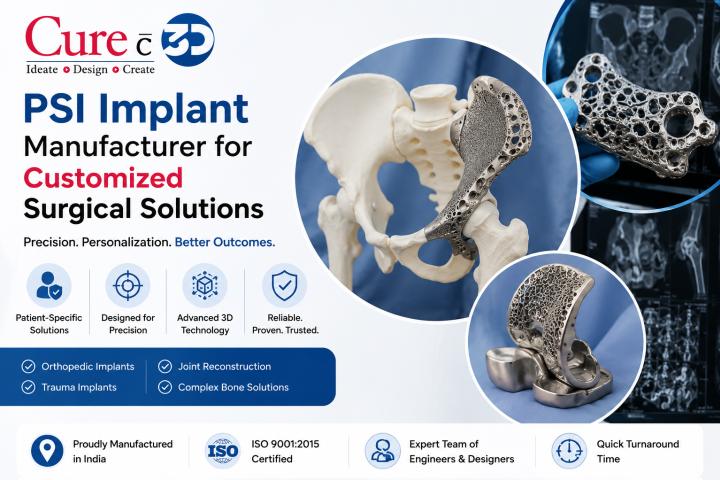
Companies like Curewith3D are leading this transformation by combining 3D printing technology, medical engineering, and digital design to deliver highly precise implants tailored to individual patients. Through innovative custom healthcare solutions, medical professionals can now offer treatments that are safer, more efficient, and better suited to each patient’s anatomy.
This shift toward personalized implants is reshaping the way surgeons approach complex procedures in orthopedics, maxillofacial surgery, oncology reconstruction, and many other medical specialties.
The Role of an Implant Manufacturer in Modern Healthcare
An implant manufacturer plays a critical role in the healthcare ecosystem. These companies design, develop, and produce medical implants used in surgical procedures to replace or support damaged biological structures such as bones, joints, and tissues.
Medical implants are widely used in areas such as:
Orthopedic surgeries
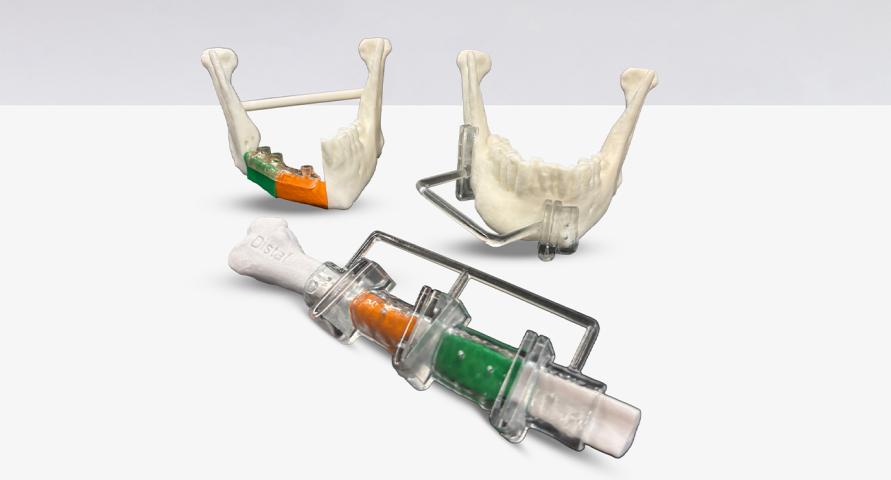
Cranial and maxillofacial reconstruction
Spinal treatments
Trauma and fracture repair
Dental restoration
Oncology-related reconstructive surgeries
Traditionally, implant manufacturers produced standardized implants in limited sizes and shapes. While these devices helped millions of patients, they often required surgeons to reshape bone structures or compromise on anatomical accuracy.
Today, the industry is moving toward patient-specific implants, and that is where custom healthcare solutions powered by advanced technologies like 3D printing are making a significant difference.
The Rise of Custom Healthcare Solutions
Personalized medicine is becoming a defining trend in healthcare. Hospitals and surgeons increasingly seek custom healthcare solutions that address the unique anatomical needs of each patient.
Unlike traditional implants, custom implants are designed using:
Patient CT or MRI scans
Advanced medical imaging software
Computer-aided design (CAD)
Additive manufacturing technologies such as 3D printing
This process enables an implant manufacturer to create implants that perfectly match a patient's anatomy.
Benefits of Custom Healthcare Solutions
Custom healthcare solutions provide several clinical advantages:
Improved Surgical Precision: Patient-specific implants fit accurately into the surgical site, reducing the need for intraoperative modifications.
Reduced Operating Time: Pre-designed implants streamline surgical workflows, helping surgeons perform procedures more efficiently.
Better Functional Outcomes: Because implants align with the patient’s anatomy, they improve structural stability and functional performance.
Faster Recovery for Patients: Accurate implant placement can reduce complications and support faster healing.
Enhanced Surgical Planning: Digital modeling and simulation allow surgeons to visualize procedures before entering the operating room.
These benefits explain why healthcare institutions increasingly partner with advanced implant manufacturers that specialize in custom healthcare solutions.
How Curewith3D is Redefining Implant Manufacturing
Curewith3D represents a new generation of implant manufacturers focused on innovation, precision, and patient-centric healthcare.
By integrating medical imaging, digital design, and additive manufacturing, Curewith3D develops advanced custom healthcare solutions tailored to the specific needs of surgeons and patients.
The company’s workflow focuses on collaboration between:
Surgeons
Biomedical engineers
Design specialists
Manufacturing experts
This multidisciplinary approach ensures that each implant meets both clinical and engineering standards.
The Curewith3D Workflow
The process followed by Curewith3D typically includes:
Patient Data Acquisition: The process begins with CT or MRI scans that capture the patient’s anatomical structure in detail.
Digital Implant Design: Biomedical engineers convert imaging data into precise digital models and design a custom implant that matches the patient's anatomy.
3D Printing and Manufacturing: Using advanced additive manufacturing techniques, the implant is produced with high precision and quality.
Quality Testing and Validation: Each implant undergoes rigorous testing to ensure safety, durability, and regulatory compliance.
Surgical Implementation: Surgeons receive a ready-to-use implant designed specifically for the patient’s condition.
This end-to-end process highlights how a modern implant manufacturer can provide reliable and efficient custom healthcare solutions.
Applications of Custom Implants in Healthcare
The demand for personalized implants continues to grow across multiple medical fields.
Orthopedic Surgery
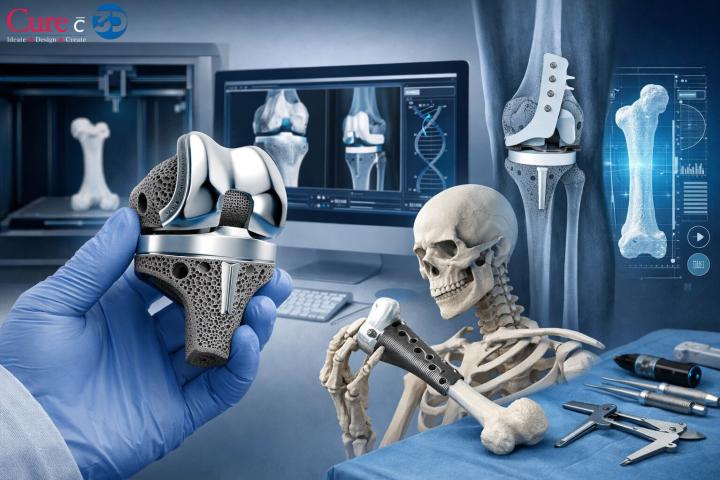
Orthopedic procedures often require implants to repair fractures, replace joints, or restore damaged bones. Custom implants allow surgeons to reconstruct bone structures with greater accuracy.
Cranial and Maxillofacial Reconstruction
Patients with trauma, congenital deformities, or tumor resections often need complex cranial or facial reconstruction. Custom implants help restore facial symmetry and functionality.
Oncology Reconstruction
Cancer surgeries sometimes involve removing large sections of bone or tissue. Custom implants help surgeons rebuild these structures and improve patient quality of life.
Spinal Surgery
Patient-specific spinal implants support better alignment and stability during complex spinal procedures.
In each of these areas, an advanced implant manufacturer can deliver tailored custom healthcare solutions that significantly improve surgical success.
The Technology Behind Advanced Implant Manufacturing
Modern implant manufacturing relies heavily on advanced technologies that enable precision and customization.
3D Printing (Additive Manufacturing)
3D printing allows manufacturers to produce implants layer by layer using materials such as titanium and biocompatible polymers. This technology enables complex geometries that traditional manufacturing methods cannot achieve.
Digital Surgical Planning
Software platforms allow surgeons to simulate procedures and plan implant placement before surgery.
Artificial Intelligence and Imaging Analysis
AI tools can analyze medical scans and assist in designing implants with optimal anatomical fit.
Biocompatible Materials
Advanced materials ensure implants integrate safely with human tissue while maintaining structural strength.
These technologies enable companies like Curewith3D to function as highly specialized implant manufacturers delivering innovative custom healthcare solutions.
Why Hospitals and Surgeons Prefer Custom Implant Manufacturers
Healthcare providers increasingly choose specialized implant manufacturers that offer custom solutions because they bring several strategic advantages.
Better Patient Outcomes: Personalized implants improve surgical accuracy and post-operative recovery.
Reduced Surgical Complexity: Pre-designed implants reduce the need for manual adjustments during surgery.
Enhanced Collaboration: Close collaboration between surgeons and engineers ensures optimal implant design.
Innovation in Medical Technology: Companies that focus on custom healthcare solutions drive innovation in surgical techniques and treatment approaches.
For hospitals aiming to deliver advanced care, working with a reliable implant manufacturer is becoming an essential part of modern healthcare infrastructure.
The Future of Implant Manufacturing and Personalized Healthcare
The future of healthcare will likely revolve around precision medicine and patient-specific treatment. Implant manufacturing will play a central role in this transformation.
In the coming years, the industry may see:
AI-driven implant design
Faster 3D printing technologies
Bioprinting of tissues and organs
Greater integration of digital surgery planning
Expanded use of patient-specific implants across medical specialties
As technology advances, companies like Curewith3D will continue to pioneer custom healthcare solutions that push the boundaries of surgical innovation.
Conclusion
The healthcare industry is moving toward a future where treatments are designed specifically for each patient. A modern implant manufacturer is no longer just a supplier of medical devices—it is a technology partner that supports surgeons in delivering personalized care.
Through advanced technologies such as 3D printing, digital modeling, and biomedical engineering, companies like Curewith3D are enabling a new generation of custom healthcare solutions that improve surgical outcomes and enhance patient quality of life.
As personalized medicine continues to evolve, the role of innovative implant manufacturers will become even more important in shaping the future of healthcare.