
Introduction: The Shift Toward AI-Native Applications
The way software is being built is rapidly changing. Traditional applications that relied on static logic and predefined workflows are now being replaced by intelligent systems capable of understanding context, generating content, and making decisions. At the center of this shift is the rise of large language models and AI coding environments that accelerate development.
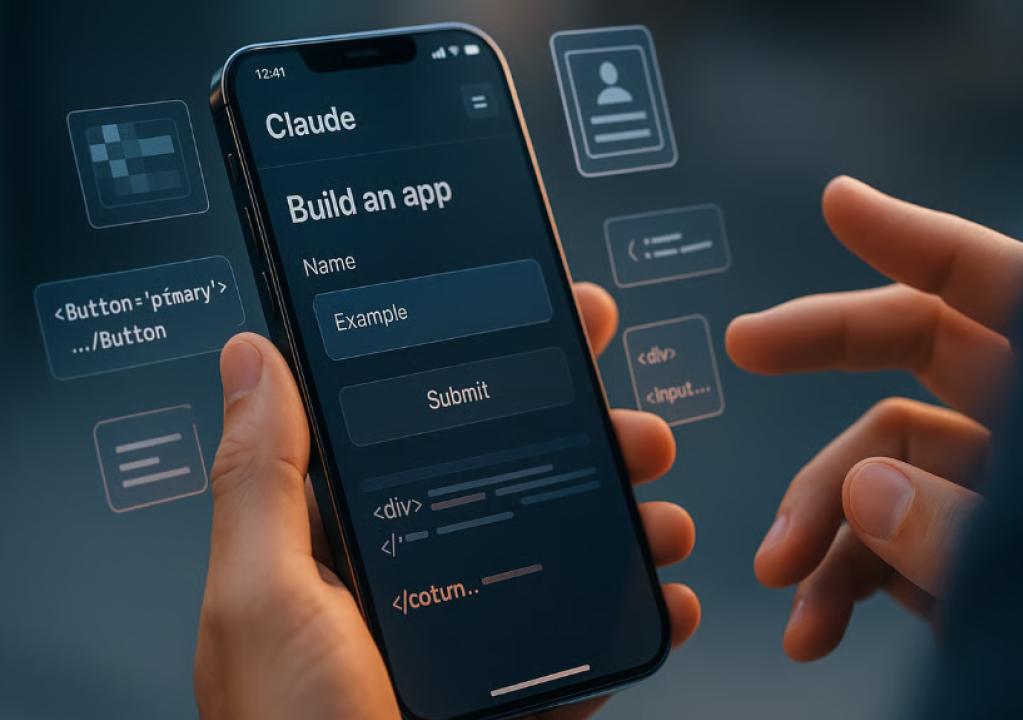
If you’re planning to build AI app with Claude Code, you’re essentially stepping into a new development paradigm one where AI is not just a feature but a foundational layer of your application. Claude Code, powered by advanced language models, enables developers and businesses to create smarter applications faster, with fewer resources and greater flexibility.
This blog explores how to approach building an AI application using Claude Code, what makes it powerful, and how businesses can leverage it effectively.
Understanding Claude Code and Its Role in AI Development
Claude Code refers to using Claude (an advanced AI model developed by Anthropic) within a development workflow to generate, refine, and manage code. Unlike traditional coding tools, Claude Code acts as an intelligent assistant that can understand requirements, generate logic, debug errors, and even optimize performance.
What makes Claude particularly effective is its ability to handle complex instructions, maintain context across interactions, and generate high-quality outputs. This makes it ideal for building AI-powered applications such as chatbots, automation tools, recommendation engines, and data-driven platforms.
When you build AI app with Claude Code, you’re not just speeding up development you’re fundamentally changing how applications are designed and implemented.
Why Businesses Are Choosing to Build AI Apps with Claude Code
Businesses today are under pressure to innovate faster while keeping development costs under control. Claude Code provides a way to achieve both. It reduces the time required to write code, simplifies complex logic, and allows teams to focus more on solving business problems rather than technical overhead.
Another key advantage is flexibility. Claude can assist in multiple stages of development, from brainstorming ideas to writing production-ready code. This makes it useful not only for developers but also for product managers and business teams who want to prototype ideas quickly.
Additionally, Claude’s ability to generate human-like responses makes it particularly valuable for applications that involve natural language interaction, such as customer support tools and conversational interfaces.
Defining the Right Use Case Before Development
Before you build AI app with Claude Code, it is important to clearly define the use case. One of the most common mistakes businesses make is jumping into development without identifying a clear problem to solve.
AI applications are most effective when they address specific challenges, such as automating repetitive tasks, improving customer engagement, or enhancing decision-making processes. For example, an eCommerce business might use AI to recommend products, while a SaaS company might build an AI assistant to support users.
By starting with a well-defined use case, you can ensure that your application delivers real value and avoids unnecessary complexity.
Designing the Architecture of an AI Application
Building an AI app requires a different architectural approach compared to traditional software. When using Claude Code, the architecture typically includes three main layers: the user interface, the application logic, and the AI model integration.
The user interface is where users interact with the application. This could be a web app, mobile app, or chatbot interface. The application logic handles workflows, data processing, and system integration. The AI layer, powered by Claude, is responsible for generating responses, analyzing data, and making intelligent decisions.
Claude Code can assist in designing and implementing each of these layers, making the development process more efficient and cohesive.
Development Process: From Idea to Execution
The process to build AI app with Claude Code usually starts with defining requirements and creating a basic prototype. Claude can help generate initial code, suggest frameworks, and outline system architecture.
As development progresses, Claude can be used to write functions, debug errors, and optimize performance. This iterative approach allows developers to refine the application continuously, improving both functionality and user experience.
One of the biggest advantages here is speed. Tasks that would traditionally take days or weeks can often be completed in hours with the help of AI-assisted coding.
Integrating Claude for Real-Time Intelligence
The core of any AI application is its ability to process input and generate meaningful output. Claude excels in natural language understanding, making it ideal for applications that involve text-based interaction.
For example, if you are building a customer support chatbot, Claude can analyze user queries, understand intent, and generate accurate responses. If you are developing a content generation tool, it can create articles, summaries, or product descriptions based on input prompts.
Integrating Claude into your application ensures that it remains dynamic, adaptive, and capable of handling complex user interactions.
Ensuring Scalability and Performance
When you build AI app with Claude Code, scalability should be a key consideration from the beginning. As user demand grows, your application must be able to handle increased traffic and data processing requirements.
This involves designing efficient APIs, optimizing data flow, and using cloud infrastructure to scale resources as needed. Claude can assist in identifying performance bottlenecks and suggesting improvements, but it is important to implement a robust backend architecture.
Scalability is not just about handling more users it’s about maintaining performance and reliability under varying conditions.
Security and Responsible AI Implementation
AI applications come with unique security and ethical considerations. When using Claude Code, it is important to ensure that your application handles data securely and complies with relevant regulations.
This includes implementing data encryption, access controls, and monitoring systems to prevent misuse. Additionally, businesses should consider ethical aspects such as bias, transparency, and responsible AI usage.
Building trust is critical for the success of any AI application, and this requires a strong focus on security and governance.
Testing and Continuous Improvement
Testing is a crucial phase when you build AI app with Claude Code. Unlike traditional applications, AI systems require both functional testing and performance evaluation.
You need to test how the model responds to different inputs, how accurate the outputs are, and how well the system performs under real-world conditions. Continuous monitoring and feedback loops are essential to improve the application over time.
Claude can assist in generating test cases and identifying potential issues, making the testing process more efficient.
Common Challenges and How to Overcome Them
While Claude Code simplifies many aspects of development, there are still challenges to consider. One of the main challenges is ensuring consistency in outputs, especially for applications that require high accuracy.
Another challenge is integrating AI with existing systems, which may require custom development and additional resources. There is also the need for proper prompt design, as the quality of outputs depends heavily on how instructions are given to the model.
By addressing these challenges early and adopting best practices, businesses can ensure smoother implementation and better results.
Future of AI App Development with Claude Code
The future of AI development is moving toward greater automation and intelligence. Tools like Claude Code are making it easier for businesses to build advanced applications without requiring large development teams.
We can expect to see more AI-native applications that are capable of learning, adapting, and improving over time. As technology evolves, the barrier to entry for building AI apps will continue to decrease, enabling more organizations to leverage AI effectively.
For businesses, this represents an opportunity to innovate faster and create solutions that were previously not possible.
Conclusion: Turning Ideas Into Intelligent Applications
To build AI app with Claude Code is to embrace a new way of developing software—one that is faster, smarter, and more adaptable. By combining the power of AI with modern development practices, businesses can create applications that deliver real value and stand out in competitive markets.
From defining the right use case to deploying scalable solutions, every step in the process plays a critical role in success. With the right strategy and tools, Claude Code can help transform ideas into intelligent, production-ready applications.
As AI continues to shape the future of technology, organizations that invest in building AI-driven applications today will be better positioned to lead tomorrow.