
Executive Summary: The Renaissance of the Coffee Machine Market
The global coffee machine market is no longer a segment defined by simple utility. It has evolved into a centerpiece of the modern life>
This review analyzes the structural shifts within the industry, emphasizing the integration of Internet of Things (IoT), the "Premiumization" of home brewing, and the urgent pivot toward circular economy principles. By deconstructing the current market report, we establish a new version of the industry’s future—one where data-driven personalization and eco-conscious engineering dictate market leadership.
Download PDF Brochure @ https://www.maximizemarketresearch.com/request-sample/216041/
Section I: Market Dynamics and Current Landscape
The Catalyst of Change: Behavioral Shifts
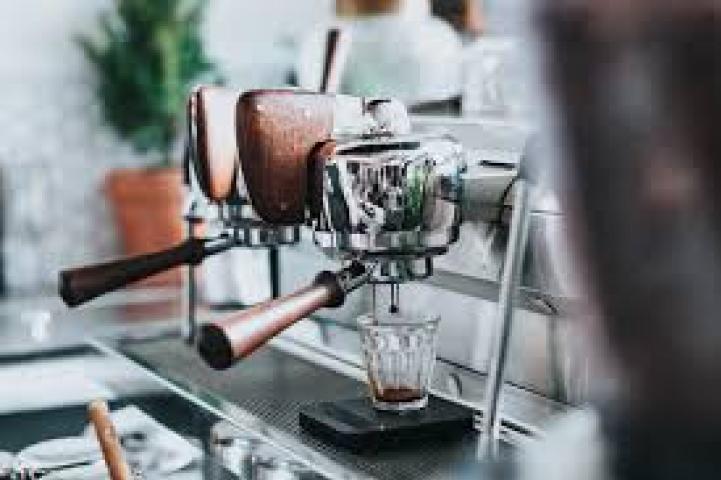
The primary driver of the coffee machine market is the "Prosumer" movement. Consumers are increasingly educated about bean origins, roast profiles, and extraction pressures. This has created a vacuum for high-end espresso machines that offer commercial-grade performance within a compact, aesthetically pleasing home footprint.
Regional Powerhouses
While Europe remains the traditional stronghold due to its deeply rooted cafe culture, the Asia-Pacific region represents the most aggressive growth frontier. Rapid urbanization in China, India, and Vietnam, coupled with a growing middle class that views Western->
The Impact of the Remote Work Paradigm
The permanent shift toward hybrid work models has permanently altered the market’s trajectory. As consumers spend more time at home, the "Sunk Cost" of an expensive, high-quality coffee machine becomes more justifiable compared to daily expenditures at premium coffee chains. This has led to the explosive growth of the "Super-Automatic" segment.
Section II: Strategic Future Vision – The "New Version" of Coffee Technology
To maintain relevance over the next decade, the industry must pivot from hardware-centric sales to a "Solution-as-a-Service" model.
1. The Integration of Artificial Intelligence (AI) and IoT
The next generation of coffee machines will not simply brew coffee; they will act as diagnostic centers.
Predictive Maintenance: Using sensors to alert users and manufacturers of scale buildup or mechanical fatigue before a breakdown occurs.
AI-Enhanced Extraction: Machines that utilize visual sensors to identify the roast level of the bean and automatically adjust water temperature, grind size, and tamping pressure to optimize the flavor profile.
The Connected Ecosystem: Integration with smart home hubs (Alexa, Google Home) to synchronize brewing with morning alarms or health data from wearable devices.
2. The Circular Economy and Sustainable Engineering
The industry faces a reputational crisis regarding waste—specifically single-use pods and non-recyclable components. The future market leaders will be those who adopt:
Zero-Waste Pod Systems: Moving beyond aluminum to fully compostable, plant-based materials that degrade within weeks.
Modular Design: Designing machines for "Repairability" rather than "Obsolescence." A modular coffee machine allows users to upgrade the pump or the grinder without discarding the entire unit, aligning with global "Right to Repair" legislation.
Section III: Deep Dive into Market Segmentation
By Product Category: The Rise of the Specialty Machine
The market is bifurcated into Drip, Espresso, and Pod-based systems. While drip machines maintain a steady volume in North America, the Espresso category is seeing the highest value growth. Specialty machines that can handle "Cold Brew" and "Nitro Coffee" at the touch of a button are emerging as the new premium sub-segment.
By End-User: The Office Coffee Revolution
The "Office Coffee Service" (OCS) segment is undergoing a radical redesign. In a bid to lure employees back to physical offices, corporations are investing in high-end, touchless coffee solutions. These machines serve as social hubs, fostering workplace culture through high-quality amenities.
Section IV: Decision-Making Framework for Business Leaders
For stakeholders looking to capitalize on this $10+ billion opportunity, the following strategic decisions are paramount:
Decision A: Invest in Software over Hardware As hardware becomes commoditized, the differentiator will be the User Interface (UI) and the mobile application ecosystem. Investing in a seamless, intuitive app that tracks bean inventory and suggests recipes will build long-term brand loyalty.
Decision B: Diversification of Distribution Channels The traditional retail model is being disrupted. Manufacturers should adopt a Direct-to-Consumer (DTC) model, utilizing subscription services that bundle the machine with a monthly supply of premium beans. This ensures recurring revenue and provides invaluable consumer data.
Decision C: Geographic Aggression in Emerging Markets Focus R&D on "Adaptable Technology" for regions with varying water hardness and power stability. Developing machines that are robust enough for emerging infrastructures while maintaining a premium feel is the key to capturing the Asian and Latin American markets.
Section V: Competitive Intelligence and Brand Positioning
The competitive landscape is currently dominated by legacy players like De’Longhi, Jura, and Breville. However, there is a burgeoning "Challenger" tier consisting of tech startups and specialty roasters entering the hardware space.
The "Levers of Competition"
Aesthetic Functionality: In modern kitchen design, the coffee machine is a "hero appliance." Brands that collaborate with industrial designers to create "countertop art" will command higher price premiums.
Customization: The "One-Touch" philosophy is being replaced by the "Precision Control" philosophy. Machines that allow users to save "User Profiles" with specific gram-weight and temperature settings are winning the enthusiast market.
Section VI: Future Business Roles and Directions
The evolution of the market will necessitate the creation of new professional roles within manufacturing organizations:
Sensory Data Analysts: Professionals who analyze brewing data to understand regional flavor preferences, allowing brands to tailor their product launches geographically.
Sustainability Architects: Roles dedicated to auditing the lifecycle of a machine, from the carbon footprint of the plastic housing to the energy efficiency of the heating elements.
Experience Managers: Shifting the focus from "Customer Service" to "User Experience," ensuring that the digital and physical interaction with the machine is frictionless.
Section VII: Risk Mitigation and Challenges
No market expansion is without hurdles. The coffee machine industry must navigate:
Raw Material Volatility: Fluctuating prices of stainless steel and semiconductors.
The "Coffee Rust" Crisis: As climate change affects coffee bean yields, the scarcity of high-quality beans may impact the demand for high-end machines.
Regulatory Pressure: Stricter energy consumption standards in the EU and North America will require a complete overhaul of traditional boiler technologies in favor of more efficient thermoblock systems.
For full access to the comprehensive strategic report, visit: https://www.maximizemarketresearch.com/market-report/coffee-machine-market/216041/
Section VIII: Conclusion – A New Paradigm
The Coffee Machine Market is at a crossroads. The data provided by Maximize Market Research indicates a sector that is healthy, growing, and ripe for disruption. However, the "New Version" of this market is not about more machines; it is about better experiences.
Success in the 2025–2030 window will be defined by the "Three S's": Smart, Sustainable, and Specialty.
Business leaders must move away from the "volume-first" mentality and embrace a "value-first" approach. By integrating AI for precision, modularity for sustainability, and high-design for life>
The direction is clear: The future of coffee is intelligent, personalized, and deeply respectful of the environment. Those who pivot now will lead the next century of the "Coffee Renaissance."