It usually starts with a model that works… until it doesn’t
Most AI journeys begin with optimism. A team builds a machine learning model, trains it on structured data, and the results look promising. Accuracy scores are high, predictions feel reliable, and there’s a sense that something valuable has been created. For a moment, it feels like the hardest part is already done.
But that confidence rarely survives contact with the real world.
The moment a model moves beyond testing environments, things begin to change. Data becomes messy and inconsistent. Systems behave unpredictably. Performance starts to fluctuate. What once looked stable begins to show cracks. Latency increases, outputs become less reliable, and suddenly the model that once impressed everyone struggles to keep up with real-world demands.
This is the point where many businesses face an uncomfortable realization. Building a model was never the hardest part. Making it work in real conditions is where the real challenge begins.
The real problem isn’t AI, it’s execution
There’s a common belief that AI projects fail because the models aren’t good enough. In reality, that’s rarely the case. Most models today are capable enough to deliver value under the right conditions.
The real issue lies somewhere else.
Execution.
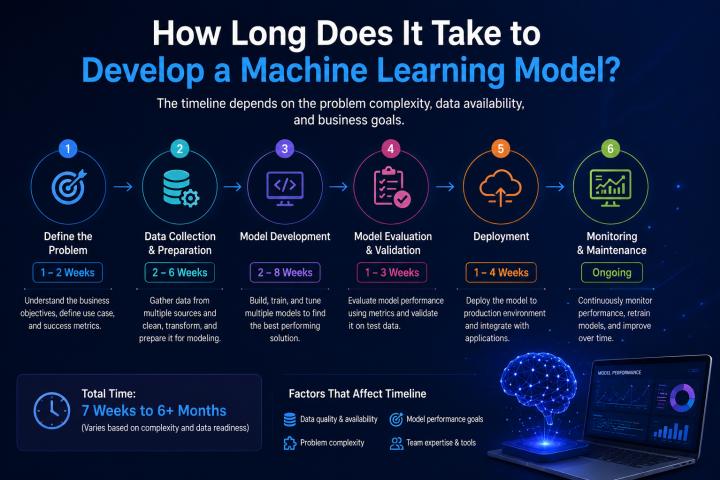
A machine learning model sitting in a notebook or a controlled environment doesn’t solve business problems. It needs to be deployed, connected to live systems, continuously updated with new data, and monitored over time. Without this operational layer, even the most advanced model remains disconnected from actual impact.
This gap between what AI can do in theory and what it actually does in practice is where many organizations struggle. It’s also the reason why the decision to hire machine learning engineers has become increasingly important.
Why hiring the right people changes everything
When companies decide to hire machine learning engineers, they are not just expanding their technical teams. They are addressing a fundamental gap in how AI systems are built and maintained.
Machine learning engineers operate at the intersection of data science and software engineering. They understand how models work, but more importantly, they understand how systems work. Their focus is not just on accuracy, but on reliability, scalability, and performance in real-world environments.
They take models out of isolated environments and turn them into functioning systems. They ensure that predictions can be generated in real time, that systems can handle increasing loads, and that performance remains stable even as conditions change.
This shift from model-building to system-building is what transforms AI from an experiment into something that can actually support business operations.
AI doesn’t fail in development, it fails in production
One of the most overlooked realities in AI is where failure actually occurs.
During development, everything is controlled. Data is clean, environments are stable, and performance metrics are carefully measured. Under these conditions, models often perform exceptionally well.
But production is a different story.
Once deployed, models encounter data that is incomplete, inconsistent, or entirely different from what they were trained on. User behavior changes. External conditions shift. Over time, performance begins to degrade, sometimes gradually, sometimes suddenly.
Without proper monitoring, these issues can go unnoticed until they begin to affect real outcomes. Predictions become less accurate. Decisions based on those predictions become less reliable. And the impact starts to ripple through the business.
Machine learning engineers are the ones who anticipate and manage these challenges. They build systems that track model performance, detect anomalies, and trigger updates when needed. They ensure that AI systems don’t just work once, but continue to work over time.
The shift from experimentation to responsibility
There was a time when AI was treated as an experimental space. Companies could explore it without expecting immediate returns. It was acceptable for projects to fail, as long as there was learning involved.
That phase is coming to an end.
Today, AI is directly tied to business outcomes. It influences customer experiences, operational efficiency, and strategic decisions. This means there is far less tolerance for inconsistency or failure.
With this shift comes responsibility.
Businesses are no longer just experimenting with AI. They are depending on it. And dependency changes expectations. Systems need to be reliable. Results need to be consistent. Risks need to be managed.
This is why more organizations are making the strategic decision to hire machine learning engineers. It’s not just about improving technology. It’s about ensuring accountability.
From isolated features to integrated systems
In the early stages of AI adoption, machine learning was often treated as a feature. A recommendation engine here, a chatbot there, a predictive model integrated into a specific part of the system.
But that approach is evolving.
AI is no longer confined to individual features. It is becoming part of entire workflows. It influences multiple steps within a process, interacts with different systems, and contributes to larger operational goals.
This level of integration requires a different kind of thinking.
It’s no longer enough to build a model that works in isolation. It needs to work as part of a larger ecosystem. It needs to communicate with other systems, handle dependencies, and operate under real constraints.
Machine learning engineers play a crucial role in making this possible. They design architectures that allow AI systems to function as part of a broader infrastructure, rather than as standalone components.
Why many companies struggle to scale AI
Despite the growing interest in AI, many organizations struggle to scale their initiatives. They build promising prototypes, but those prototypes never evolve into production systems.
There are several reasons for this.
Sometimes it’s a lack of infrastructure. Sometimes it’s a lack of expertise. And sometimes it’s simply a misunderstanding of what it takes to move from experimentation to execution.
Scaling AI requires more than good ideas. It requires systems that can handle complexity, adapt to change, and operate reliably over time.
This is why companies are increasingly looking beyond traditional roles. Instead of focusing solely on data scientists, they are investing in engineering talent that can support long-term implementation.
In many cases, organizations also collaborate with experienced partners like Appinventiv to accelerate this process. These partnerships help bridge the gap between conceptual models and production-ready systems, especially when internal resources are limited.
The evolving role of machine learning engineers
The role of machine learning engineers is also evolving.
It’s no longer just about deploying models. It’s about managing the entire lifecycle of AI systems. This includes data pipelines, infrastructure, monitoring, optimization, and continuous improvement.
As AI systems become more complex, the responsibilities associated with them also grow. Engineers need to think about performance, security, scalability, and compliance, all at the same time.
This makes the role both challenging and critical.
Because at the end of the day, the success of an AI system is not determined by how advanced the model is, but by how well it functions within its environment.
It’s no longer about building AI, it’s about making it work
The conversation around AI is changing.
It’s no longer about who can build the most advanced models or who has access to the most data. Those factors still matter, but they are no longer enough on their own.
What matters now is execution.
Who can take an idea and turn it into a working system? Who can ensure that system performs reliably over time? Who can adapt it as conditions change?
These are the questions that define success in the current landscape.
And the answers often point to the same conclusion: businesses need the right engineering capabilities to support their AI initiatives.
Final thought
AI has immense potential, but potential alone does not create value.
Value comes from execution.
It comes from systems that work not just once, but consistently. Systems that adapt, scale, and integrate into real-world environments without breaking down.
Behind those systems are people who understand both the intelligence and the infrastructure that supports it.
That is why more businesses are choosing to hire machine learning engineers.
Because in the end, the difference between an idea and impact is not just innovation.
It’s implementation.