Market Overview:
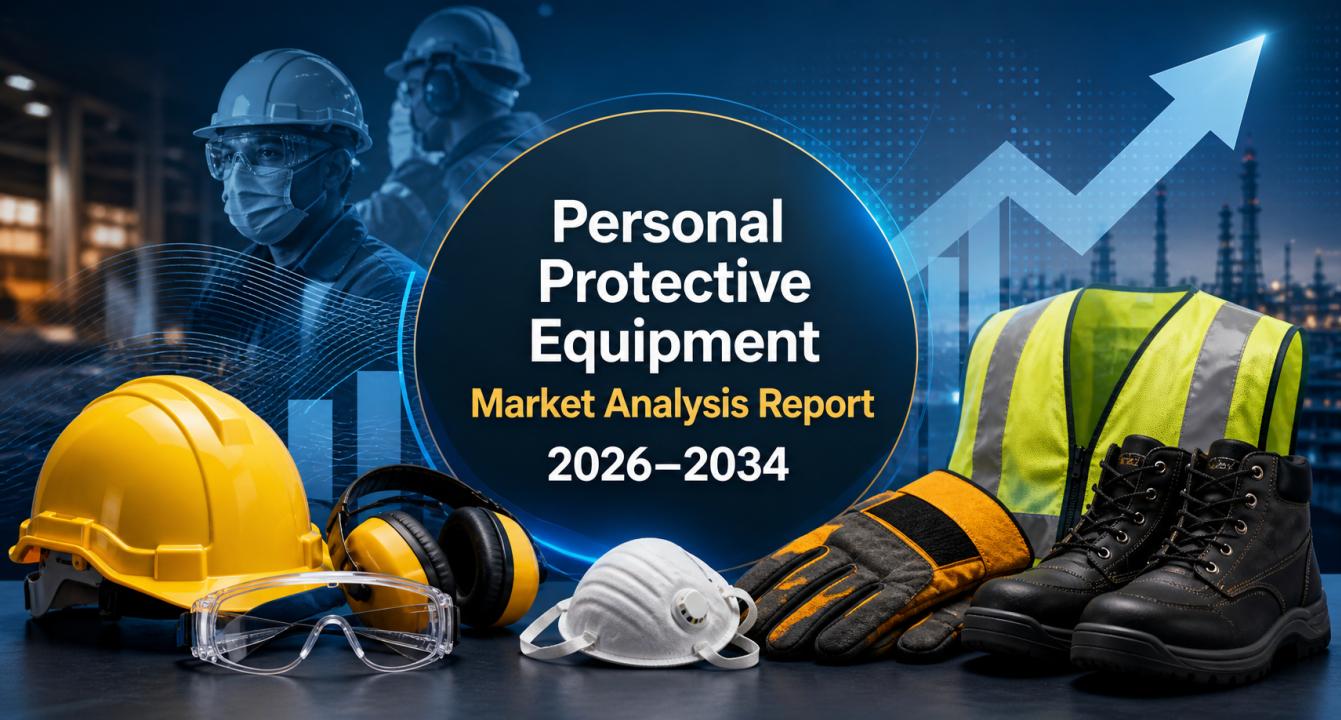
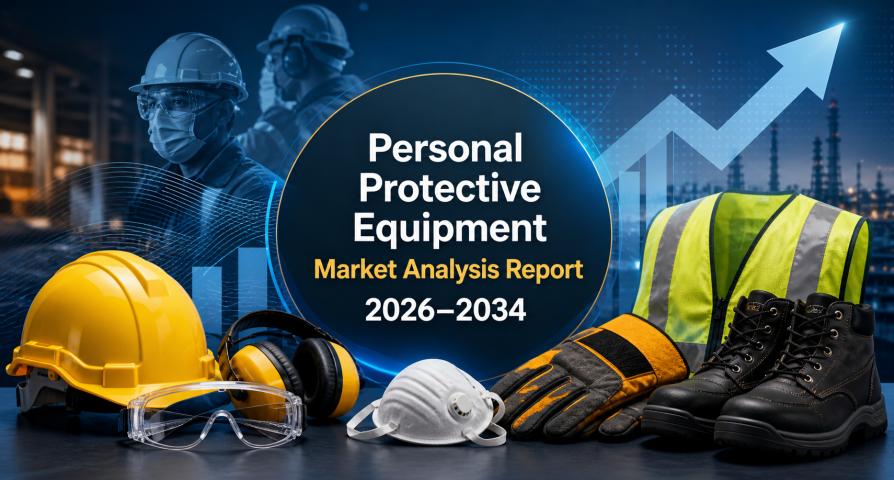
The personal protective equipment (PPE) market is
experiencing rapid growth, driven by stringent regulatory frameworks and safety
standards, escalating healthcare requirements and infection control, and rapid
industrialization and infrastructure development. According to IMARC
Group’s latest research publication, “Personal Protective Equipment
Market Size, Share, Trends and Forecast by Equipment Type, End Use Industry,
and Region, 2026-2034”, The global personal protective equipment (PPE)
market was valued at USD 87.4 Billion in 2025. It is projected
to reach USD 170.0 Billion by 2034, growing at a CAGR
of 7.45%, driven by stringent safety regulations and global industrial
expansion.
This detailed analysis primarily encompasses industry size,
business trends, market share, key growth factors, and regional forecasts. The
report offers a comprehensive overview and integrates research findings, market
assessments, and data from different sources. It also includes pivotal market
dynamics like drivers and challenges, while also highlighting growth
opportunities, financial insights, technological improvements, emerging trends,
and innovations. Besides this, the report provides regional market evaluation,
along with a competitive landscape analysis.
Download a sample PDF of this report: https://www.imarcgroup.com/personal-protective-equipment-market/requestsample
Our report includes:
- Market
Dynamics
- Market
Trends and Market Outlook
- Competitive
Analysis
- Industry
Segmentation
- Strategic
Recommendations
Growth Factors in the Personal Protective Equipment (PPE) Market
- Stringent
Regulatory Frameworks and Safety Standards
The expansion of the industrial personal protective equipment market is heavily propelled by the
implementation of rigorous occupational health and safety regulations
worldwide. Government bodies, such as the Occupational Safety and Health
Administration in the United States and the European Agency for Safety and Health
at Work, have intensified their oversight, leading to a 33% increase in
industrial compliance checks. These authorities mandate the use of specialized
gear to mitigate risks associated with chemical exposure, physical hazards, and
infectious agents. Furthermore, the International Labour Organization has
introduced updated policies requiring companies to provide appropriate
protective clothing in high-risk sectors like mining and construction. This
regulatory pressure is mirrored by the rising costs of worker compensation and
penalties for negligence, which incentivize employers to invest in high-quality
equipment. Consequently, industries such as pharmaceuticals and manufacturing
now account for a substantial portion of the total demand within the industrial
personal protective equipment market.
- Escalating
Healthcare Requirements and Infection Control
The healthcare sector remains a primary engine for market
development, representing approximately 36% of the global demand for protective
solutions. This growth is driven by a heightened emphasis on clinical
protocols and the ongoing need to protect medical staff from biological agents
and hospital-associated infections, which account for over one million cases
annually in the United States alone. To address these challenges, the
World Health Organization has collaborated with various governments to boost the
production rate of essential items like surgical masks and gloves by nearly
40%. Companies like Honeywell and 3M have responded by launching advanced
NIOSH-certified respiratory products designed specifically for long-term use in
clinical settings. Additionally, increasing surgical volumes and the expansion
of medical infrastructure in emerging economies ensure a steady requirement for
disposable barriers, including gowns and goggles, to maintain sterile
environments and prevent person-to-person transmission.
- Rapid
Industrialization and Infrastructure Development
Substantial investments in infrastructure and the rapid
expansion of the manufacturing industry, particularly in emerging economies,
are creating a continuous need for industrial safety gear. In regions like
India and China, large-scale construction projects and the growth of the
chemical and automotive sectors have led to a surge in the procurement of
protective footwear, fall protection systems, and headgear. For instance,
hand and arm protection currently represents 27% of the total equipment demand
as workers in manufacturing and petrochemicals face direct contact risks. Major
industry players are establishing new production facilities to meet this
localized demand; Kimberly-Clark and Ansell have expanded their manufacturing
footprints to provide hearing and respiratory protection closer to these
industrial hubs. The modernization of traditional factories also
introduces new mechanical and thermal risks, reinforcing the necessity for
flame-resistant clothing and impact-resistant helmets as core components of
operational safety.
Key Trends in the Personal Protective Equipment (PPE) Market
- Integration
of Smart PPE and Wearable Technology
The transition toward networked safety systems is a defining
trend, with wearable technology becoming a standard feature in high-risk
industrial environments. Smart equipment, such as helmets with built-in
sensors and vests that monitor body temperature, allows for real-time health
tracking and immediate hazard alerts. These devices can detect falls or
track vital signs to prevent heatstroke among construction and mining
personnel. In 2026, the adoption of ergonomically designed smart gear has grown
by 41%, as companies shift from simple compliance to data-driven safety
strategies. For example, connected gloves can now detect hazardous
chemical exposure and transmit data to a central safety management platform,
enabling supervisors to intervene before an injury occurs. This
integration of the Internet of Things into protective apparel not only enhances
worker protection but also improves operational efficiency by providing
actionable insights into environmental conditions.
- Emphasis
on Sustainable and Eco-Friendly Materials
Environmental sustainability has become a top priority for
manufacturers, leading to the development of eco-conscious protective
solutions. There is a visible shift toward using biodegradable materials,
such as plant-based plastics for face shields and recyclable nonwoven fibers
for protective clothing. This trend addresses the massive volume of waste
generated by disposable items in the healthcare and food processing sectors.
Leading suppliers are now focusing on the "circular economy" by
implementing recycling programs for used gloves and reducing packaging waste
through energy-efficient manufacturing processes. Innovations include the
introduction of sustainable workwear fibers that maintain high-performance
protection while minimizing the overall carbon footprint. Furthermore,
many organizations are opting for longer-life, reusable PPE that meets
stringent safety certifications, aligning their safety procurement with
corporate social responsibility goals and reducing long-term waste disposal
costs for large-scale institutional users.
- Advancement
in Ergonomic and Human-Centric Design
Design innovation is increasingly focused on enhancing
wearer comfort and compliance through ergonomic improvements and human-centric
engineering. A significant portion of workers approximately 41% now
prioritize comfort when selecting protective equipment for long-term use. Manufacturers
are utilizing artificial intelligence to design novel gear that fits a wider
range of body types and sizes, ensuring that equipment like respirators and
harnesses provides a complete seal without causing fatigue. For instance,
powered air-purifying respirators are gaining popularity in the pharmaceutical
industry because they use battery-powered fans to reduce respiratory
resistance, making them more comfortable for extended shifts. Additionally,
there is a growing focus on gender-specific PPE, such as radiation-protective
sleeves designed for female healthcare workers to reduce exposure during
imaging procedures. These advancements ensure that safety gear does not hinder
productivity, thereby encouraging consistent use among the global workforce.
Leading Companies Operating in the Personal Protective
Equipment (PPE) Industry:
- 3M
Company
- DuPont
de Nemours Inc.
- Ansell
Limited
- MSA
Safety Inc.
- Protective
Industrial Products, Inc. (PIP)
- Delta
Plus Group
- Lakeland
Industries
- Drägerwerk
AG & Co. KGaA
- Sioen
Industries NV
- Alpha
Pro Tech Ltd.
Personal Protective Equipment (PPE) Market Report
Segmentation:
By Product Type:
- Head,
Eye & Face Protection
- Respiratory
Protection
- Hand
& Arm Protection
- Protective
Clothing
- Fall Protection
- Protective
Footwear
- Hearing Protection
- Others
Head, Eye, and Face Protection holding the largest share at
22.7% in 2025, this segment includes essential safety gear like helmets and
goggles, driven by universal mandates across various industries and increased
demand from construction booms.
By End User
- Oil
& Gas
- Construction
- Chemical
- Healthcare
- Manufacturing
- Others
Oil and Gas leading with a 16.7% market share in 2025,
this segment requires comprehensive protection programs across all operations,
supported by major projects like North Sea reactivation and Saudi Vision 2030,
which enhance demand for specialized PPE.
Regional Insights:
- North
America (United States, Canada)
- Asia
Pacific (China, Japan, India, South Korea, Australia, Indonesia, Others)
- Europe
(Germany, France, United Kingdom, Italy, Spain, Russia, Others)
- Latin
America (Brazil, Mexico, Others)
- Middle
East and Africa
Europe leading with a 30.3% market share in 2025,
Europe is bolstered by stringent regulations mandating PPE compliance and a
high number of occupational injury cases, ensuring ongoing investment in safety
equipment.
Note: If you require specific details, data, or insights
that are not currently included in the scope of this report, we are happy to
accommodate your request. As part of our customization service, we will gather
and provide the additional information you need, tailored to your specific
requirements. Please let us know your exact needs, and we will ensure the
report is updated accordingly to meet your expectations.
About Us:
IMARC Group is a global management consulting firm that
helps the world’s most ambitious changemakers to create a lasting impact. The
company provide a comprehensive suite of market entry and expansion services.
IMARC offerings include thorough market assessment, feasibility studies,
company incorporation assistance, factory setup support, regulatory approvals
and licensing navigation, branding, marketing and sales strategies, competitive
landscape and benchmarking analyses, pricing and cost research, and procurement
research.
Contact Us:
IMARC Group
134 N 4th St. Brooklyn, NY 11249, USA
Email: sales@imarcgroup.com
Tel No:(D) +91 120 433 0800
United States: +1-201971-6302