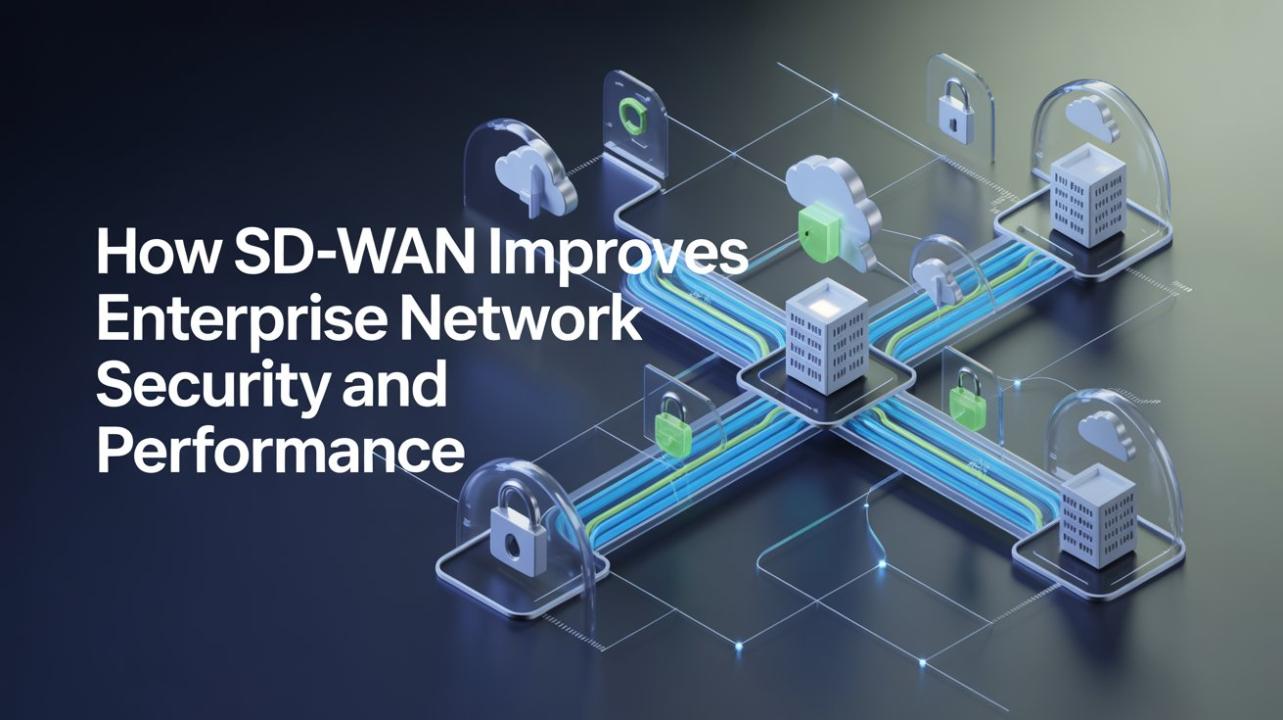
Enterprise networking has shifted dramatically in the last few years. With cloud applications, remote employees, SaaS platforms, and globally distributed operations becoming standard, traditional WAN architectures often struggle to deliver consistent performance and strong security. This gap has pushed organizations toward Software-Defined Wide Area Networking (SD-WAN), a modern approach that brings intelligence, flexibility, and centralized control into enterprise connectivity.
In this evolving landscape, Cisco SD-WAN Course has become a key learning pathway for engineers, while SD-WAN Training in India is increasingly relevant for professionals aiming to understand real-world enterprise networking transformations and secure connectivity models.
SD-WAN is not just a connectivity upgrade—it is a complete redesign of how enterprise networks are built, managed, and secured across multiple locations.
Understanding the Shift from Traditional WAN to SD-WAN
Traditional WAN systems were built for a time when most applications were hosted in centralized data centers. Branch offices connected back to headquarters through fixed, often expensive links like MPLS.
However, modern enterprise traffic no longer follows a single direction. Users access cloud applications directly, data is distributed across multiple platforms, and employees work from anywhere.
Limitations of Traditional WAN
High dependency on MPLS circuits
Lack of cloud optimization
Manual and complex configuration
Limited visibility into application performance
Poor scalability for growing enterprises
SD-WAN was introduced to solve these challenges with a software-driven approach.
Core Architecture of SD-WAN
SD-WAN separates the control layer from the data layer, enabling centralized intelligence over distributed networks.
Key Components
Centralized controller for policy management
Edge devices at branch locations
Secure tunnels for encrypted communication
Application-aware routing engine
This architecture allows organizations to manage thousands of network nodes from a single control system.
How SD-WAN Improves Network Performance
Performance improvement is one of the biggest reasons enterprises adopt SD-WAN. It ensures applications run efficiently regardless of location or network conditions.
Application-Based Traffic Prioritization
SD-WAN identifies traffic types and prioritizes them automatically based on business importance.
This leads to:
Faster performance for critical business applications
Reduced congestion during peak usage
Better user experience for cloud services
Real-Time Path Selection
SD-WAN continuously evaluates multiple network paths and selects the best available route in real time.
It helps achieve:
Lower latency
Improved packet delivery
Automatic failover during link degradation
Stable application performance
Multi-Link Bandwidth Optimization
Instead of relying on a single WAN link, SD-WAN intelligently distributes traffic across multiple connections.
This includes:
Internet broadband
MPLS connections
LTE/5G backup links
Benefits include better utilization of bandwidth and reduced dependency on costly private circuits.
How SD-WAN Strengthens Enterprise Security
Security is no longer an add-on in SD-WAN—it is built into the architecture itself.
Centralized Security Control
Security policies are managed from a single dashboard and applied consistently across all branches.
This ensures:
Uniform security enforcement
Reduced configuration errors
Faster policy updates
Encrypted End-to-End Communication
SD-WAN encrypts data traffic between all network endpoints.
This provides:
Protection from interception
Secure branch-to-cloud communication
Safe data transmission over public networks
Integrated Threat Protection
Modern SD-WAN platforms often include built-in security features such as:
Firewall capabilities
Intrusion prevention systems
Web filtering
Malware detection
This reduces the need for multiple security appliances at each branch location.
SD-WAN and Cloud-First Enterprise Models
As organizations move toward cloud-first strategies, SD-WAN plays a critical role in ensuring seamless connectivity.
Direct-to-Cloud Access
SD-WAN enables branches to connect directly to cloud applications instead of routing traffic through central data centers.
This improves:
Application speed
Network efficiency
User experience
Multi-Cloud Connectivity Support
Most enterprises now use multiple cloud platforms. SD-WAN simplifies this by:
Providing unified connectivity across cloud providers
Optimizing traffic flow between clouds
Ensuring consistent security policies
SD-WAN in Remote and Hybrid Work Environments
The rise of hybrid work has made secure remote connectivity a top priority.
Secure Remote Access Framework
SD-WAN ensures remote users connect securely through:
Encrypted tunnels
Identity-based authentication
Policy-driven access control
Improved User Experience for Remote Teams
Employees working from home or remote locations benefit from:
Stable application performance
Lower latency to enterprise systems
Consistent access to cloud resources
Automation in SD-WAN Networks
Automation is one of the strongest advantages of SD-WAN, reducing manual effort and operational complexity.
Zero-Touch Provisioning
New branch devices can be deployed without manual configuration.
This enables:
Faster network expansion
Reduced deployment errors
Simplified IT operations
Policy-Driven Network Management
Instead of configuring individual devices, administrators define policies that automatically control network behavior.
This ensures:
Consistent network performance
Easier scalability
Reduced operational overhead
SD-WAN vs Traditional WAN (Real-World Comparison)
Understanding the difference highlights why SD-WAN is rapidly becoming the enterprise standard.
Traditional WAN Challenges
Static routing paths
Expensive MPLS dependency
Limited cloud compatibility
High operational complexity
SD-WAN Advantages
Intelligent traffic routing
Cloud-optimized architecture
Centralized control
Built-in security
Cost-effective connectivity
Business Benefits of SD-WAN Adoption
Beyond technical improvements, SD-WAN provides clear business advantages.
Lower Infrastructure Costs
By using broadband and internet links alongside MPLS, enterprises significantly reduce networking expenses.
Faster Business Expansion
New branches can be deployed quickly using automated provisioning systems.
Real-Time Network Visibility
Organizations gain insight into:
Application performance
Security events
Bandwidth usage
Network health
Implementation Challenges of SD-WAN
Despite its advantages, SD-WAN adoption requires careful planning.
Integration with Legacy Systems
Many enterprises still run older infrastructure that requires compatibility adjustments.
Security Policy Misconfiguration Risks
Incorrect setup can lead to vulnerabilities if policies are not properly defined.
Skill Gap in IT Teams
Engineers need strong knowledge in:
Networking fundamentals
Cloud systems
Security frameworks
Automation tools
This is where structured learning paths like Cisco SD-WAN Course become highly valuable.
Future of SD-WAN Technology
SD-WAN continues to evolve as enterprises move toward intelligent and automated networking systems.
Emerging Innovations
AI-driven traffic optimization
Zero Trust security integration
Intent-based networking
Fully automated network orchestration
Long-Term Role in Enterprises
SD-WAN will continue to:
Power global digital transformation
Improve hybrid cloud connectivity
Strengthen enterprise security models
Simplify large-scale network operations
Conclusion
SD-WAN has transformed enterprise networking by delivering a unified approach to performance optimization and security enforcement. It replaces rigid traditional WAN systems with intelligent, cloud-ready, and automation-driven architecture that supports modern digital businesses.
As organizations continue adopting cloud technologies and hybrid work models, SD-WAN will remain a foundational technology for secure and high-performance networking. SD-WAN Training in India continues to be a strong pathway for professionals who want to build expertise in next-generation enterprise networking and security-driven infrastructure design.