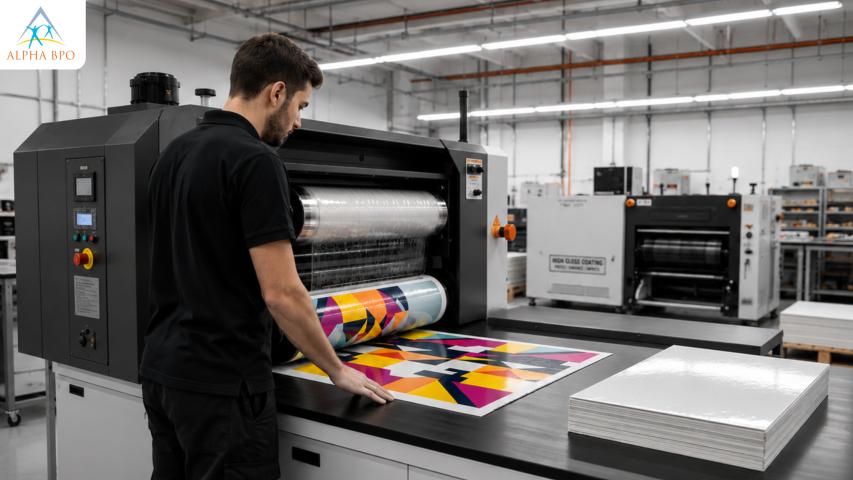
Customers are getting attracted to the printing and packaging design for your brand. However, have you come across unique brochures, catalogs, business cards, or other printing materials that easily fade, smudge, or become dull within a short period? Such issues occur very commonly when companies spend huge sums on marketing materials, but fail to pay attention to finishing processes.
Product finishing plays an essential role in the prepress printing industry, including processes such as laminating and coating to enhance the durability of printed materials. Aqueous coating has become one of the most common finishing techniques due to its high durability, fast drying time, and ability to provide a glossy finish to printed documents at an affordable rate.
According to the latest research by Smithers, the print finishing market is growing globally due to demand for visual improvements and sustainable packaging. This blog discusses the meaning of aqueous coating, its benefits, and where it is applied.
Aqueous Coating Definition
Water-based coating is the process of applying a coating to printed materials using water. In printing, a coat is applied to the printed document to prevent fingerprints and moisture from affecting it.
In other words, it is a way to add a unique layer of protection and visual appeal to any printed materials. Due to their water-based nature, aqueous coatings are considered less harmful to the environment than solvent-based coatings. Currently, aqueous coating printing techniques are widely used for:
Product labels
Business cards
Magazines
Posters
Packaging boxes
Leaflets
Brochures
Catalogs
Due to their quick drying, printed materials are ready for distribution, storage, and shipment within a short period of time.
Understanding Aqueous Coating Meaning In Printing
Many people confuse coating with lamination, but there is a difference between the two techniques. In the case of coating, no plastic is added to the paper; instead, a water-based liquid is applied to the printed material's surface.
Beyond protection, an aqueous coating gives printed materials a cleaner, more premium appearance that lasts through handling and shipping.
Why do printers prefer aqueous coating? There are several reasons for that.
Aqueous Coating Procedure
There are two main stages in the aqueous coating procedure: coating and printing application. The procedure is performed in the following order:
Printing Stage
Designs are printed using either digital or offset printing techniques.
Coating Application
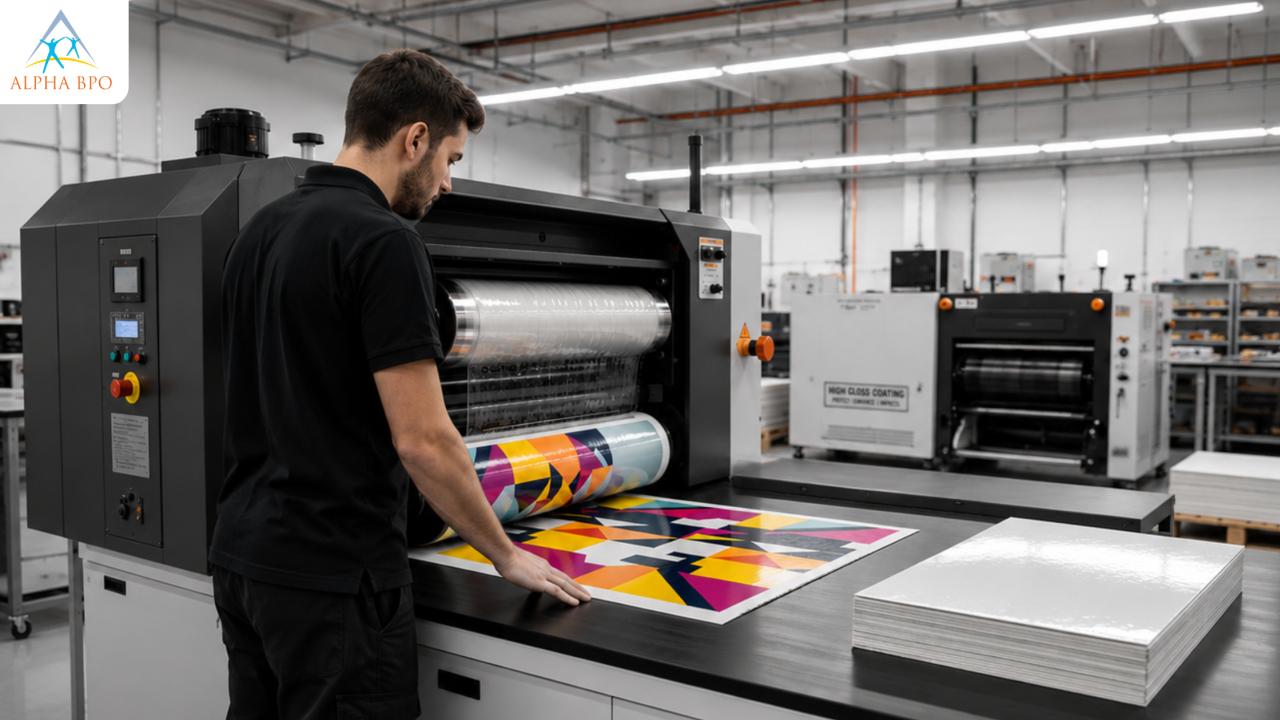
Printers apply a thin protective layer over the printed surface to improve durability and color retention.
Drying
The coating process takes place under the influence of infrared rays and hot air. Thus, the drying time is very fast. After coating, the material is dry, and the printed materials are ready to be packed and shipped to customers.
Such an approach confirms quick processing of large-scale printing orders, as the coating procedure itself takes little time.
Different Types Of Aqueous Coating
Depending on the desired result and application purposes, different coating types can be used.
Matte Aqueous Coating
If the material requires a soft, silky look with minimal shine, a matte coating should be used. Main application areas include:
High-end catalogs
Invitations
Corporate reports
Luxury packaging materials
Gloss Aqueous Coating
This type of gloss aqueous coating helps add a vibrant, shiny look to printed materials. The common applications of gloss aqueous coating include:
Retail marketing materials
Promotional brochures
Magazine covers
Product packaging boxes
Satin or Silk Coating
It provides a semi-gloss finish and confirms good legibility of printed texts. The soft-touch coating is ideal for various tasks:
Book covers
Educational materials
Corporate profiles
The advantages include adding a velvet touch to printing. Uses of soft-touch coating include packaging and luxurious branding.
Advantages Of Using Aqueous Coating
Companies choose coating techniques for numerous reasons. There are many benefits of aqueous coatings.
Environmental Friendly
Due to its water-based nature, it contains fewer solvents.
Quick Drying
Since the aqueous coating is applied with water, the drying process is fast. As a result, the production process speeds up. For this reason, packaging prepress is essential for business success and increasing efficiency.
Protection
Since printed materials are susceptible to scratches, fingerprints, and scuffing, an aqueous coating helps prevent them.
Improved Appearance
Coated materials acquire a professional, clean appearance, and colors become deeper and more saturated.
Cost Efficiency
Aqueous coating remains cost-effective, since the process requires little expense and effort.
Comparing Aqueous Coating and UV Coating
When selecting a unique coating technique for specific projects, people and designers often wonder whether they need aqueous or a UV coating.
Aqueous Coating Includes Multiple Features and Functions:
Water-based
Eco-friendly
Quick drying
Cost-Effective
Smooth finish
UV coating includes unique functions:
High gloss effect
Resistance to chemicals
Thick finish
Higher price
Aqueous coating is more preferable for catalogs, brochures, and packaging boxes.
Aqueous Coating For Business Cards
When discussing business cards, the benefits of aqueous coating become apparent. Because businesses and people handle these cards frequently, they are prone to various marks and smudges.
That is why aqueous coating can help business cards maintain a professional look and prevent scratches. If you need a more vibrant look, go for gloss-coated cards.
If a company wants to demonstrate a sophisticated, elegant >
Real-Life Example Of Improving Packaging Box Quality
A California-based skin-care company faced problems due to packaging damage. Customers reported problems with scratching, fading, and smudging on the packages.
They decided to cooperate with a specialist in commercial printing and packaging who offered to use aqueous coating. For this purpose, a matte coating was chosen.
Surprising Results After Three Months
Saving money on packaging replacements.
Improved printing production speed.
Increasing customer satisfaction rate.
Significant improvements in the appearance of products.
Decrease in the number of packaging complaints by 40 percent.
Apart from the technique’s effectiveness, the company appreciated the coating’s environmentally friendly nature because sustainability was a key concept of their brand. Thus, aqueous coating can be very useful for brands.
Industries Which Require Aqueous Coating
Currently, aqueous coatings are needed across various industries.
Healthcare Sector
Product packages and informational brochures should be protected with a coating.
Corporate Businesses And Offices
Businesses require business cards, presentations, brochures, and direct mailing materials to be coated.
Publishing Industry
In the publishing sector, marketing inserts, magazines, and book covers should be coated.
Food and Beverage Industry
In the food and beverage sector, packaging boxes, labeling, and menu cards must also be coated.
Retail Industry
This sector requires coating for packaging, catalogs, shopping bags, and promotional stands.
Selection Of Proper Aqueous Coating Machines
Commercial printing businesses often use specialized machines to achieve more consistent, faster coating. The selection process depends on several factors, such as:
Drying features
Production cost
Control over coating thickness
Paper compatibility
By purchasing the right machines, printers improve production quality and minimize waste and downtime.
Will Your Business Need Coatings?
Do you require better protection, a more appealing appearance, faster production, affordable print protection, or an environmentally-friendly solution? The coating will be the perfect solution for you. In cases where writable materials are required, coating might be less preferable.
Increase The Impression Of Your Brand With Aqueous Coating and Prepress Printing
Aqueous coating has become the most popular finishing technique due to its numerous advantages. Aqueous coating offers clear benefits across industries, from packaging boxes to business cards.
With this technique, you can create professional-looking materials that impress people and protect printed designs.
As technology evolves, coating becomes more efficient. With professional prepress printing services, companies can benefit even more.