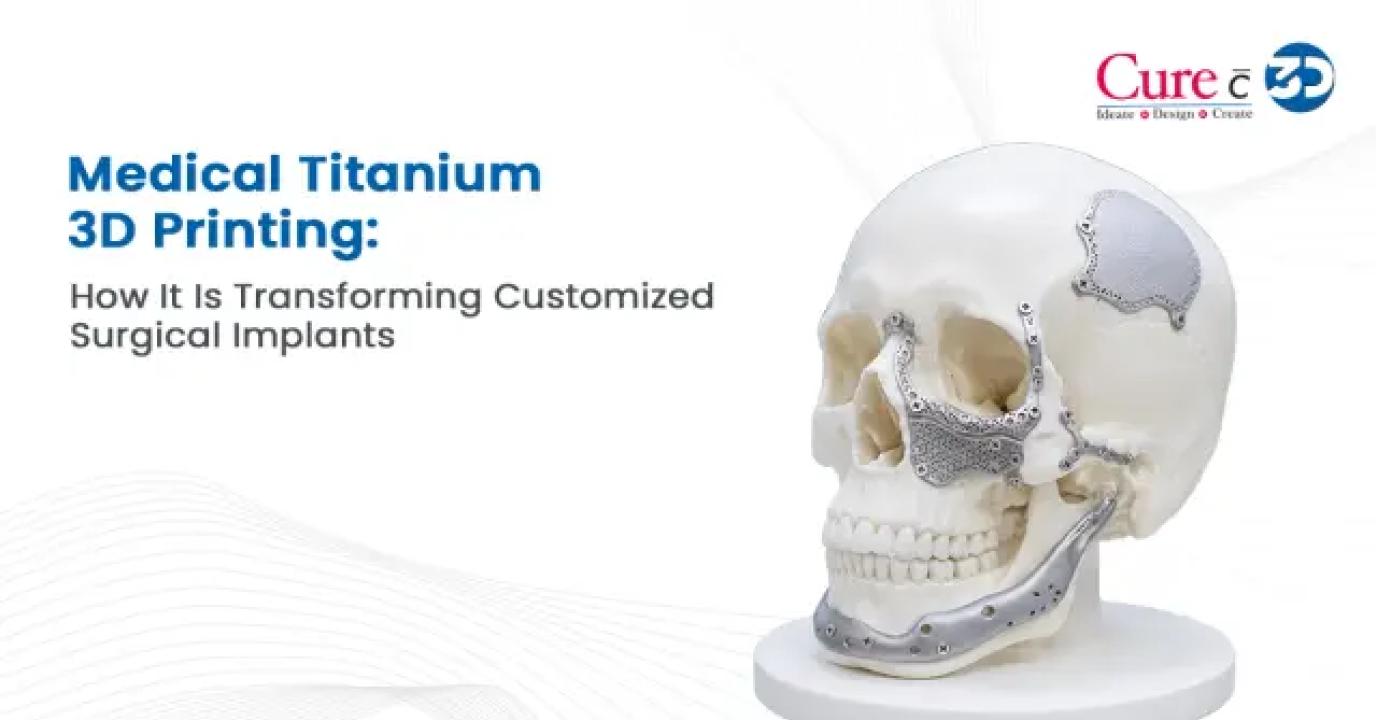
What if a medical implant could be designed specifically around a patient's anatomy rather than forcing the patient's anatomy to fit a standard implant?
That is the promise of medical titanium 3D printing.
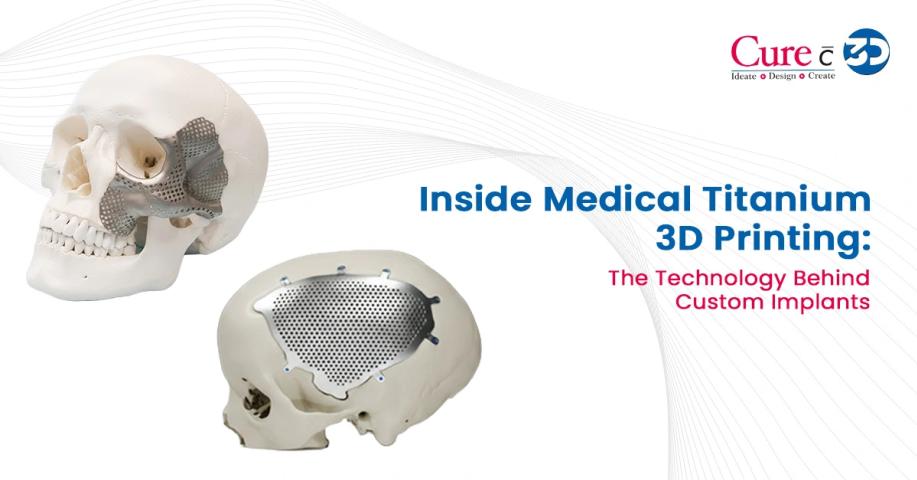
Also known as titanium additive manufacturing, this advanced technology is changing how surgeons, engineers, and medical-device manufacturers approach complex orthopedic and cranio-maxillofacial procedures. By converting digital anatomical data into highly precise physical implants, titanium 3D printing can support patient-specific designs, complex geometries, and personalized surgical solutions.
At Curewith3D, medical 3D printing combines digital planning, advanced manufacturing, and patient-specific design to support the development of customized medical solutions.
But how does medical titanium 3D printing actually work? What makes titanium suitable for implants? And where does this technology provide the greatest value?
Let's explore.
What Is Medical Titanium 3D Printing?
Medical titanium 3D printing is an additive manufacturing process used to produce titanium components layer by layer from a digital 3D model.
Unlike conventional manufacturing, which often involves cutting or machining material away, additive manufacturing builds the component according to a computer-generated design.
A typical workflow includes:
- Patient imaging and anatomical data collection
- Creation of a 3D anatomical model
- Virtual implant design
- Engineering and design validation
- Titanium 3D printing
- Post-processing and finishing
- Quality inspection
- Preparation for clinical use according to applicable requirements
This digital workflow enables engineers to create geometries that can be difficult or expensive to manufacture using traditional methods.
Why Is Titanium Used for Medical Implants?
Titanium and its alloys are widely used in medical applications because they offer a valuable combination of strength, relatively low density, corrosion resistance, and biocompatibility.
One important advantage is titanium's ability to support implant designs that balance mechanical performance with patient-specific anatomical requirements.
For example, titanium can be engineered into structures with carefully controlled internal geometry. In certain applications, porous or lattice structures can be incorporated into an implant design to support bone integration, subject to appropriate clinical and regulatory validation.
This is particularly relevant when conventional implant shapes cannot adequately address a patient's unique anatomy.
7 Key Advantages of Medical Titanium 3D Printing
1. Patient-Specific Implant Design
Every patient's anatomy is different.
Instead of selecting an implant solely from a limited range of standard sizes, patient-specific implants can be designed using the patient's anatomical data.
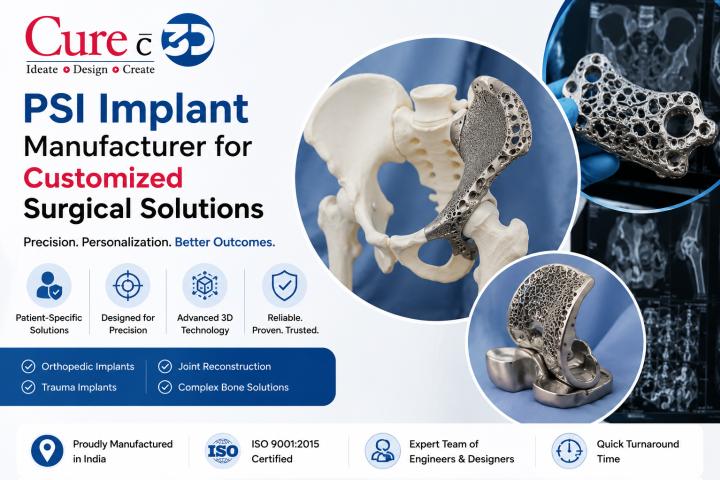
This approach can be especially valuable for complex bone defects, revision procedures, trauma cases, and anatomically challenging reconstructions.
The result is a more personalized design process that begins with the patient's anatomy.
2. Complex Geometries Become Possible
Traditional manufacturing can make certain intricate structures difficult to produce.
3D printing changes that equation.
Additive manufacturing can produce complex contours, internal structures, and lattice geometries that would otherwise require multiple manufacturing steps or may not be practical to manufacture conventionally.
This design freedom allows engineers to explore solutions that are more closely aligned with anatomical requirements.
3. Better Integration With Digital Surgical Planning
Medical titanium 3D printing does not work in isolation.
It can form part of a larger virtual surgical planning (VSP) workflow.
Patient imaging can be converted into a 3D model, which can then be used to simulate anatomy, evaluate reconstruction options, and develop a customized implant design.
This creates a connected digital pathway:
Patient Data → 3D Model → Surgical Planning → Implant Design → 3D Printing
That digital continuity can improve communication between surgeons, engineers, and other healthcare professionals.
4. Design Optimization
Titanium 3D printing enables engineers to optimize implant geometry for specific requirements.
Depending on the clinical application, designers can consider:
- Implant shape
- Thickness
- Weight
- Fixation features
- Surface characteristics
- Porous structures
- Anatomical fit
This flexibility can be particularly valuable when dealing with irregular or large bone defects.
5. Supports Personalized Reconstruction
Complex reconstruction often requires more than a standard implant.
For example, a patient may have experienced trauma, undergone previous surgery, or developed significant bone loss. In such cases, a customized implant may provide an opportunity to address the specific geometry of the defect.
Patient-specific titanium implants can therefore become an important tool within personalized orthopedic and reconstructive strategies.
6. Rapid Digital Iteration
One of the strongest advantages of digital manufacturing is the ability to modify a design digitally before production.
Engineers can evaluate different implant concepts, make adjustments, and refine the geometry before manufacturing the final component.
However, faster digital design does not mean skipping clinical validation or quality controls. Medical-device manufacturing still requires rigorous processes appropriate to the intended application.
7. Advanced Manufacturing for the Future of Healthcare
The medical-device industry is increasingly moving toward personalization, digital workflows, and data-driven manufacturing.
Medical titanium 3D printing sits at the intersection of these trends.
As imaging technologies, computational design, simulation, additive manufacturing, and quality systems continue to evolve, the potential applications of personalized implants may expand further.
Frequently Asked Questions About Medical Titanium 3D Printing
Is titanium 3D printing safe for medical implants?
Titanium is widely used in medical implants, but the safety of a particular 3D-printed implant depends on factors including material selection, manufacturing controls, design, post-processing, sterilization, testing, and regulatory compliance.
Therefore, the manufacturing process and quality system are just as important as the material itself.
What is titanium commonly used for 3D-printed implants?
Titanium alloys, particularly Ti-6Al-4V, are widely associated with medical additive manufacturing because of their established mechanical and biological characteristics.
The appropriate material depends on the intended medical application and applicable standards and regulatory requirements.
Can titanium implants be customized for individual patients?
Yes. One of the major advantages of additive manufacturing is its ability to produce patient-specific implants from customized digital designs.
Patient-specific manufacturing can be especially useful for anatomically complex cases where conventional implant options may not provide an appropriate solution.
What medical applications use titanium 3D printing?
Potential applications include:
- Orthopedic implants
- Cranio-maxillofacial reconstruction
- Trauma reconstruction
- Spinal applications
- Patient-specific implants
- Surgical planning models
- Specialized reconstructive solutions
The suitability of 3D printing depends on the specific clinical requirement and regulatory pathway.
How does Curewith3D use 3D printing technology?
Curewith3D focuses on integrating 3D technology with healthcare workflows, including patient-specific implants, 3D surgical models, custom surgical guides, and virtual surgical planning.
The goal is to connect patient anatomy with digital design and advanced manufacturing to support more personalized surgical solutions.
What Does the Future Hold?
The future of medical titanium 3D printing is closely connected to personalization.
Imagine a workflow where a patient's anatomy is digitally reconstructed, the surgical strategy is virtually evaluated, and an implant is engineered specifically around the required anatomy and clinical objectives.
That future is already becoming part of modern medical manufacturing.
However, successful adoption requires more than a sophisticated 3D printer. It requires clinical collaboration, engineering expertise, validated processes, material knowledge, quality control, and regulatory discipline.
For healthcare organizations exploring personalized implant solutions, choosing an experienced technology partner is therefore critical.
Conclusion
Medical titanium 3D printing is transforming the possibilities of personalized implant design.
From patient-specific implants and complex geometries to digital surgical planning and advanced manufacturing, the technology offers powerful opportunities for modern healthcare.
The biggest advantage is not simply the ability to print titanium.
It is the ability to translate patient-specific anatomy into precisely engineered digital solutions.
With organizations such as Curewith3D working at the intersection of medical expertise, 3D design, and additive manufacturing, the next generation of personalized healthcare solutions is becoming increasingly achievable.
For complex cases where conventional solutions may not be enough, patient-specific titanium 3D printing could represent a powerful new direction in modern reconstructive and orthopedic care.