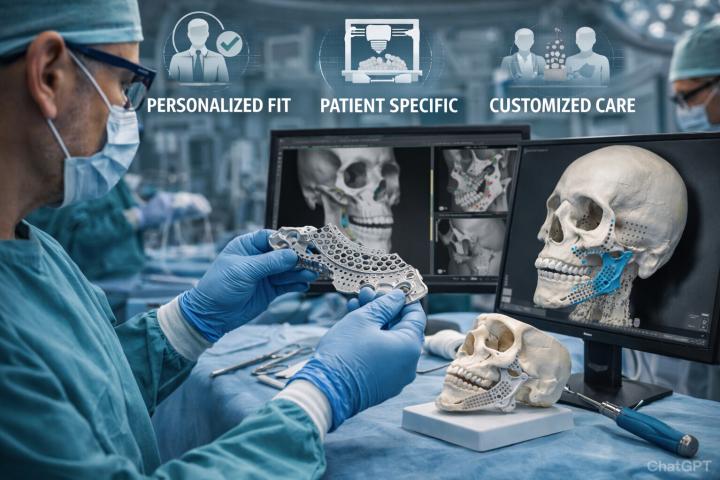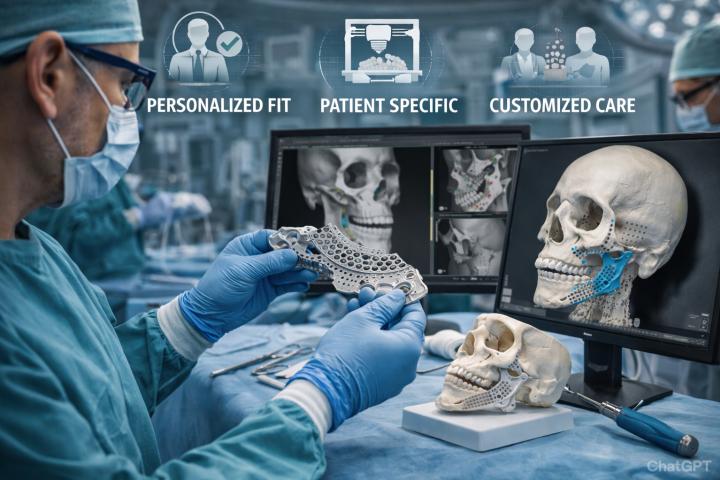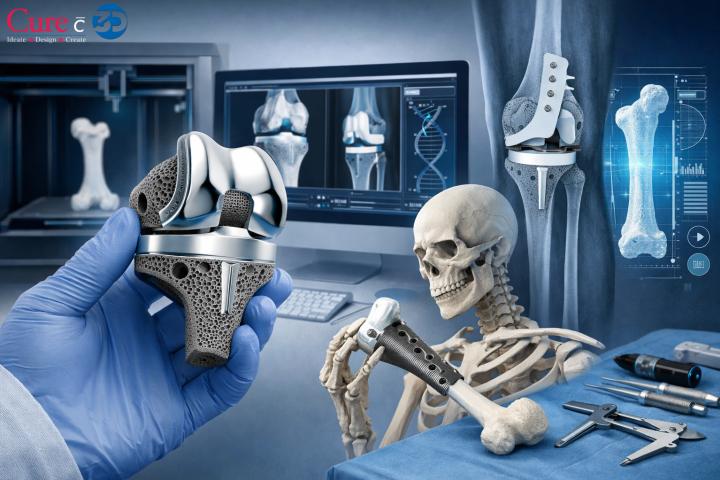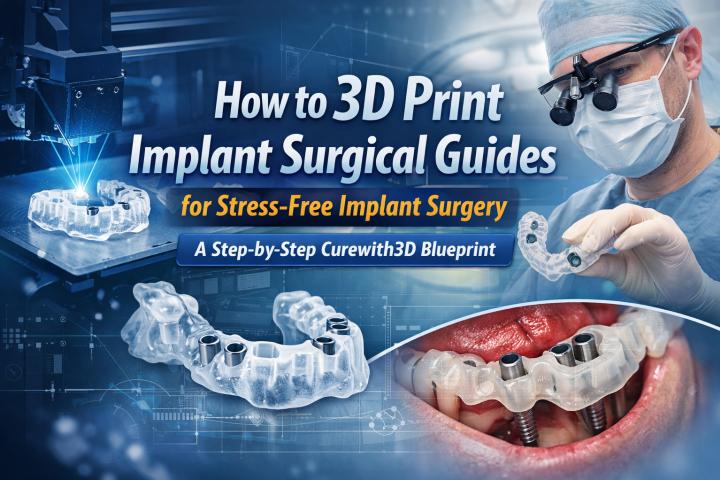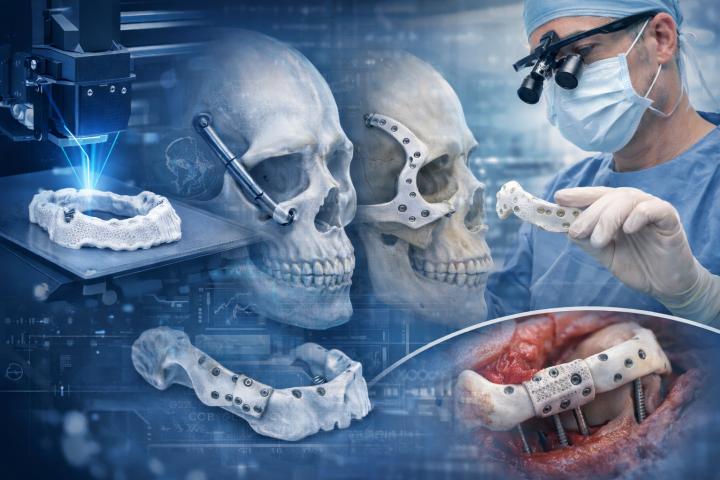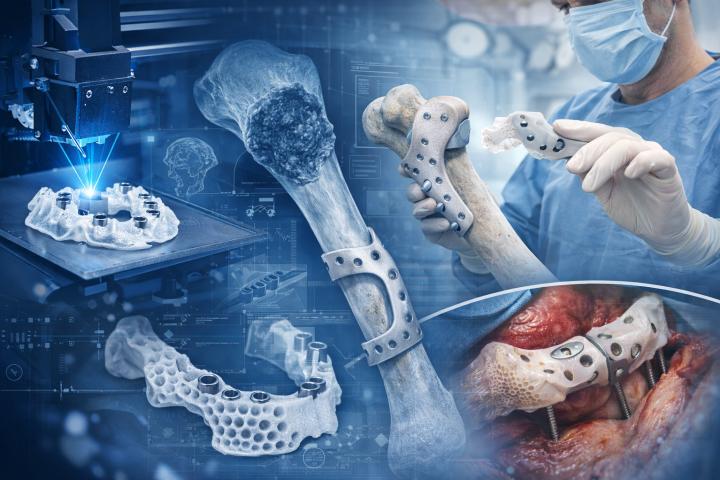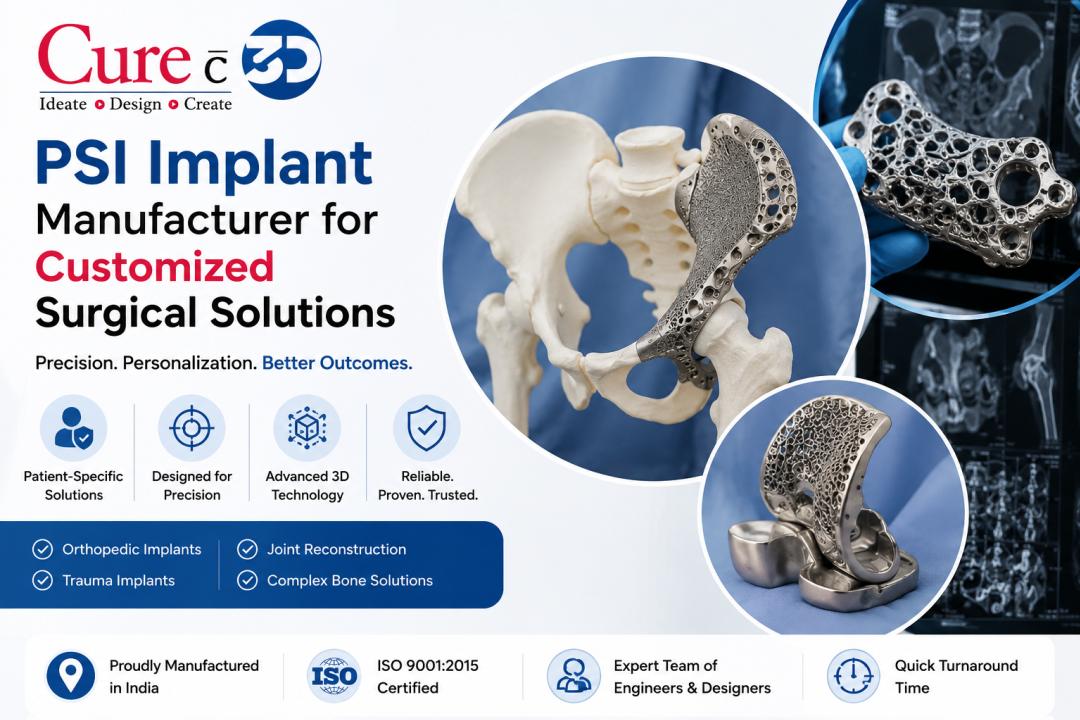
Every patient is unique, so why should every implant be the same? This question has led to one of the biggest innovations in modern healthcare—Patient Specific Implants (PSIs). Designed using advanced CT or MRI imaging, digital engineering, and medical 3D printing, these implants are customized to match a patient's exact anatomy rather than relying on standard, off-the-shelf solutions.
From complex orthopedic procedures to cranio-maxillofacial reconstruction and trauma surgery, Patient Specific Implants are helping surgeons achieve greater precision, reduce operating time, and improve patient outcomes. As personalized medicine continues to evolve, customized implants are becoming an essential part of advanced surgical care.
In this blog, you'll discover what Patient Specific Implants are, how they are manufactured, their benefits, applications, and why they are shaping the future of reconstructive surgery.
What Are Patient Specific Implants?
Patient Specific Implants (PSIs) are customized medical implants designed specifically for an individual patient using high-resolution CT or MRI scans. Biomedical engineers convert medical images into detailed 3D digital models, allowing implants to perfectly match the patient's anatomy.
Unlike conventional implants that come in predefined sizes, PSIs are manufactured exclusively for one patient, resulting in improved anatomical fit and surgical accuracy.
How Are Patient Specific Implants Designed?
The manufacturing process combines advanced engineering with medical expertise.
Step 1: Medical Imaging
Detailed CT or MRI scans capture the patient's anatomy.
Step 2: Digital 3D Modeling
Biomedical engineers reconstruct the affected bone using specialized CAD software.
Step 3: Virtual Surgical Planning
Surgeons and engineers collaborate to simulate the surgery, ensuring the implant fits perfectly before the actual procedure.
Step 4: Implant Design
The implant is digitally designed according to the patient's anatomy and surgical requirements.
Step 5: Medical 3D Printing
Using medical-grade additive manufacturing, the implant is produced with exceptional precision.
Step 6: Quality Validation
Every implant undergoes strict dimensional inspection and quality testing before clinical use.
7 Powerful Benefits of Patient Specific Implants
1. Perfect Anatomical Fit
Every implant is designed specifically for one patient, providing exceptional accuracy and minimizing gaps between bone and implant.
2. Higher Surgical Precision
Customized implants eliminate much of the guesswork during surgery, allowing surgeons to perform procedures with greater confidence.
3. Reduced Operating Time
Because the implant fits correctly from the beginning, fewer intraoperative modifications are required, shortening surgical procedures.
4. Faster Recovery
Accurate implant placement often supports improved healing, reduced discomfort, and earlier functional recovery.
5. Better Implant Stability
Patient-specific designs improve fixation and decrease the likelihood of implant movement after surgery.
6. Improved Functional and Cosmetic Results
Whether reconstructing facial bones or repairing orthopedic defects, customized implants restore both function and appearance more effectively.
7. Better Long-Term Outcomes
A personalized anatomical fit may contribute to improved durability and long-term patient satisfaction.
Clinical Applications of Patient Specific Implants
Patient Specific Implants are widely used across multiple surgical specialties.
Orthopedic Surgery
Customized implants help reconstruct complex bone defects caused by trauma, deformities, or revision procedures.
Cranio-Maxillofacial Surgery
PSIs restore facial symmetry following tumor removal, congenital deformities, or traumatic injuries.
Cranial Reconstruction
Patient-specific cranial implants replace missing skull sections while restoring protection and aesthetics.
Oncology Reconstruction
Following bone tumor removal, customized implants help rebuild affected anatomical structures with greater precision.
Trauma Surgery
Complex fractures that cannot be treated with standard implants benefit significantly from personalized reconstruction.
Why Are Patient Specific Implants Better Than Standard Implants?
Traditional implants are manufactured in limited sizes, requiring surgeons to make adjustments during surgery.
Patient Specific Implants eliminate many of these limitations by providing:
- Personalized anatomical matching
- Improved surgical planning
- Reduced operating time
- Greater implant stability
- Better functional outcomes
- Enhanced cosmetic appearance
This personalized approach improves surgical efficiency while supporting better patient experiences.
FAQs
Are Patient Specific Implants safe?
Yes. They are manufactured using biocompatible medical-grade materials such as Titanium Grade 23 and PEEK while following strict quality standards.
Which surgeries use Patient Specific Implants?
They are commonly used in orthopedic, craniofacial, trauma, oncology, spinal, and reconstructive surgeries.
What materials are used?
Titanium Grade 23 and PEEK are among the most commonly used materials due to their strength, durability, and excellent biocompatibility.
Do Patient Specific Implants reduce surgery time?
In many complex cases, yes. Pre-planned implant design reduces intraoperative adjustments and improves surgical workflow.
Are Patient Specific Implants created for every patient?
Yes. Each implant is individually designed from that patient's CT or MRI scans.
The Future of Patient Specific Implants
The future of personalized surgery is becoming even more exciting with advancements in artificial intelligence, digital surgical planning, and medical 3D printing.
Emerging innovations include:
- AI-assisted implant design
- Automated anatomical modeling
- Advanced lattice implant structures
- Robotic-assisted surgery
- Smart biomaterials
- Faster digital manufacturing
As these technologies continue to evolve, Patient Specific Implants will become more accessible and increasingly important in precision medicine.
Why Choose Curewith3D?
Curewith3D specializes in designing and manufacturing advanced Patient Specific Implants using CT/MRI imaging, Virtual Surgical Planning (VSP), CAD engineering, and medical-grade 3D printing technologies.
By collaborating closely with surgeons throughout the planning and manufacturing process, Curewith3D delivers personalized implant solutions that improve surgical precision, implant stability, and patient outcomes across orthopedic, cranio-maxillofacial, trauma, spinal, and reconstructive procedures.
Conclusion
Patient Specific Implants represent a major advancement in modern healthcare by combining personalized design, digital engineering, and medical 3D printing to improve surgical accuracy and patient outcomes. Their ability to match each patient's anatomy makes them an ideal solution for complex reconstructive procedures where traditional implants often fall short.
As personalized medicine continues to grow, Patient Specific Implants will play an even greater role in delivering safer surgeries, faster recovery, and better long-term results. Healthcare providers adopting these advanced technologies are helping shape the future of precision surgery and transforming patient care worldwide.