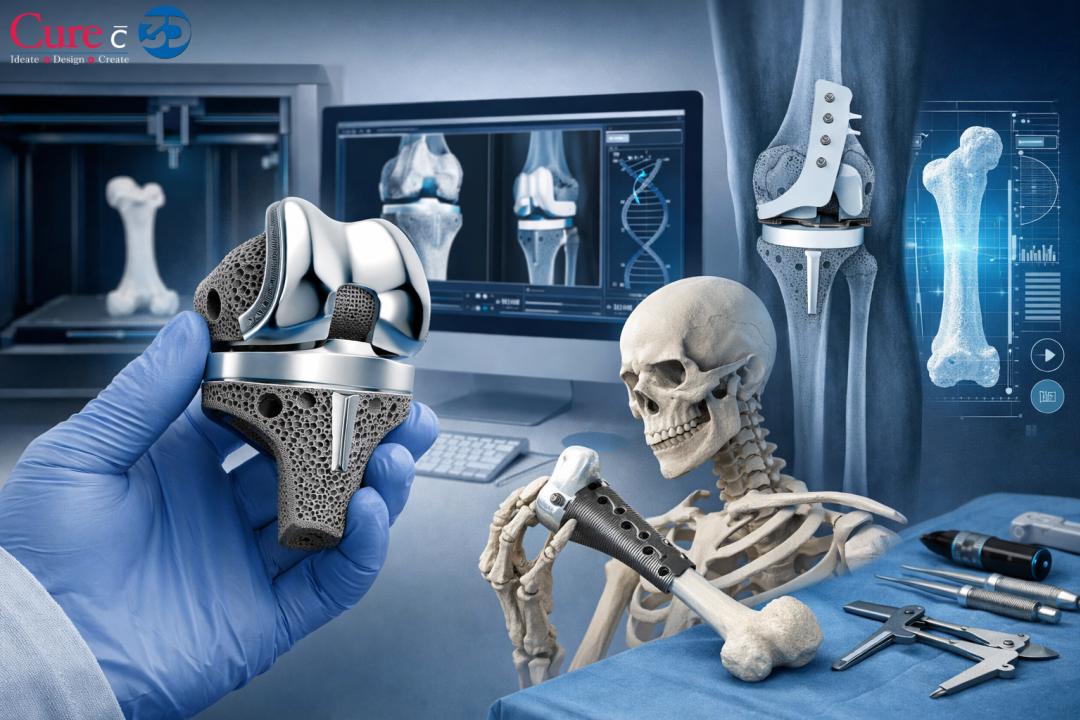
The field of orthopedic surgery has evolved rapidly over the last decade, driven by advances in materials science, imaging, and digital manufacturing technologies. Today, surgeons are no longer limited to standardized solutions when treating complex bone and joint conditions. Instead, personalized approaches are becoming the new standard of care, improving accuracy, safety, and long-term outcomes. At the center of this transformation are orthopedic implants and the growing adoption of patient-specific implants, which together are redefining how musculoskeletal conditions are treated in modern healthcare.
This blog explores the role of orthopedic implants, the limitations of conventional implant systems, and how patient-specific solutions are shaping the future of orthopedic treatment.
Understanding Orthopedic Implants
Orthopedic implants are medical devices designed to support, replace, or stabilize bones and joints affected by trauma, degenerative diseases, tumors, or congenital abnormalities. These implants are commonly used in procedures such as fracture fixation, joint replacement, spinal stabilization, and limb reconstruction.
Typical orthopedic implants include:
Plates and screws for fracture fixation
Intramedullary nails for long bone stabilization
Joint prostheses for hip, knee, and shoulder replacement
Spinal rods and cages for vertebral support
The primary goal of orthopedic implants is to restore anatomical alignment, enable bone healing, and improve mobility while maintaining long-term structural stability.
Materials and Design in Orthopedic Implants
Modern orthopedic implants are manufactured using biocompatible materials such as titanium alloys, cobalt-chromium alloys, and medical-grade stainless steel. These materials are chosen for their strength, corrosion resistance, and compatibility with human tissue.
Design considerations play a critical role in implant performance. Factors such as load distribution, fatigue resistance, and surface characteristics influence how well an implant integrates with bone. While traditional implants have been successful in many routine cases, they often rely on standardized shapes and sizes, which may not fully match individual patient anatomy.
Limitations of Conventional Implant Systems
Despite their widespread use, conventional orthopedic implants have inherent limitations, particularly in complex or irregular anatomical cases. Standard implants are designed based on average anatomical measurements, which may not accurately reflect patient-specific variations.
Common challenges include:
Poor anatomical fit in complex defects
Increased need for intraoperative modification
Longer surgical time
Higher risk of implant loosening or misalignment
Suboptimal functional or aesthetic outcomes
These limitations have driven the demand for more personalized solutions that adapt to the patient rather than forcing the patient to adapt to the implant.
What Are Patient-Specific Implants?
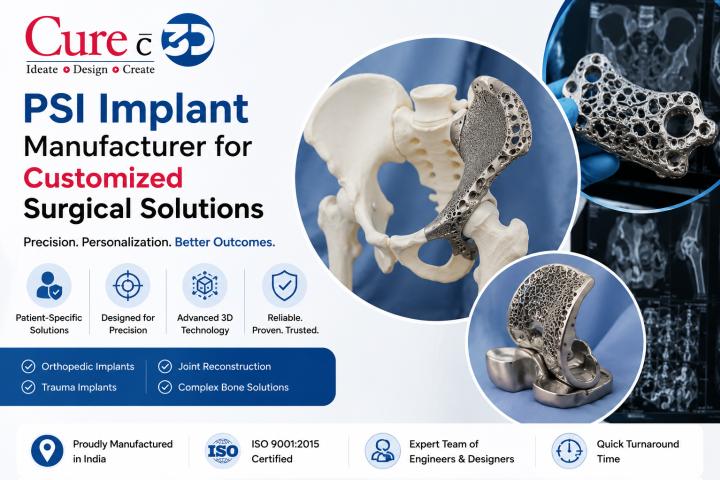
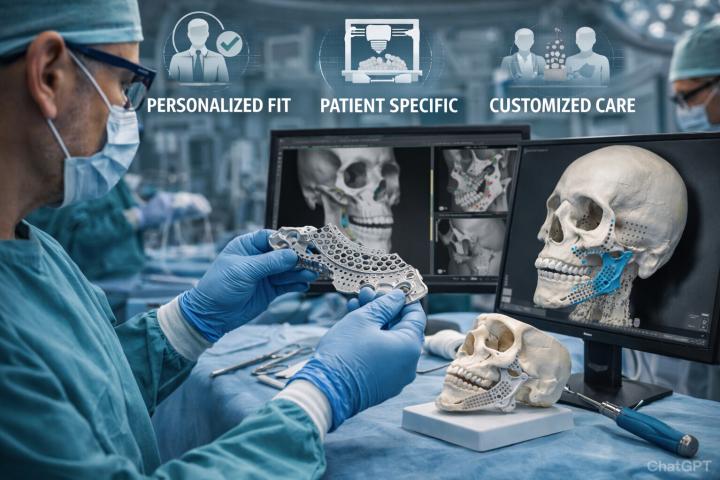
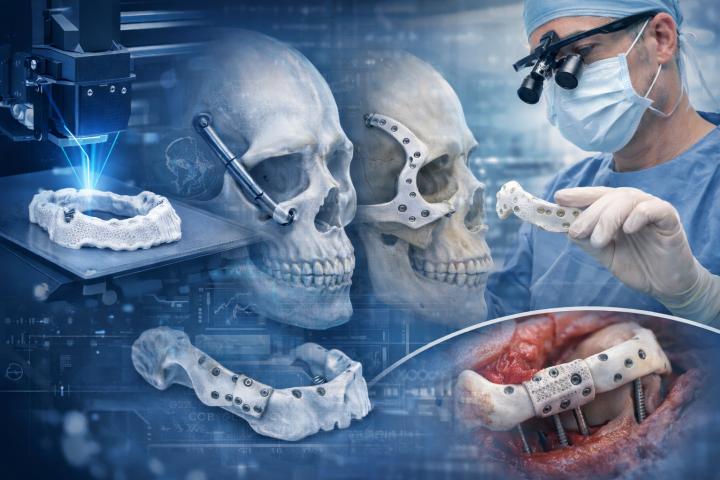
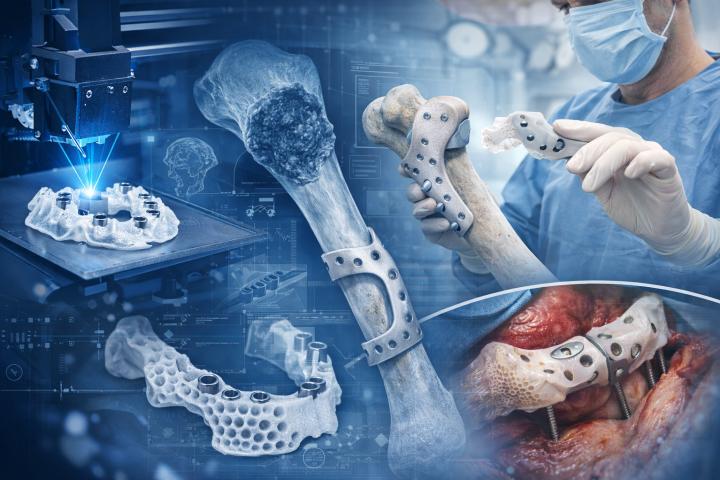
Patient-specific implants are custom-designed medical devices created to match the unique anatomy of an individual patient. Unlike off-the-shelf implants, these solutions are developed using patient imaging data, such as CT or MRI scans, to create a precise digital model of the affected anatomy.
Using advanced design software, implants are tailored to fit the exact contours, dimensions, and biomechanical requirements of the patient’s bone structure. This personalized approach significantly enhances surgical precision and predictability.
How Patient Specific Implants Are Designed
The development of patient-specific implants follows a structured digital workflow:
Medical imaging acquisition using CT or MRI
Anatomical segmentation to isolate bones and defect areas
Digital implant design based on patient anatomy and surgical goals
Virtual surgical planning to validate implant positioning
Manufacturing using advanced techniques such as additive manufacturing
This process ensures that the final implant is optimized for both anatomical fit and functional performance.
Clinical Advantages of Patient-Specific Implants
The shift toward patient-specific solutions offers multiple clinical benefits across orthopedic specialties.
Improved Anatomical Fit
Customized implants conform precisely to patient anatomy, reducing gaps and improving stability.
Enhanced Surgical Accuracy
Predefined implant geometry minimizes intraoperative guesswork and adjustments.
Reduced Operative Time
Better preoperative planning and precise fit lead to shorter surgeries and reduced anesthesia exposure.
Improved Functional Outcomes
Accurate alignment and load distribution support better mobility and long-term performance.
Lower Risk of Complications
Personalized implants reduce the likelihood of implant failure, loosening, or revision surgery.
Applications Across Orthopedic Specialties
Patient specific implants are increasingly used in various orthopedic applications, including:
Complex fracture reconstruction
Bone tumor resection and reconstruction
Revision joint replacement surgery
Cranio-maxillofacial and pelvic reconstruction
Congenital deformity correction
In each of these cases, standard implants may be inadequate due to anatomical complexity, making personalized solutions particularly valuable.
Role of Digital Technology in Personalized Orthopedics
The success of patient specific implants is closely linked to advancements in digital technology. High-resolution imaging, three-dimensional modeling, and computer-assisted design enable surgeons and engineers to collaborate effectively throughout the planning and design process.
Digital workflows also support better communication among multidisciplinary teams, ensuring that surgical objectives, biomechanical considerations, and clinical constraints are aligned before the procedure takes place.
Comparing Standard and Patient Specific Orthopedic Implants
| Aspect | Standard Orthopedic Implants | Patient Specific Implants |
|---|---|---|
| Design | Predefined sizes and shapes | Customized to patient anatomy |
| Fit | Approximate | Highly accurate |
| Surgical Time | Often longer | Typically reduced |
| Planning | Limited preoperative simulation | Detailed virtual planning |
| Outcomes | Variable in complex cases | More predictable |
This comparison highlights why patient-specific approaches are becoming increasingly important in advanced orthopedic care.
Challenges and Considerations
While patient specific implants offer significant advantages, their implementation requires careful planning. Challenges include the need for high-quality imaging, specialized software, and collaboration between clinicians and design teams. Regulatory compliance and quality assurance are also critical to ensure safety and effectiveness.
However, as digital infrastructure and clinical expertise continue to expand, these challenges are steadily being addressed.
The Future of Orthopedic Implants
The future of orthopedic surgery lies in precision medicine and personalization. As technologies such as artificial intelligence, advanced imaging, and additive manufacturing continue to mature, patient specific implants will become more accessible and widely adopted.
Surgeons will increasingly rely on data-driven planning and customized solutions to deliver better outcomes with fewer complications. This evolution represents a fundamental shift from standardized treatment models to patient-centered orthopedic care.
Conclusion
Orthopedic implants have long been essential tools in restoring mobility and function for patients with musculoskeletal conditions. Today, the integration of digital planning and personalized design has elevated their role even further. Patient specific implants address the limitations of conventional systems by offering superior fit, accuracy, and predictability, particularly in complex cases.
As healthcare continues to embrace digital innovation, the combination of orthopedic implants and patient-specific solutions will play a critical role in improving surgical outcomes, enhancing patient safety, and shaping the future of modern orthopedic treatment.
https://curewith3d.weebly.com/orthopedic-implants.html
https://savelist.co/my-lists/lists/6981d0172c164d854778e105/items/6981d01a459e6c62dee9df6d