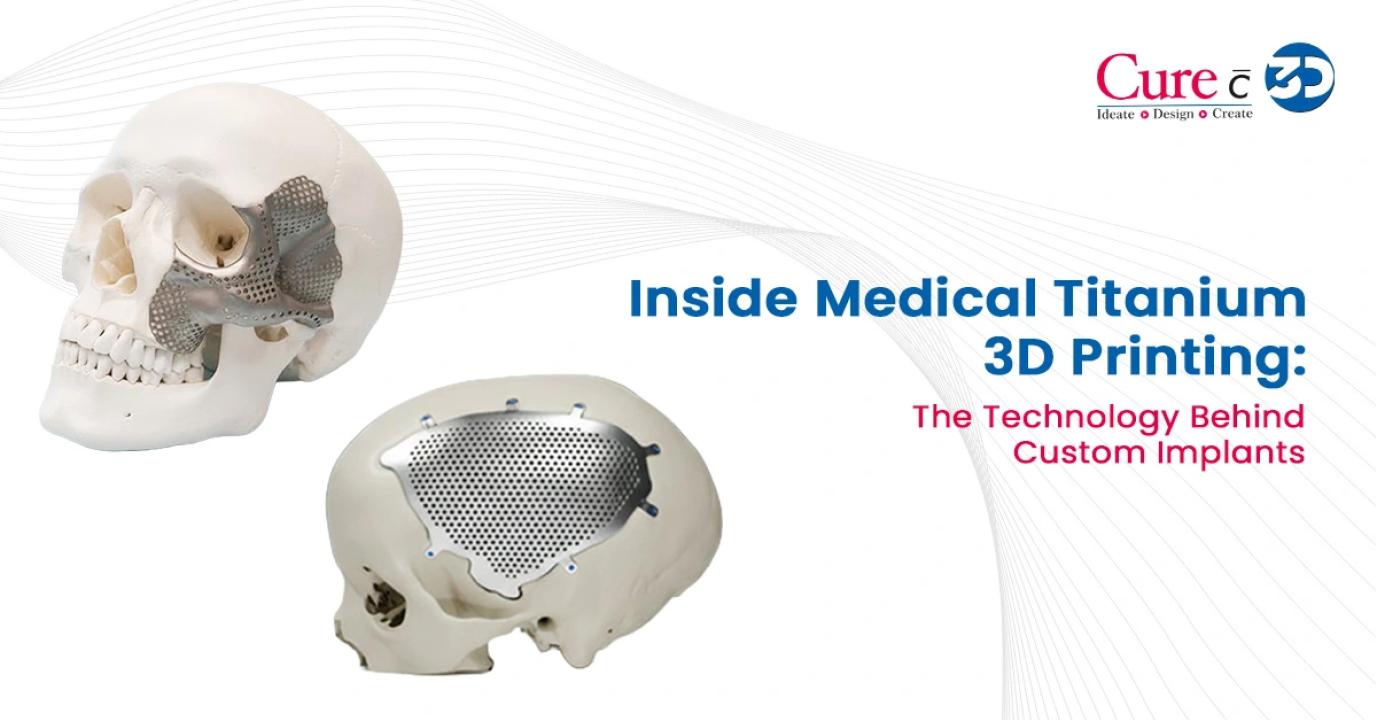
Healthcare is constantly evolving, and Medical Titanium 3D Printing has been regarded as one of the biggest developments in the field of personalized medical treatment. Traditional manufacturing techniques often fail to meet the distinct anatomy of each patient. However, 3D printing with titanium can create specific implants for patients that provide greater precision, improved functionality, and enhanced clinical outcomes.
From orthopedic reconstructive surgery to craniomaxillofacial (CMF) surgery, surgeons are increasingly using custom titanium implants that can provide greater precision in surgery while also decreasing operating times. As medical technology continues to improve, 3D printing for medical implants has revolutionized how complex procedures are planned and executed.
On this page, we'll discuss the process of this technology as well as its primary advantages, its applications, and what makes it the standard solution for healthcare professionals of today.
What Is Medical Titanium 3D Printing?
Medical Titanium 3D printing is a cutting-edge additive manufacturing process that is used to create titanium implants for patients as well as surgical guides and anatomical models straight from an individual's CT or MRI scan.
Contrary to traditional machine tools, additive manufacturing constructs implants layer by layer with medical-grade titanium powder that is medical-grade, which enables manufacturers to design highly intricate geometries that are perfectly matched to the patient's anatomy.
The most widely utilized product most commonly used material is Titanium Grade 23 (Ti-6Al-4V ELI) due to its:
Excellent biocompatibility
High resistance to corrosion
Astonishing strength-to-weight ratio
Long-term durability
Outstanding fatigue resistance
This makes titanium the ideal material for long-term placement within the body of a human.
Why Titanium Is the Preferred Material in Healthcare
Titanium is now the gold standard in medical implants because of its amazing mechanical and biological properties.
Key Advantages Include:
Bone is extremely compatible with human bones.
Lower possibility of allergic reactions
Lightweight but extremely durable
High resistance to body fluids
Natural Bone Integration (Osseointegration)
These features aid in a faster recovery for patients and longevity of implant performance.
How Medical Titanium 3D Printing Works
The manufacturing process blends modern imaging technology with precise manufacturing.
Step 1: Medical Imaging
CT and MRI scans show the anatomy of a patient in extreme resolution.
Step 2: Digital Design
Biomedical engineers design a custom implant with CAD software.
Step 3: Virtual Surgical Planning
The implant is scanned digitally and optimized prior to production.
Step 4: Titanium 3D Printing
Implants are manufactured using the latest metal additive manufacturing technology.
Step 5: Finishing & Quality Inspection
Each implant is subjected to polishing and dimension examination, sterilization preparation, and quality testing prior to surgery.
9 Major Benefits of Medical Titanium 3D Printing
1. Personalized Patient-Specific Implants
Each implant is created according to the individual patient's anatomy, which ensures a perfect fit.
2. Higher Surgical Accuracy
Implants with customisation reduce adjustments during surgery and allow surgeons to perform their operations more precisely.
3. Faster Surgical Procedures
Because implants are fitted perfectly and are perfectly sized, the time in the operating room is usually reduced, which reduces the exposure to anesthesia.
4. Better Patient Outcomes
The improved fit of implants often leads to improved functionality, greater comfort, and stability over the long term.
5. Complex Geometry Made Simple
3D printing allows for intricate lattice patterns and internal designs that traditional manufacturing can't make.
6. Reduced Material Waste
Unlike subtractive manufacturing manufacturing requires only the necessary quantity of titanium powder.
7. Improved Bone Integration
Implants with pores encourage the growth of bone naturally, which increases the stability of the implant over time.
8. Rapid Manufacturing
Digital workflows speed up the production process for intricate custom implants.
9. Supports Advanced Surgical Planning
Dental titanium 3D printing is integrated effortlessly and seamlessly with Virtual Surgical Planning (VSP). This allows surgeons to design procedures with greater certainty.
Applications of Medical Titanium 3D Printing
The technology is being employed in many medical specialties.
Orthopedic Surgery
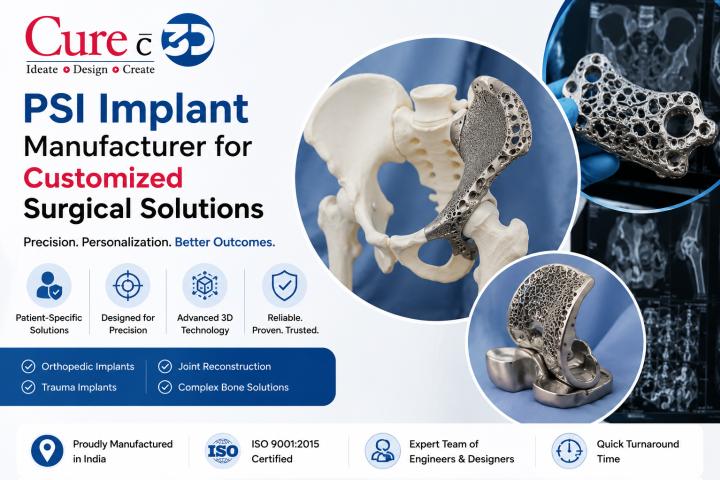
Pelvic reconstruction
Joint revision surgery
Trauma implants
Bone defect reconstruction
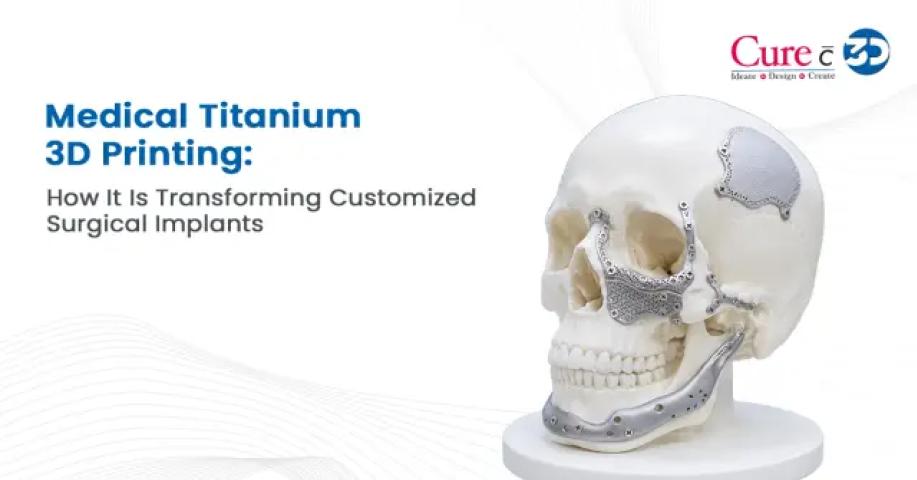
Cranio-Maxillofacial (CMF) Surgery
Mandible reconstruction
Implants in the orbit
Implants in the skull
Reconstruction of the facial features
Oncology Reconstruction
Custom-designed implants can help restore the anatomical structure after surgery to remove tumors.
Dental & Maxillofacial Procedures
Titanium implants are a great option for complex dental rehabilitation as well as jaw reconstruction.
Industry Statistics
Printing medical devices continues to see significant growth in the world.
The 3-D medical printing industry is anticipated to surpass USD 8 billion over the next few years.
Implants that are specifically designed for patients are among the fastest-growing segments due to the growing demand for customized health care.
Titanium remains among the most frequently used orthopedic materials for permanent and CMF implants due to its clinically proven performance.
These trends point to the growing use of implant technology that is customized across the globe.
Frequently Asked Questions
Is Titanium Safe for Medical Implants?
Yes. It is medical grade. Titanium Grade 23 has excellent biocompatibility and is extensively used in spinal, orthopedic, and craniofacial procedures.
How Long Do Titanium Implants Last?
Many titanium implants last for a long time if they are properly placed and treated.
Why Are Customized Titanium Implants Better?
Implants that are custom-designed to fit the body of the patient in a precise way reduce the need for surgical adjustments and enhance functional outcomes.
Is 3D Printing Strong Enough for Permanent Implants?
Yes. The medical 3D printer creates implants that are in compliance with strict quality and mechanical standards for long-term implants.
Which Medical Fields Use Titanium 3D Printing?
Common specialty areas include:
Orthopedics
Cranio-Maxillofacial Surgery
Oncology Reconstruction
Dental Surgery
Trauma Reconstruction
Future of Medical Titanium 3D Printing
Artificial intelligence and digital surgical planning, as well as advanced additive manufacturing, are transforming the future of personalized healthcare.
In the near future, hospitals as well as implant makers will work closer together to create high-quality implants that are customized, with lower lead times, greater precision, and better outcomes for patients.
As technology advances, 3D printing for medical applications is predicted to be an everyday solution to treat complicated anatomical issues.
Conclusion
Medical Titanium 3D Printing is revolutionizing modern medicine by enabling the creation of implants for patients that are durable, precise, and offer excellent clinical performance. Compared with conventional manufacturing, this technology offers greater design freedom, improved surgical efficiency, and better patient outcomes across orthopedic, cranio-maxillofacial, dental, and reconstructive procedures.
As demand for personalized medical care grows, healthcare providers are increasingly using titanium 3D printing for more secure, reliable, and highly personalized surgical solutions. For surgeons, hospitals, and patients too, this is a significant step towards the future of medical precision.