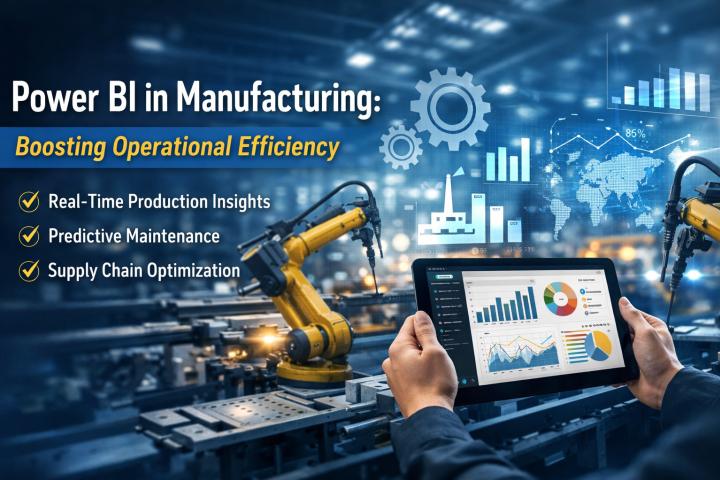

Indian manufacturing is growing fast, and so is the pressure to keep up. If you're running a manufacturing business and wondering whether ERP for manufacturing is worth it, the short answer is yes. It centralizes your operations, cuts down waste, and helps you make smarter decisions, faster.
The Real Cost of Running Without a System
Most manufacturers in India still rely on spreadsheets, phone calls, and gut instinct. It works, until it doesn't.
When orders pile up, inventory goes missing, or production delays cascade into client complaints, the cracks show up fast. You spend more time firefighting than actually growing. The problem isn't effort. It's the lack of a single source of truth.
Without a connected system, your purchase team doesn't know what your production floor needs. Your accounts team is always chasing numbers. And your leadership team is making decisions based on information that's already outdated by the time it reaches them.
What ERP for Manufacturing Actually Does
ERP for manufacturing is not just software. It's an operating backbone for your entire business. Here is what a manufacturing ERP system helps you manage and improve across daily operations.
Production Planning Gets Smarter
A good ERP system helps you plan production based on real demand, not guesswork. It tells you what raw materials you have, what you need to order, and when to schedule each batch. This alone can reduce downtime significantly.
You stop over-ordering. You stop running out of critical components at the worst possible time. Everything gets linked, from your sales orders all the way down to the shop floor.
Inventory and Supply Chain Become Manageable
For Indian manufacturers dealing with long supply chains and vendor variability, inventory management is a constant headache. An ERP for manufacturing gives you real-time visibility into stock levels, pending orders, and supplier performance.
You can set reorder points, track batch numbers, and manage multiple warehouses from one dashboard. That kind of control used to be reserved for large enterprises. Now, even mid-sized manufacturers in cities like Pune, Ahmedabad, and Coimbatore are using it.
Finance and Compliance Stay on Track
Manufacturing businesses in India deal with GST filings, TDS calculations, and audit requirements. Doing all of this manually is risky and time-consuming. An ERP system automates most of it.
Your finance team gets accurate data in real time. Reconciliation happens faster. And you stay compliant without dedicating an entire team to it.
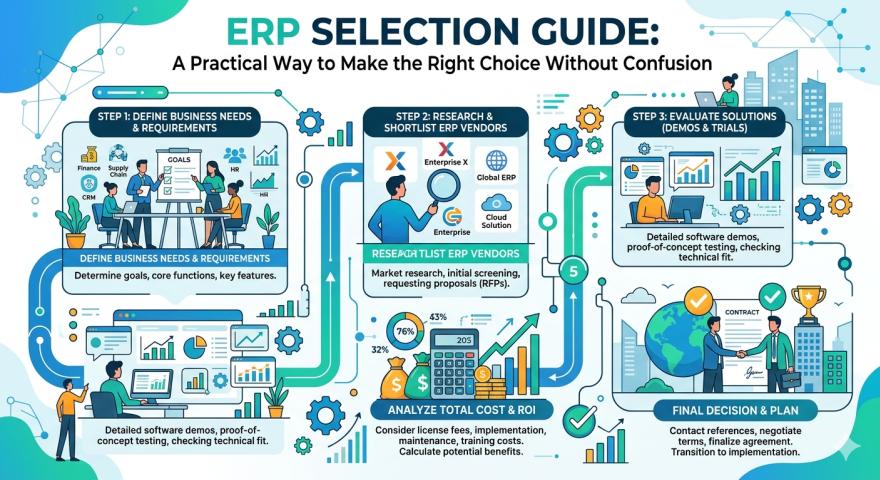
Choosing the Right ERP Service Provider
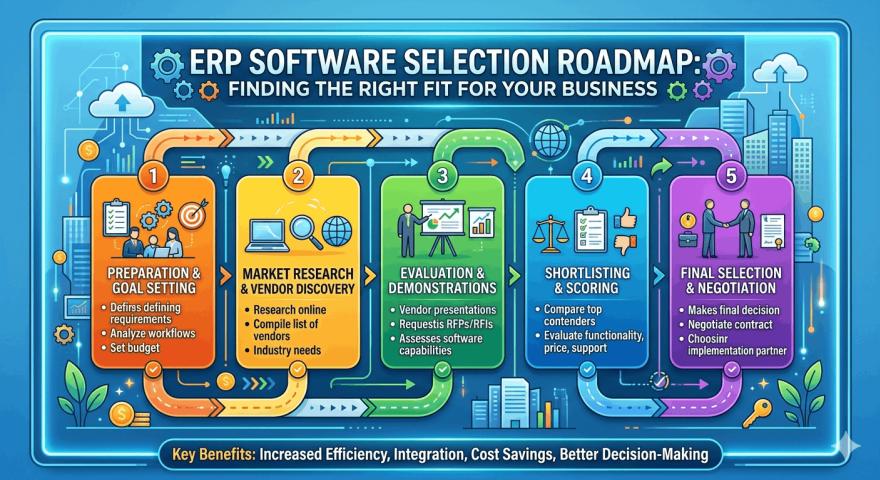
Getting the software is only half the job. The implementation matters just as much. Here is how you can choose the ideal ERP provider for your business:
Look for Industry Experience, Not Just Technology
A good ERP service provider understands manufacturing workflows. They know what a bill of materials looks like, how shop floor reporting works, and what kind of reports a plant manager actually needs. Generic IT vendors don't always understand this nuance.
When evaluating providers, ask for case studies from manufacturing clients. Ask how long implementation typically takes. Ask what kind of post-go-live support they offer. These questions separate serious providers from ones just selling licenses.
Customization and Scalability Matter
Indian manufacturers are not all the same. A garment factory in Tirupur has very different needs from an auto component supplier in Chennai. A reliable ERP service provider should be able to tailor the system to your workflows, not force you to adapt to the software.
Also, think about where your business will be in five years. The system you pick today should be able to scale with you, handle more users, more plants, more complexity, without requiring a full replacement.
Adoption Challenges You Should Know About
Many manufacturers hesitate because of cost or fear of disruption. Both concerns are valid, but manageable.
Implementation does take time. Your team will need training. There will be a transition period where things feel slower before they feel faster. That's normal. What matters is having a clear rollout plan and a provider who stays engaged beyond the installation phase.
ERP for manufacturing projects succeed when leadership is committed, when employees are trained properly, and when the system is configured to reflect how your business actually operates. Shortcuts here are what cause failure, not the technology itself.
It's Time to Build a Smarter Factory
ERP for manufacturing helps businesses gain better visibility, improve efficiency and respond faster to changing market demands. Whether you are looking to streamline production, manage inventory more effectively or support future expansion, the right ERP system can make a meaningful difference. In an increasingly competitive landscape, having accurate data and connected processes is no longer an advantage. It is becoming a necessity for sustainable growth, stronger decision-making and long-term operational success.