Managing online sales and accounting data separately can consume valuable time and increase the chances of manual entry errors. Businesses that want to streamline operations are increasingly looking for ways to sync Shopify orders to Sage 50 accounting and create a smooth flow of information between their eCommerce store and accounting system. If you are searching for guidance on how to sync Shopify orders to Sage 50 accounting, help is available through +1 (844) 341-4437 or 1-800-446-8848 to understand the available integration methods and best practices.
Why Businesses Need Shopify and Sage 50 Integration
As eCommerce continues to grow in 2026, business owners are processing more orders, handling larger product catalogs, and managing customers across multiple channels. Entering order information manually into Sage 50 can lead to:
- Duplicate entries
- Inventory mismatches
- Incorrect financial reports
- Delayed invoicing
- Increased administrative workload
A proper integration allows sales data to move from Shopify into Sage 50 automatically, reducing repetitive tasks and helping businesses maintain accurate records.
Benefits of Connecting Shopify with Sage 50
Businesses that implement a reliable integration often experience several advantages:
- Faster order processing
- Accurate bookkeeping
- Better inventory tracking
- Reduced human error
- Improved customer management
- Real-time visibility into business performance
By connecting both platforms, accounting records remain aligned with actual sales activity.
Understanding Shopify Order Synchronization
Shopify generates sales orders whenever customers place purchases online. These orders contain important details such as:
Customer Information
- Name
- Address
- Contact details
- Purchase history
Order Details
- Products purchased
- Quantities
- Pricing
- Taxes
- Shipping charges
Payment Information
- Payment method
- Transaction status
- Refund details
When businesses sync sage 50 and shopify automatically, all relevant information can be transferred into accounting records without manual intervention.
How Shopify Data Flows into Sage 50
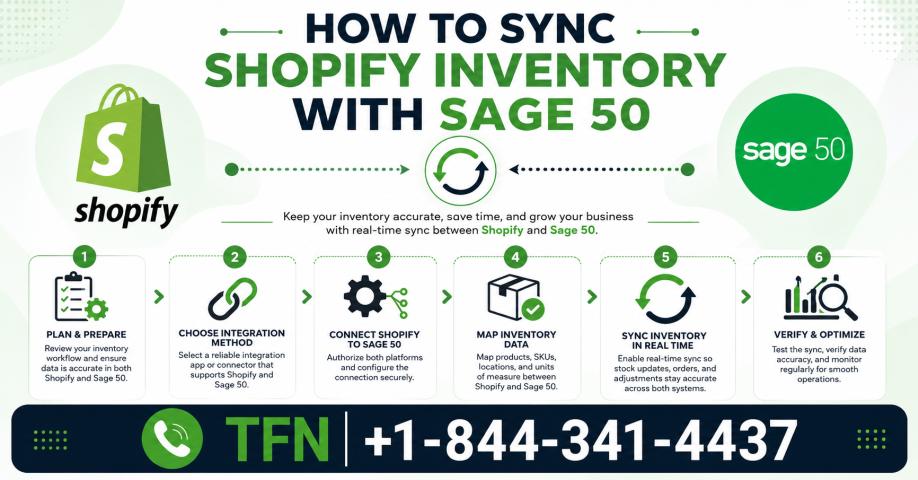
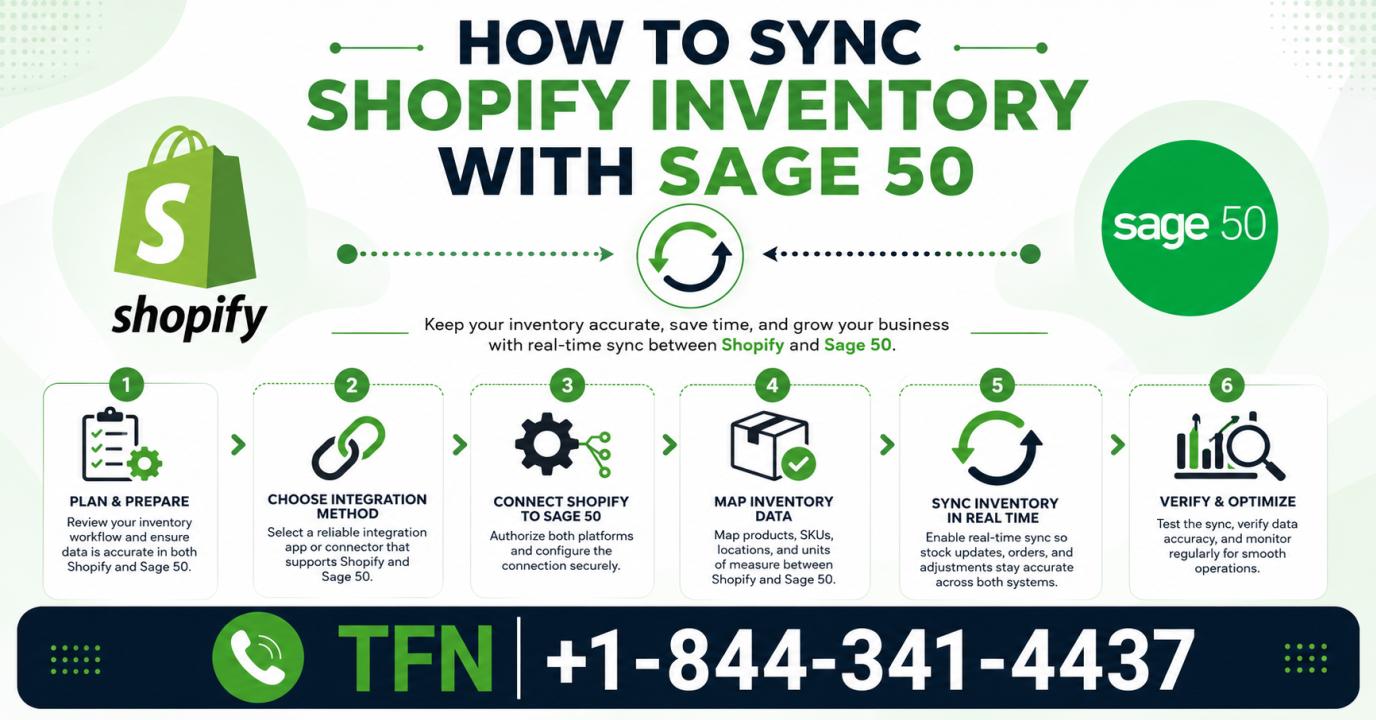
A typical integration follows several steps:
- Customer places an order in Shopify.
- Order information is captured.
- Integration software processes the data.
- Sales records are created in Sage 50.
- Inventory levels are updated.
- Financial transactions are recorded.
This automated workflow eliminates the need to re-enter information multiple times.
Choosing the Right Integration Method
There are several approaches available for Shopify and Sage 50 connectivity.
Third-Party Connectors
Many businesses use dedicated integration platforms that specialize in connecting accounting and eCommerce systems.
Advantages include:
- Faster setup
- Minimal technical knowledge required
- Automated updates
- Pre-built workflows
Custom API Integration
Organizations with specialized requirements may choose custom development.
Benefits include:
- Greater flexibility
- Customized workflows
- Advanced reporting capabilities
However, custom integrations generally require technical expertise and ongoing maintenance.
Features to Look for in a Shopify-Sage 50 Integration
Not all integration tools offer the same functionality.
Key capabilities include:
Order Synchronization
The system should support complete shopify order sync with sage 50 including:
- New orders
- Updated orders
- Cancelled orders
- Refunded transactions
Customer Synchronization
A quality solution should sync shopify customers with sage 50 automatically.
Benefits include:
- Centralized customer records
- Improved account management
- Accurate billing information
Inventory Synchronization
Businesses frequently ask how to sync shopify inventory with sage 50 because inventory accuracy directly impacts profitability.
Inventory synchronization helps:
- Prevent overselling
- Reduce stock discrepancies
- Improve forecasting
- Maintain accurate stock counts
Product Synchronization
Effective sage 50 shopify product catalog sync ensures product information remains consistent across both systems.
Typical synchronized fields include:
- Product names
- SKUs
- Pricing
- Descriptions
- Inventory quantities
Real-Time vs Scheduled Synchronization
One of the most important decisions involves selecting between real-time and scheduled updates.
Real-Time Synchronization
A real-time sync sage 50 shopify configuration updates information immediately after transactions occur.
Advantages:
- Instant inventory updates
- Faster order processing
- Better visibility
Ideal for:
- High-volume stores
- Multi-channel sellers
- Fast-moving inventory
Scheduled Synchronization
Scheduled synchronization transfers data at designated intervals.
Examples:
- Every 15 minutes
- Every hour
- Daily updates
Advantages:
- Lower system load
- Simpler implementation
- Reduced processing requirements
Suitable for smaller operations with moderate transaction volumes.
Common Data Elements Synced Between Shopify and Sage 50
A successful integration usually transfers multiple data categories.
Sales Orders
Order details move automatically into Sage 50.
Customer Records
Customer information remains consistent between systems.
Inventory Data
Stock levels update whenever sales occur.
Tax Information
Sales tax calculations transfer into accounting records.
Shipping Charges
Shipping revenue and expenses are accurately recorded.
Refunds and Returns
Financial adjustments are reflected automatically.
Best Practices for Shopify and Sage 50 Integration
Businesses can improve results by following proven implementation practices.
Start with Data Cleanup
Review:
- Product records
- Customer information
- Inventory data
Clean data reduces synchronization issues.
Create SKU Consistency
Matching SKUs are critical for successful synchronization.
Ensure:
- Product codes are unique
- Naming conventions are consistent
- Duplicate SKUs are removed
Test Before Going Live
Perform testing using sample transactions.
Verify:
- Orders import correctly
- Inventory updates properly
- Customer records match
- Tax calculations remain accurate
Avoiding Common Integration Challenges
Several issues can affect synchronization performance.
Duplicate Customer Records
This occurs when matching rules are not configured correctly.
Inventory Variances
Mismatched stock quantities can result from manual inventory adjustments.
Tax Configuration Errors
Incorrect tax mapping may affect financial reports.
Product Mapping Issues
Products must match accurately between Shopify and Sage 50.
Regular monitoring helps identify and resolve these issues quickly.
Why Inventory Synchronization Matters
Inventory management remains one of the most valuable aspects of integration.
When businesses sync shopify orders to sage 50 accounting, inventory updates automatically as orders are processed.
Benefits include:
- Better purchasing decisions
- Reduced stock shortages
- Improved customer satisfaction
- More accurate reporting
For growing businesses, automated inventory synchronization becomes increasingly important as order volume increases.
The Role of Customer Synchronization
Customer data consistency improves accounting accuracy and service quality.
When businesses sync shopify customers with sage 50, they gain:
- Complete customer histories
- Faster invoice generation
- Accurate reporting
- Better account management
Customer synchronization also supports long-term business growth by creating a centralized source of information.
Understanding Sage 50 Pro Shopify Sync
Many small businesses use sage 50 pro shopify sync solutions to simplify daily operations.
These integrations often provide:
- Order imports
- Customer synchronization
- Product updates
- Inventory adjustments
For businesses using Sage 50 Pro, selecting a connector that supports their specific edition is essential.
Shopify Sync for Sage 50 Premium
Organizations running Premium editions often require more advanced functionality.
A reliable shopify sync for sage 50 premium may include:
- Multi-user support
- Advanced reporting
- Enhanced inventory features
- Detailed financial tracking
These capabilities help larger teams manage increasing transaction volumes effectively.
Future of Shopify and Sage 50 Integration in 2026
Integration technology continues to evolve.
Businesses can expect improvements in:
- Automation
- Artificial intelligence-assisted reconciliation
- Faster processing
- Enhanced reporting
- Improved inventory forecasting
The demand for seamless accounting and eCommerce connectivity is expected to continue growing as online retail expands.
Final Thoughts
Implementing the right solution to sync Shopify orders to Sage 50 accounting can simplify bookkeeping, improve inventory accuracy, and reduce manual administrative work. Whether you need sage 50 data sync shopify, customer synchronization, inventory management, or a complete sage 50 and shopify sync strategy, choosing a dependable integration approach can significantly improve operational efficiency. Businesses seeking additional guidance on sync Shopify orders to Sage 50 accounting options can learn more through +1 (844) 341-4437 or 1-800-446-8848 and explore methods that fit their workflow requirements in 2026.