Quick Summary: The conversation around acoustics has evolved. No longer confined to technical specs, acoustic materials now drive the visual language of modern interiors. Leading this shift are PET polyester acoustic panels, a favorite among architects for merging sound control with creative freedom. From sculptural ceilings to statement walls, these versatile systems are redefining how contemporary spaces look, feel, and sound.
Transforming Walls into Architectural Features
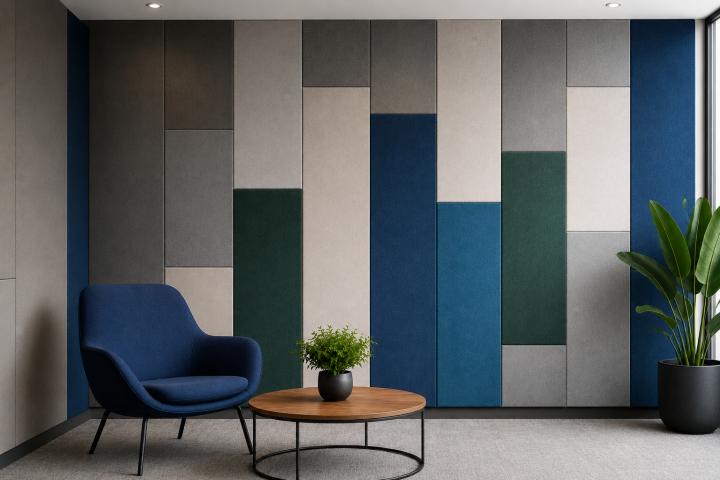
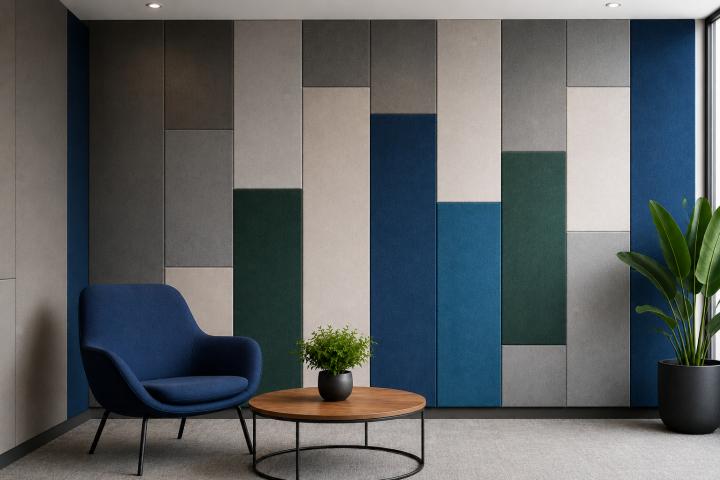
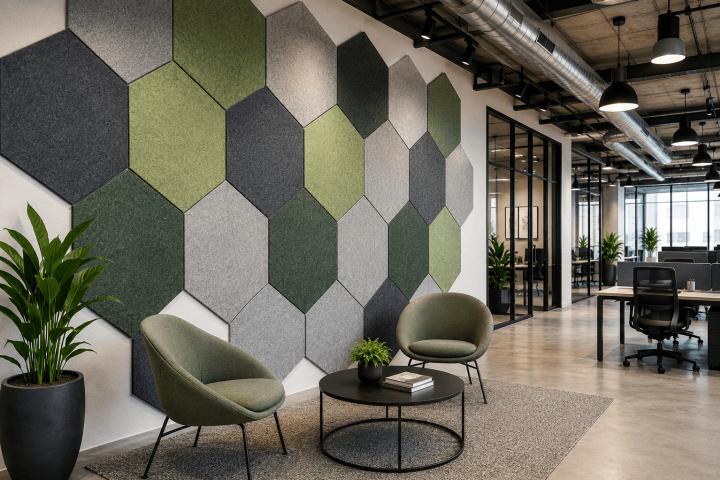
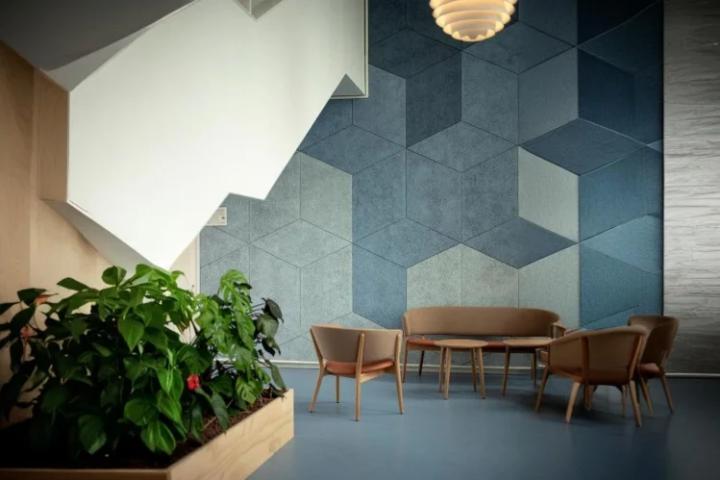
Perhaps the most obvious yet impactful upgrade is the transformation of ordinary walls into architectural focal points. Traditionally, walls have been treated as passive surfaces.
Paint, wallpaper, and decorative finishes provide visual interest, but they contribute little to the overall performance of the environment. PET polyester acoustic panels change that dynamic.
Designers increasingly use them to create feature walls that offer:
- Visual texture
- Geometric depth
- Dimensional patterns
- enhancement
- Brand expression
Rather than hiding acoustic treatments, architects now celebrate them.
The beauty of PET-based systems lies in their ability to create rhythm across large surfaces. Repeated patterns, sculptural forms, and layered compositions introduce movement and visual intrigue without overwhelming the space.
In corporate environments, these walls often become identity-defining elements. In hospitality settings, they contribute warmth and atmosphere. In educational spaces, they create more engaging environments while improving acoustic comfort.
The wall is no longer merely a boundary. It becomes a design statement.
Elevating Ceilings from Utility to Experience
For decades, ceilings have been among the most underutilized surfaces in interior design.
Many projects treat ceilings purely as functional zones reserved for lighting, HVAC systems, and building services. Yet contemporary designers increasingly view the ceiling as an opportunity for architectural storytelling.
This is where the PET panel ceiling has become particularly influential.
Modern PET ceiling systems allow designers to create:
- Suspended acoustic forms
- Floating architectural elements
- Layered visual compo
- Sculptural overhead features
- Dynamic spatial experiences
A well-designed ceiling influences how occupants perceive scale, movement, and atmosphere.
In large open-plan env
ironments, PET ceiling installations can help define zones without introducing physical barriers. They create visual separation while maintaining openness. The result is an environment that feels both acoustically controlled and architecturally expressive.
Instead of disappearing into the background, the ceiling becomes a central design feature.
Introducing Texture into Minimalist Interiors
Minimalism remains one of the dominant influences in contemporary architecture. However, minimalist spaces often face a recurring challenge: they can feel acoustically harsh and visually sterile if not carefully balanced.
This is where PET acoustic solutions offer a unique advantage. The surface qualities of polyester acoustic board systems introduce a level of tactile richness that many minimalist interiors lack.
They provide:
- Soft visual texture
- Material warmth
- Subtle dimensionality
- Greater visual comfort
- Enhanced sensory experience
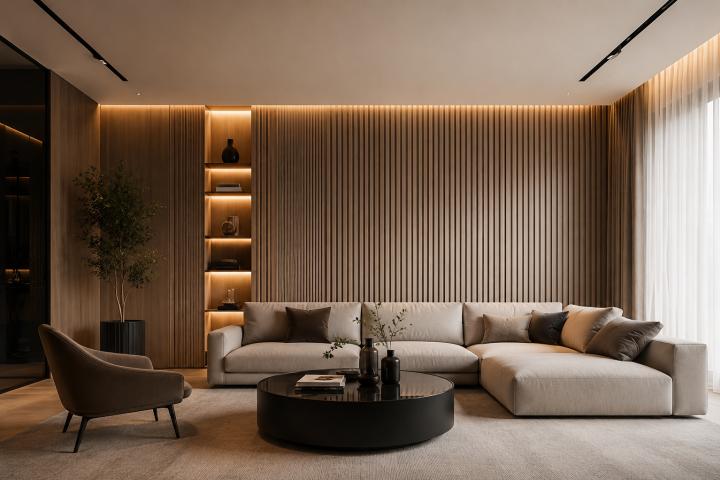
Importantly, this texture is achieved without compromising the clean aesthetic that defines minimalist design. Architects frequently use PET panels to soften hard surfaces such as glass, concrete, and metal. The contrast creates a more balanced environment while improving acoustic performance. The effect is often subtle but highly effective.
Spaces feel calmer, more inviting, and more human.
Creating Flexible and Adaptive Interior Zones
One of the defining characteristics of contemporary interiors is flexibility.
Workplaces are becoming more collaborative. Educational facilities are embracing multi-functional learning environments. Hospitality spaces increasingly serve multiple purposes throughout the day. This evolution requires design solutions that support adaptability. PET acoustic systems are uniquely suited to this challenge.
Designers use them to create:
- Semi-defined collaboration areas
- Quiet focus zones
- Informal meeting spaces
- Multi-use environments
- Acoustic transitions between functions
Unlike traditional partitions, PET-based installations can establish spatial boundaries without making environments feel enclosed. Their visual lightness preserves openness while their acoustic performance helps improve functionality.
This is particularly valuable in modern workplaces where flexibility is often prioritized over permanent layouts. The result is an environment that can adapt to changing needs while maintaining visual coherence.
Strengthening the Identity of a Space
Every memorable interior tells a story.
The most successful projects communicate a sense of identity through materials, colors, forms, and spatial experiences. Increasingly, PET acoustic systems are playing a role in this narrative. Designers use PET polyester acoustic panels as a medium for expression.
They can support:
- Brand storytelling
- Cultural references
- Signature visual themes
- Custom design concepts
- Distinctive architectural language
This ability to contribute to identity is one reason why PET panels have become so prominent in commercial interiors. A technology company may use bold geometric patterns to communicate innovation.
A hospitality venue may favor softer forms that encourage relaxation. An educational institution may choose vibrant compositions that inspire creativity. In each case, the acoustic treatment becomes part of the design story rather than a separate technical layer.
This shift represents a broader evolution in architectural thinking.
Acoustic materials are no longer hidden infrastructure. They are active contributors to the character of a space.
Read to know more about PET acoustic panels here: What is the PET Panel Acoustical System and its benefits?
Why these Design Upgrades Matter
The growing popularity of PET acoustic solutions reflects a larger transformation within interior architecture. Designers are increasingly expected to deliver environments that perform across multiple dimensions simultaneously.
Spaces must be:
- Visually compelling
- Acoustically comortable
- Functionally efficient
- Adaptable to change
- Supportive of occupant well-being
Materials that address only one of these requirements are becoming less attractive. PET acoustic systems stand out because they contribute across all of them. Their appeal lies not simply in noise control but in their ability to enrich the overall experience of a space.
As organizations place greater emphasis on wellness, productivity, and user experience, design choices that integrate aesthetics and performance will continue gaining importance.
Reimagine Acoustic Design with Tranquil Global
At Tranquil Global, we believe acoustic solutions should contribute as much to design as they do to performance. Our PET polyester acoustic panel systems are developed to help architects and designers create spaces that are visually distinctive, acoustically balanced, and built for modern occupant expectations. By combining innovation, functionality, and aesthetic versatility, Tranquil Global supports interiors that leave a lasting impression.
FAQs
1. What are PET polyester acoustic panels used for?
They are used to improve acoustic performance while enhancing the visual design of walls, ceilings, and interior spaces.
2. Why are PET panel ceiling systems becoming popular?
They combine sound absorption with architectural creativity, allowing ceilings to become design features rather than purely functional surfaces.
3. Can polyester acoustic boards improve workplace design?
Yes. They help create quieter, more comfortable, and visually engaging work environments.
4. Are PET acoustic panels suitable for modern minimalist interiors?
Absolutely. They add texture and warmth while maintaining clean and contemporary design aesthetics.
5. How do PET acoustic panels support flexible spaces?
They help define zones, improve acoustic comfort, and support multi-functional environments without creating visual heaviness.