Quick Summary: Modern interior design is pushing ceilings beyond their traditional role. In 2026, designers are using the metal ceiling as a major architectural feature that enhances aesthetics, spatial definition, and visual impact. From creative layouts to artistic installations, a metal baffle ceiling can completely transform a space. Here are some innovative ways to design a metal ceiling that stands out.
Create Floating Ceiling Islands
Instead of installing a continuous metal ceiling across an entire room, create suspended ceiling islands above specific functional areas. Floating islands can be positioned over reception desks, conference tables, dining spaces, or lounge areas to visually anchor them.
This design technique helps define zones within open-plan environments while adding depth and architectural interest. The suspended effect also creates a modern, lightweight appearance that enhances the overall design.
Design with Curved Baffle Layouts
Straight ceiling lines are giving way to more fluid and organic forms. A metal baffle ceiling arranged in curves or wave-like patterns introduces movement and sophistication to a space.
Curved layouts can mimic natural elements such as flowing water or rolling landscapes, creating a more dynamic environment. This approach is particularly effective in hospitality, commercial, and public spaces where memorable design is important.
Alternate Baffle Heights
Installing baffles at different heights adds a sculptural quality to the ceiling. The varying elevations create shadows, depth, and visual texture that make the space feel more engaging.
This design method works especially well in large interiors where a flat ceiling might appear monotonous. By carefully adjusting the height variations, designers can achieve dramatic visual effects without overwhelming the space.
Combine Multiple Metallic Finishes
A single finish can sometimes limit design possibilities. Mixing matte, brushed, polished, perforated, and textured finishes within the same metal ceiling creates visual contrast and sophistication.
Different finishes reflect light in unique ways, generating subtle variations throughout the day. This layered approach adds richness and character while maintaining a cohesive architectural aesthetic.
Create Geometric Ceiling Art
Transform the ceiling into a design centerpiece by arranging metal panels or baffles into geometric patterns. Shapes such as hexagons, triangles, diamonds, and custom polygons create a striking visual statement overhead.
Geometric configurations can complement contemporary interiors and help reinforce branding or architectural themes. Rather than blending into the background, the ceiling becomes a key design attraction.
Integrate Linear Lighting between Baffles
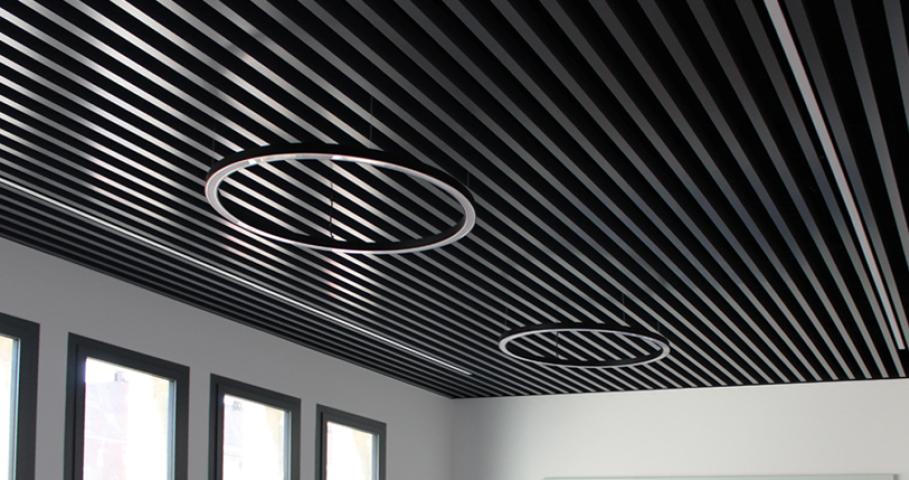
Lighting and ceilings are becoming increasingly interconnected. By placing LED strips between metal baffle ceiling sections, designers can create illuminated lines that enhance both function and aesthetics. The lighting highlights the ceiling structure while improving overall ambiance.
This technique can be used to create dramatic focal points or subtle atmospheric effects, depending on the lighting intensity and placement.
Use Gradient Color Transitions
Gradient effects are gaining popularity in modern architecture. Instead of using a single color, designers can install metal ceiling components in progressively changing shades. The gradual color transition adds depth and movement without appearing overwhelming.
This design strategy introduces creativity while maintaining a clean and professional appearance, making it ideal for offices, retail spaces, and cultural venues.
Extend the Ceiling onto Walls
One of the most dramatic design trends involves extending the metal ceiling seamlessly onto adjacent walls. This creates a unified architectural envelope that blurs the distinction between horizontal and vertical surfaces.
The result is a bold, immersive environment that strengthens visual continuity and enhances the overall design concept. It also helps emphasize focal areas within the space.
Create a Digital Pixel Effect
Inspired by digital design and technology, pixel-inspired ceilings use varying panel colors, finishes, or heights to create a mosaic-like appearance. This contemporary approach works particularly well in innovation centers, technology offices, creative studios, and entertainment venues.
The pixel effect introduces visual energy while reflecting the modern digital culture that influences many interior environments.
Design Radial Patterns
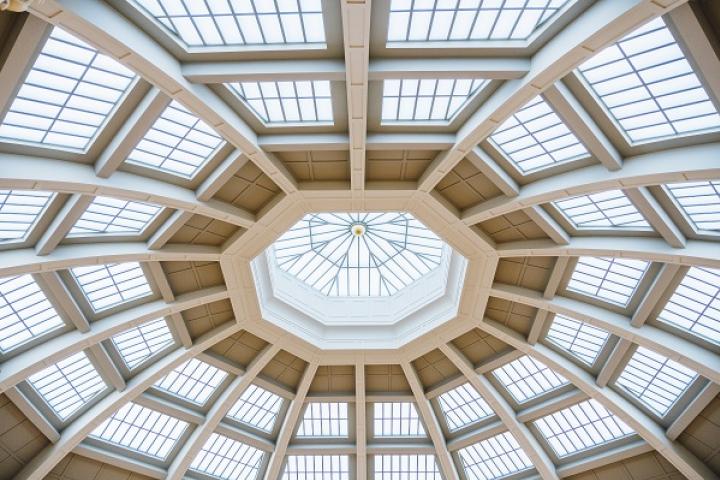
Instead of arranging ceiling elements in parallel lines, consider creating radial patterns that extend outward from a central point. A chandelier, skylight, atrium, or feature light can serve as the focal point for the design.
Radial layouts naturally draw attention and create a sense of symmetry and balance. They can also make large spaces feel more cohesive and visually organized.
Incorporate Open-sky Effects
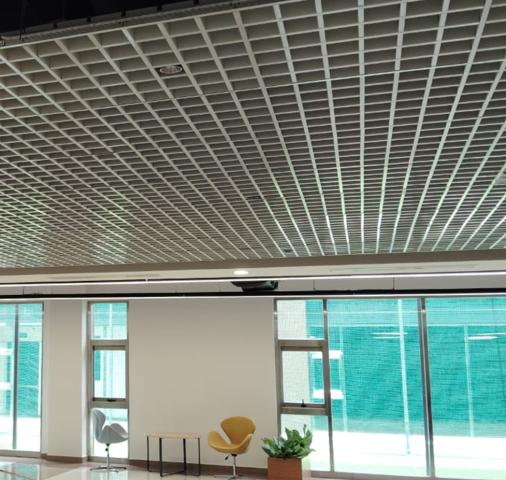
A metal baffle ceiling can be designed with wider spacing to create a semi-open visual effect. This approach gives the illusion of openness while maintaining structure and order. The resulting ceiling feels lighter and less imposing, making it especially useful in large commercial environments.
Open-sky designs can also enhance lighting distribution and contribute to a more spacious atmosphere.
Frame Architectural Features
Ceilings can be used strategically to highlight important architectural elements. Metal ceiling components can frame staircases, reception desks, atriums, collaborative workspaces, or feature walls. This approach directs attention to key areas while creating stronger visual connections throughout the interior. Framing techniques help establish hierarchy and improve spatial organization.
Mix Wide and Narrow Baffles
Combining different baffle widths introduces rhythm and variation into the ceiling design. The contrast between wide and narrow elements creates a customized appearance that feels modern and intentional.
This technique adds texture without relying on color or decorative details. It is particularly effective in contemporary interiors where simplicity and sophistication are equally important.
Develop Layered Ceiling Zones
Multi-level ceiling designs are becoming increasingly popular in commercial and hospitality projects. By creating layered ceiling zones, designers can visually separate functions while maintaining an open layout.
Different ceiling heights and configurations can define collaboration spaces, waiting areas, meeting rooms, or circulation zones. The result is a more organized and visually dynamic environment.
Highlight Pathways and Movement
Ceilings can serve as powerful wayfinding tools. Arranging metal baffles in directional patterns naturally guides visitors through a space. This approach is particularly useful in airports, shopping centers, educational facilities, and large office environments.
Beyond functionality, directional ceiling designs create a sense of movement that makes interiors feel more engaging and purposeful.
Read to know more on metal ceiling here: A Designer’s Guide for Choosing the Right Metal Ceilings
Create Sculptural Ceiling Installations
A metal ceiling can become a work of art when designed as a sculptural installation. Custom suspended forms that twist, fold, curve, or appear to float overhead create a memorable visual experience. Sculptural ceilings are increasingly used in premium commercial and hospitality environments where unique design helps establish a strong identity and lasting impression.
Combine Metallic and Wood Finishes
Blending metal with wood-inspired finishes creates an attractive balance between modernity and warmth. The sleek appearance of metal complements the natural character of wood, resulting in a sophisticated and welcoming environment. This combination works particularly well in offices, restaurants, hotels, and residential projects seeking both elegance and comfort.
Use Asymmetrical Layouts
Perfect symmetry is no longer the only path to beautiful design. Asymmetrical metal ceiling layouts introduce an element of surprise and creativity. Uneven arrangements can create visual interest while maintaining balance through thoughtful composition. This design strategy is ideal for contemporary interiors that embrace individuality and unconventional aesthetics.
Design Ceiling Canopies
Suspended canopy->
Ceiling canopies provide visual intimacy while preserving openness throughout the surrounding environment. Their architectural presence makes them particularly effective in hospitality and commercial interiors.
Build Patterned Light-and-Shadow Effects
One of the most creative uses of a metal baffle ceiling involves designing for light interaction. Strategic spacing and positioning allow natural and artificial light to cast changing patterns across walls, floors, and ceilings.
These dynamic shadow effects evolve throughout the day, adding visual interest and creating a more immersive environment. The result is a ceiling that continuously transforms with changing lighting conditions.
Transform Your Space with Tranquil Global!
Do not let your ceilings remain a passive background element. From breathtaking sculptural installations and floating islands to dynamic light-and-shadow effects, Tranquil Global’s state-of-the-art metal ceiling and baffle systems are engineered to turn ordinary overhead spaces into iconic, high-performance architectural features.
Whether you want to seamlessly guide visitor movement, integrate striking linear lighting, or cultivate the perfect balance between organic wood finishes and sleek metal, our premium custom design solutions bring unmatched visual precision and structural confidence to your project. Connect with us today!
FAQs
1. How do floating ceiling islands benefit open-plan environments?
Instead of covering a whole room, suspended floating islands are positioned over specific functional zones (such as reception desks or lounge areas) to visually anchor them, defining distinct spaces while adding depth and architectural interest.
2. Can metal ceilings be used to guide people through a building?
Yes. Arranging metal baffles in directional layouts serves as a powerful wayfinding tool that naturally highlights pathways and movement, making it highly effective for large layouts like airports, shopping centers, and corporate offices.
3. What is the visual advantage of combining metallic and wood finishes?
Blending sleek metal with wood-inspired finishes establishes an elegant balance between modern clean lines and organic warmth, creating a highly sophisticated yet inviting environment.
4. How does a metal baffle ceiling interact with lighting to create shadow effects?
By utilizing strategic spacing, elevations, and positioning, a metal baffle ceiling allows both natural and artificial light to cast changing patterns across the walls and floors, continuously transforming the spatial mood throughout the day.
5. Why should I consider geometric patterns for a metal ceiling design?
Arranging panels or baffles into shapes like hexagons, triangles, or diamonds transforms the ceiling into custom geometric art. This makes it a striking centerpiece that reinforces branding and elevates the overall interior aesthetic.