Construction projects rarely fail because of a lack of work. More often, they struggle because costs exceed expectations. A project that starts with a healthy profit margin can quickly become unprofitable when labor costs increase, material prices change, or estimates are inaccurate.
According to industry studies, cost overruns remain one of the most common challenges in construction. Even experienced contractors can face unexpected expenses when project budgets are not properly planned or monitored.
This is why many contractors are investing in cost estimating software. Instead of relying on spreadsheets and manual calculations, they use digital tools to create more accurate estimates, monitor project costs, and reduce financial risks throughout the project lifecycle.
In this article, we'll look at how construction estimating software helps reduce budget overruns and improve project profitability.
Why Budget Overruns Happen in Construction
Budget overruns can occur for many reasons. Some are unavoidable, while others result from poor planning and inaccurate data.
Common causes include:
- Incomplete project estimates
- Material price fluctuations
- Scope changes
- Poor labor forecasting
- Delayed project schedules
- Communication gaps between teams
- Lack of real-time cost tracking
- Manual calculation errors
When several of these issues happen at the same time, project costs can quickly exceed the original budget.
Many construction companies still depend on spreadsheets to prepare estimates. While spreadsheets may work for small projects, they become difficult to manage as projects grow in complexity.
What Is Construction Cost Estimating Software?
Construction cost estimating software is a digital solution that helps contractors calculate project costs more accurately before work begins.
The software allows users to estimate:
- Labor costs
- Material costs
- Equipment expenses
- Subcontractor costs
- Overhead expenses
- Project contingencies
Instead of manually entering calculations across multiple spreadsheets, contractors can create structured estimates using centralized data.
This improves consistency and reduces costly mistakes.
Improving Accuracy Before the Project Starts
One of the biggest reasons projects exceed budgets is inaccurate estimating.
If labor hours are underestimated or material quantities are calculated incorrectly, the project budget becomes unreliable from day one.
Modern estimating software helps contractors:
- Build standardized estimates
- Use historical project data
- Create repeatable pricing structures
- Reduce human calculation errors
- Apply consistent markups and margins
This results in more realistic project budgets and fewer surprises during execution.
Better Material Cost Planning
Material costs represent a significant portion of construction budgets.
Prices can change frequently due to supply chain disruptions, inflation, or market demand.
Estimating software helps contractors manage this challenge by:
- Storing supplier pricing information
- Updating material databases
- Creating detailed quantity breakdowns
- Comparing projected and actual material costs
With accurate material planning, contractors reduce the risk of ordering errors and unexpected expenses.
Supporting Better Labor Forecasting
Labor is often the largest cost category in construction.
When labor requirements are underestimated, projects can quickly become unprofitable.
Estimating software helps project managers forecast:
- Required labor hours
- Crew sizes
- Trade-specific workloads
- Labor costs by project phase
By improving workforce planning, contractors can allocate resources more effectively and avoid costly scheduling issues.
Reducing Costly Manual Errors
Manual estimating processes increase the likelihood of mistakes.
Common issues include:
- Formula errors
- Duplicate entries
- Incorrect quantities
- Missing project items
- Outdated pricing information
Even small mistakes can create major financial problems on large construction projects.
Digital estimating systems automate calculations and reduce the possibility of human error, resulting in more reliable budgets.
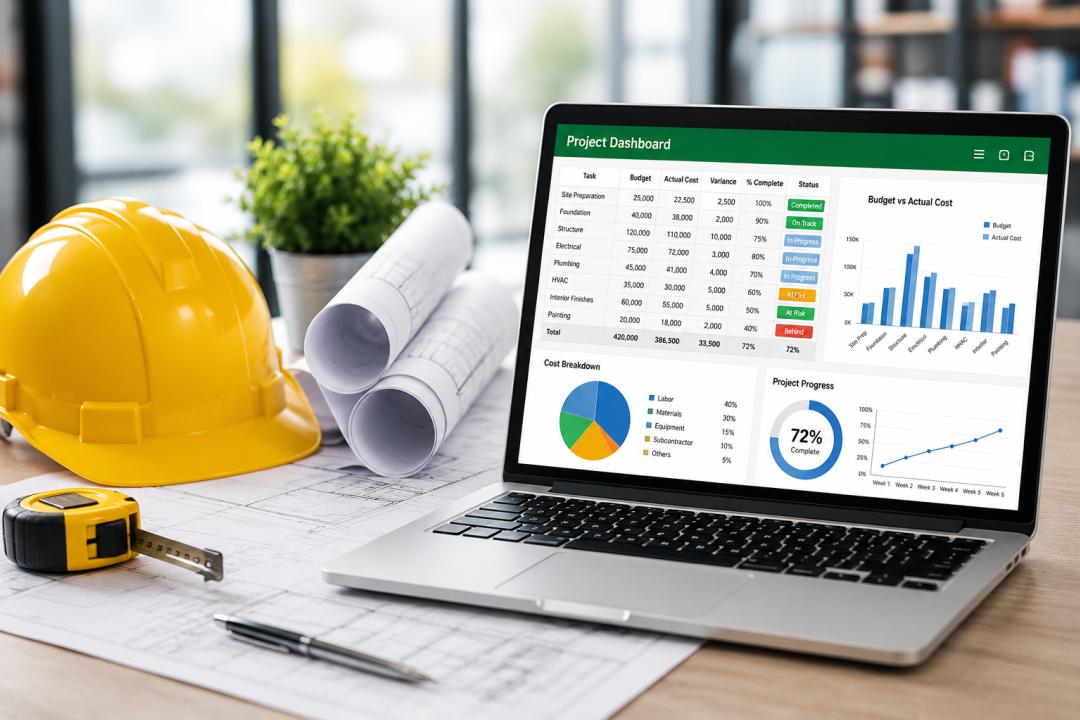
Tracking Budget Performance Throughout the Project
Creating an accurate estimate is only the first step.
Construction companies must continuously compare actual costs against projected costs.
This is where post calculation construction software becomes valuable.
Project managers can monitor:
- Actual labor costs
- Material spending
- Equipment expenses
- Project profitability
- Budget variances
This visibility helps identify financial issues before they become major problems.
Turning Estimates Into Actionable Project Plans
Many contractors struggle because estimating and project execution are disconnected.
Information created during the estimating phase often gets lost when the project moves into production.
Using pre calculation construction software, contractors can create structured estimates that support project planning, resource allocation, and budgeting from the start.
This creates better alignment between estimating teams and project managers.
Improving Change Order Management
Construction projects frequently experience scope changes.
Additional work, revised designs, or client requests can affect budgets significantly.
Without proper tracking, these changes can reduce profit margins.
Estimating software helps contractors:
- Calculate change order costs quickly
- Document additional work
- Update budgets in real time
- Maintain accurate project records
This ensures that every project change is reflected in the financial plan.
Better Visibility Into Project Profitability
Many contractors only realize a project was unprofitable after completion.
By then, it is too late to take corrective action.
Estimating software provides real-time financial insights that help businesses monitor profitability throughout the project lifecycle.
Key metrics include:
- Estimated vs actual costs
- Gross profit margins
- Labor productivity
- Material consumption
- Cost variance reports
This information allows managers to make informed decisions before budget issues become critical.
Strengthening Communication Across Teams
Budget overruns often occur because project stakeholders work with different information.
Estimators, project managers, field teams, and finance departments may all operate independently.
When data is centralized, everyone works from the same information.
This improves:
- Project coordination
- Budget visibility
- Cost accountability
- Decision-making speed
As a result, teams can respond faster to cost-related issues.
Supporting Long-Term Business Growth
Growing construction companies need systems that can scale with their operations.
Manual estimating methods may work for a handful of projects, but they become difficult to manage as project volume increases.
Estimating software helps businesses:
- Standardize estimating processes
- Improve consistency
- Reduce administrative workload
- Increase bidding capacity
- Maintain profit margins
These benefits allow contractors to take on more projects without losing financial control.
Features to Look for in Construction Estimating Software
When evaluating estimating solutions, contractors should look for features such as:
- Cost databases
- Quantity takeoffs
- Supplier pricing integration
- Labor forecasting
- Budget tracking
- Reporting dashboards
- Change order management
- Margin analysis
- Project cost monitoring
The right software should support both estimating and ongoing financial management throughout the project lifecycle.
How ERP Integration Improves Cost Control
Estimating software becomes even more powerful when integrated with a construction ERP system.
ERP platforms connect estimating with:
- Project management
- Scheduling
- Invoicing
- Workforce management
- Supplier management
- Financial reporting
This creates a complete view of project performance and helps contractors maintain tighter control over budgets.
Instead of managing information across multiple disconnected tools, teams can access everything from a single platform.
Also Read: Monitor Construction Performance in Real Time with ERP Software
Conclusion
Budget overruns remain one of the biggest threats to construction profitability. Inaccurate estimates, changing material costs, poor labor planning, and limited financial visibility can quickly push projects beyond their original budgets.
By using cost estimating software, contractors can create more accurate estimates, reduce manual errors, improve forecasting, and track costs throughout the project lifecycle. Combined with strong planning processes and ongoing cost monitoring, estimating software helps construction businesses protect their margins and complete projects more successfully.
For contractors looking to improve financial control, reduce risk, and make better business decisions, investing in construction cost estimating software is often one of the most effective steps they can take.